


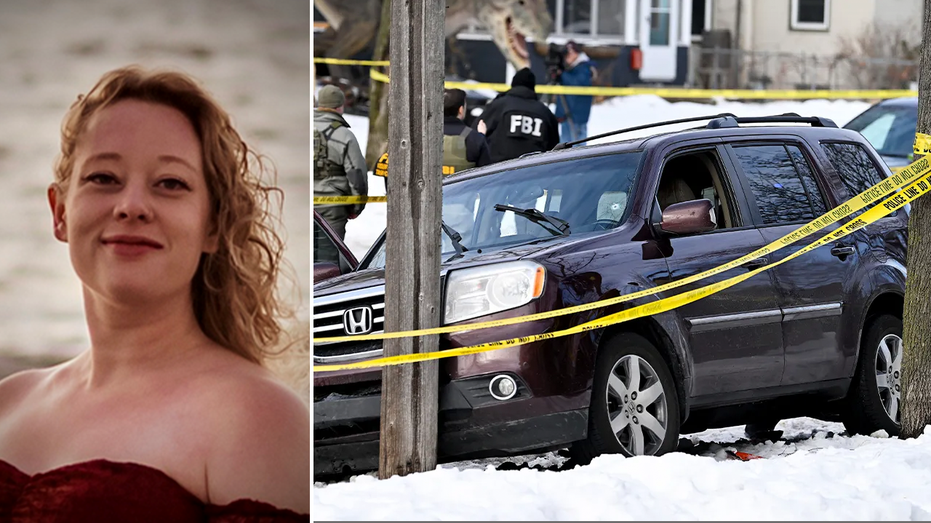
The shooting happened in a crowded Minneapolis neighborhood during a federal immigration operation, involved a vehicle and an unidentified agent, and left no body camera footage behind. Within hours, the same incident was being described as self-defense, domestic terrorism, and a preventable death.
Two Versions Of The Same Fatal Encounter
Authorities have identified the person killed in the Immigration and Customs Enforcement operation in south Minneapolis as 37-year-old Renee Nicole Good. The shooting occurred during an enforcement action carried out by federal immigration officers, according to the Department of Homeland Security, and is now under investigation.
From there, the narratives diverge.
Minneapolis ICE shooting latest: Renee Nicole Good named as woman killed by ICE agent https://t.co/Z6Cz2D5hIg pic.twitter.com/TjnMpKiSSI
— The Independent (@Independent) January 8, 2026
In a detailed account reported by Fox News, Homeland Security Secretary Kristi Noem said ICE agents were conducting operations when one of their vehicles became stuck in the snow. As agents tried to push it free, she said, they were confronted by people she described as agitators who interfered with the work.
Noem said Good was in an SUV that repeatedly blocked officers and impeded their efforts. According to her account, agents ordered Good to exit the vehicle and stop obstructing them. She allegedly refused.
Noem then alleged that Good used her SUV as a weapon. The secretary stated that “she then proceeded to weaponize her vehicle,” claiming Good attempted to run over an officer. Noem said the officer was struck, taken to a hospital, treated, and released. A federal agent then fired, killing Good. That is the core of the federal government’s version of events, as relayed through Fox News.
At this stage, those details remain allegations from federal officials. The agent who fired has not been publicly identified. There is no publicly released video, and the full investigative record has not been made available.
City Leaders Call It A Killing, Demand Accountability
Minneapolis city leaders have publicly used different language for the same incident. Members of the Minneapolis City Council issued a joint statement, quoted by Fox News, that identified Good as “a member of our community” and referred to the shooting as a killing.
“This morning an ICE agent shot and killed Renee Nicole Good, a member of our community,” the statement said. “Anyone who kills someone in our city deserves to be arrested, investigated, and prosecuted to the fullest extent of the law.”
The council members also accused federal immigration authorities of bringing “chaos and violence” to Minneapolis and called for ICE to leave the city, according to the Fox report. Those comments reflect a broader conflict between local officials and federal immigration agencies over recent large-scale operations in the Twin Cities area.
Federal officials, by contrast, have framed the shooting as a response to escalating threats against law enforcement. Noem described the incident as an act of domestic terrorism and linked it to what she said was a rise in vehicle ramming attempts against federal officers in recent weeks. She argued that elected officials should be denouncing violence against law enforcement rather than criticizing the operation itself.
There is currently no publicly available database that would allow independent verification of a recent “rise” in vehicle attacks on ICE agents specifically, and DHS has not released underlying data alongside Noem’s statements.
Who Renee Good Was, Beyond The Scene
While officials argued over labels and legal framing, Good’s family and past colleagues tried to explain who she was before the traffic stop and the gunfire.
Good’s mother, Donna Ganger, told the Minneapolis Star Tribune, as cited in the Fox News report, that her daughter lived in the Twin Cities with her partner. The family learned of Good’s death late that morning.
Ganger said her daughter was not involved in protests against ICE and reacted with disbelief and grief when informed about the federal account of the confrontation. “That’s so stupid she was killed,” Ganger told the newspaper. “She was probably terrified.”
Ganger described Good as “one of the kindest people I’ve ever known,” and said her daughter was compassionate and devoted to caring for others.
According to Fox, which in turn cited the Star Tribune, Good had previously been married to Timmy Ray Macklin Jr., who died in 2023. Macklin’s father told reporters that the couple had a child together and said he planned to travel to care for the child after Good’s death. That detail underscores one direct consequence of the shooting that is not in dispute. A young child has now lost both parents within a span of a few years.
There are also public traces of Good’s life as a writer and artist. Fox News reported that an Instagram account that appears to have belonged to Good described her as “a poet and writer and wife and mom and s—– guitar strummer from Colorado; experiencing Minneapolis, MN.”
Old Dominion University’s English Department in Virginia had previously recognized a student named Renee Macklin, identified as being from Colorado Springs and studying creative writing. In a Facebook post highlighted in the Fox article, the department said she won the 2020 ODU College Poetry Prize Undergraduate award for a poem titled “On Learning to Dissect Fetal Pigs” and noted that her work had appeared in literary publications and that she co-hosted a podcast with her then-husband.
Together, these accounts present a picture of Good as a parent, a creative writer, and an active member of several communities. None of them answer the central question of what precisely happened in the minutes before she was killed.
No Body Cameras, No Public Video
One verifiable gap in the record stands out. There is no body camera footage from the agents directly involved in the shooting.
Fox News reported, citing unnamed ICE sources, that none of the agents in the Minneapolis operation were wearing body cameras at the time of the shooting. The network noted that ICE has been gradually rolling out body-worn cameras nationwide during certain operations, but that this particular team did not have cameras equipped.
ICE has publicly described body-worn cameras as a key tool for “transparency” and “accountability” in some of its operations, according to program information published on ICE’s official website. The absence of cameras in this case means investigators and the public will likely be reliant on physical evidence, any third-party video that might surface, and the testimony of federal agents and civilian witnesses.
So far, there has been no public indication from DHS or ICE that surveillance footage from nearby buildings or bystanders’ phones has been recovered and preserved. Noem’s account, city statements, and family interviews have all been filtered through media outlets, primarily Fox News and local newspapers.
An SUV, Out-Of-State Plates, And Unanswered Questions
Another detail that has attracted attention is the vehicle itself.
Kansas City television station KSHB 41 reported, according to Fox News, that the SUV driven by Good carried Missouri license plates. The station said it confirmed with the Missouri Department of Revenue that the vehicle was registered to “Renee N. Good Macklin” at an address in Kansas City, Missouri.
It was, according to Fox’s account of the KSHB reporting, not immediately clear why the vehicle of a Minneapolis resident was registered in another state. Federal officials have not publicly explained whether the registration status played any role in the operation or was simply an administrative detail.
What remains central is how the SUV was used in the moments before the shooting. In Noem’s framing, it was a “weaponized” vehicle deployed in an attempted ramming of a federal officer. In the family’s description, Good was someone who would have been “terrified” in a confrontation with armed federal agents in a tense political environment.
Without video or a publicly released investigative file, outside observers cannot independently verify how fast the vehicle was traveling, how close it came to agents, or whether alternative tactics were available. Those are likely to be key questions in any criminal or civil review.
A Local Flashpoint In A National Fight
The shooting occurred against a backdrop of intense debate over federal immigration enforcement in Minneapolis and across the country. According to Fox News, the Department of Homeland Security had sent thousands of additional officers to the Twin Cities in recent days, prompting protests and formal opposition from city leaders.
Noem has defended those deployments as lawful enforcement operations. Critics in Minneapolis describe them as an unwanted federal incursion that increases the risk of violence in neighborhoods that already face policing concerns. The killing of Good has become an immediate focal point for that disagreement.
Each side is already using the incident to reinforce its broader position. Federal officials point to the reported injury of an ICE officer and the claim of an attempted vehicle attack. City leaders and Good’s family point to the lack of local control, the absence of body cameras, and the death of a resident who, in her mother’s words, “was probably terrified.”
For now, the public record consists of sharply conflicting statements, limited corroborating detail, and an ongoing investigation that has not yet produced a comprehensive, public accounting. Whether that accounting will ultimately align more closely with the federal narrative, the city’s demands for accountability, or introduce an entirely different timeline remains to be seen.