


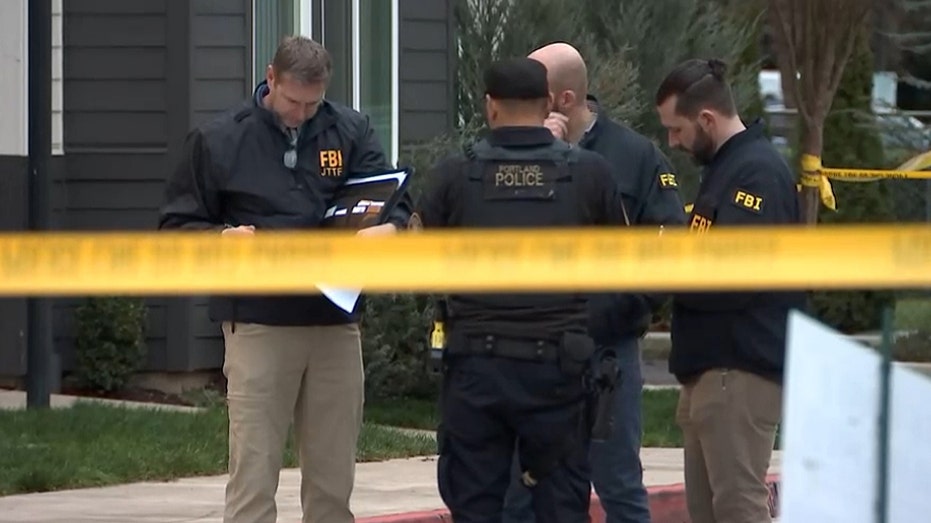
Two people are in the hospital, a federal agent has fired his weapon, and within hours of the first 911 call, state and city leaders were already questioning the government’s own account of what happened.
What Everyone Agrees On So Far
On a recent afternoon in Portland, Oregon, a U.S. Border Patrol agent shot a man and a woman after a vehicle stop near Portland Adventist Hospital. The Department of Homeland Security (DHS) has confirmed that federal agents were involved and that a Border Patrol agent fired the shots, according to an initial account reported by Fox News, which cites DHS and city statements as its primary sources (Fox News).
Portland Police Bureau (PPB) officers responded to a report of a shooting on Southeast Main Street shortly after 2:18 p.m. local time. Minutes later, officers were alerted that a man who had been shot was calling from the area of Northeast 146th Avenue and East Burnside. When officers arrived there, they found a man and a woman with apparent gunshot wounds. Both were transported to a hospital. Officials have not publicly released their names or their medical conditions.
City officials say PPB officers were not involved in the shooting and do not participate in immigration enforcement. The scenes were secured and multiple investigations have begun. No arrests had been confirmed in the immediate aftermath.
Two Timelines, Six Minutes
One key point of clarity is time. DHS says Border Patrol agents stopped a car and identified themselves as law enforcement at approximately 2:19 p.m. local time. PPB logs show officers were dispatched to reports of a shooting on the 10200 block of Southeast Main Street at about 2:18 p.m. A second location, near Northeast 146th Avenue and East Burnside, came into the picture around 2:24 p.m., when an injured man reportedly called for help.
Publicly available accounts do not yet state precisely where the shots were fired or how far the car traveled between the initial stop and the second scene where the wounded man and woman were found. That gap matters. It will likely be central to reconstructing whether the shooting happened during the attempted stop, during a chase, or at some other point in the short window between the two calls.
Audio from a 911 call, released by local authorities and described in the Fox News report, captures a request for help for a man shot twice in the arm and a woman, described as his wife, shot in the chest. The recording, if released in full, will be an important piece of the factual record, but by itself it does not resolve how or why federal agents opened fire.
What DHS Says Happened
The only detailed narrative of the shooting so far comes from DHS, summarized in the Fox News report. According to that account, Border Patrol agents stopped a vehicle, identified themselves as law enforcement, and then saw the driver allegedly use the car as a weapon.
DHS says the driver, who is believed by federal authorities to be a member of the Venezuelan criminal group Tren de Aragua, “allegedly weaponized the vehicle and attempted to run over the law enforcement agents.” DHS further asserts that the driver was suspected of involvement in a recent shooting elsewhere in Portland.
In that version of events, one Border Patrol agent fired because he believed he faced an imminent threat. As DHS put it, “Fearing for his life and safety, an agent fired a defensive shot.” Federal officials say the driver then fled the scene with a passenger, and both were later found with gunshot wounds.
At this stage, those details remain allegations from DHS. Investigators have not yet publicly presented independent evidence to confirm the claimed gang affiliation, the earlier Portland shooting tie, or the precise movements of the vehicle in the moments before the shots were fired.
Use of force by Border Patrol agents is governed by internal policy and by constitutional standards on reasonable use of force. Customs and Border Protection publishes its policy framework and related guidance on its official website, which outlines when deadly force is authorized and how such incidents are reviewed (CBP). In general, agents are permitted to use deadly force when they reasonably believe it is necessary to protect human life or prevent serious bodily injury.
City Hall Pushes Back
Within hours, Portland’s mayor signaled deep skepticism of the federal account and called for a halt to immigration enforcement operations in the city until an outside review is complete.
“We know what the federal government says happened here,” Mayor Keith Wilson said at a news conference. “There was a time when we could take them at their word. That time has long passed.”
Wilson urged a full and independent investigation of Immigration and Customs Enforcement (ICE) and DHS leadership and linked the Portland shooting to federal actions in other cities. According to the Fox report, he said ICE agents and DHS leaders must be held responsible for “the violence inflicted on the American people in Minnesota, in Portland, and in all the communities across America.”
Portland Police Bureau Chief Bob Day, in a written statement cited by Fox News, acknowledged public concern and referenced a separate, recent shooting involving ICE agents in Minneapolis. “We understand the heightened emotion and tension many are feeling in the wake of the shooting in Minneapolis, but I am asking the community to remain calm as we work to learn more,” he wrote.
Portland shooting: A husband and wife are hospitalized after they were shot by a Border Patrol agent. Agents had attempted to stop a vehicle with a suspected gang member. The mayor called on ICE to halt operations until the incident is investigated. pic.twitter.com/CA46fjPc3z
— John P. Flannery (@JonFlan) January 9, 2026
State Leaders Tie It To National Politics
Oregon Governor Tina Kotek publicly connected the Portland shooting to what she described as a broader federal posture. According to Fox’s account of her remarks, Kotek said the incident flowed from “the reckless agenda of the Trump administration.” She argued that “when a president endorses tearing families apart and attempts to govern through fear and hate rather than shared values, you foster an environment of lawlessness and recklessness.”
Kotek added that Oregon’s attorney general and other state leaders had already raised concerns about what they see as excessive force by federal agents in Portland and said the shooting increases the urgency for “transparency and accountability.”
Oregon Attorney General Dan Rayfield announced that the state Department of Justice has opened a formal investigation into the incident. Multnomah County District Attorney Nathan Vazquez said he was “very concerned” and promised a thorough review in coordination with PPB and the FBI, according to the Fox report.
Members of Oregon’s federal delegation also weighed in. Senator Ron Wyden wrote on X that he was monitoring reports of “two people shot in Portland by federal law enforcement” and argued that the deployment of federal agents in the city was “clearly inflaming violence and must end.” Senator Jeff Merkley said he had “huge concern” about the reported shooting and urged that protests of federal immigration enforcement remain peaceful.
Who Investigates When Federal Agents Fire
When a federal agent uses deadly force, several investigative tracks typically open. Internally, DHS and its component agency, in this case Border Patrol, conduct an administrative review of the use of force. Externally, local police usually investigate the incident as a potential crime scene, and local or state prosecutors decide whether to bring charges.
In serious or contested cases, the Department of Homeland Security Office of Inspector General (OIG) can launch an independent investigation into DHS personnel conduct. The OIG describes its role as providing “independent oversight and promoting effectiveness, efficiency, and integrity” across DHS through audits and investigations (DHS OIG).
In Portland, local officials have confirmed the FBI is assisting. The Oregon DOJ review, the district attorney’s investigation, and any DHS internal or inspector general inquiries will all have access to evidence that is not yet public, including:
Item 1: Body-worn camera footage from PPB officers who responded after the shooting, if available.
Item 2: Any dashboard, body, or fixed cameras tied to federal agents or nearby facilities, including the hospital.
Item 3: Forensic analysis of the vehicle, bullet trajectories, and the scene locations.
Item 4: Communications records and reports from the agents involved, including their initial written statements.
Until those materials are reviewed and some portion is released, the public record will remain heavily dependent on competing statements rather than shared evidence.
Unanswered Questions Around The Stop
Several basic facts about the shooting remain unclear based on public reporting to date.
First, investigators have not publicly confirmed the identities, immigration status, or criminal histories of the man and woman who were shot. DHS has alleged that the driver is associated with Tren de Aragua and connected to another Portland shooting, but it has not provided documentation or charging documents to support that claim in the public domain.
Second, it is not yet known exactly how the car was moving when the agent fired. DHS describes a driver who “attempted to run over” agents. Independent investigators will need to determine the car’s path, speed, and position relative to the agents before and during the gunfire. Physical evidence at the scene and any video will be critical for that analysis.
Third, officials have not said how many rounds were fired, from what distance, or whether any weapons other than the agent’s firearm were recovered at the scene or from the vehicle.
Finally, the specific location of the shooting relative to the two reported scenes remains unresolved in the public narrative. That missing detail makes it difficult for residents to visualize what took place, and it is likely to be a focus of both local and federal investigations.
Politics, Trust, And The Next Steps
The shooting in Portland did not occur in a vacuum. It came as city and state leaders have been vocal about federal immigration enforcement operations and about an earlier federal shooting in Minneapolis. In that context, Mayor Wilson’s statement that the time to “take them at their word” has passed reflects a deeper breakdown in trust between local officials and federal agencies deployed in the city.
For now, DHS maintains that a Border Patrol agent lawfully fired in self-defense after a driver turned a car into a weapon. City and state leaders question that account and have triggered overlapping investigations that could take months.
What those inquiries reveal about the car’s movement, the agent’s decision to fire, and the accuracy of DHS’s claims about the driver will determine whether this is ultimately viewed as a justified use of force or an unlawful shooting. Until investigators release that evidence, two facts remain uncontested. A federal agent pulled the trigger, and two Portland residents are left wounded while the official story around them is still being written.