

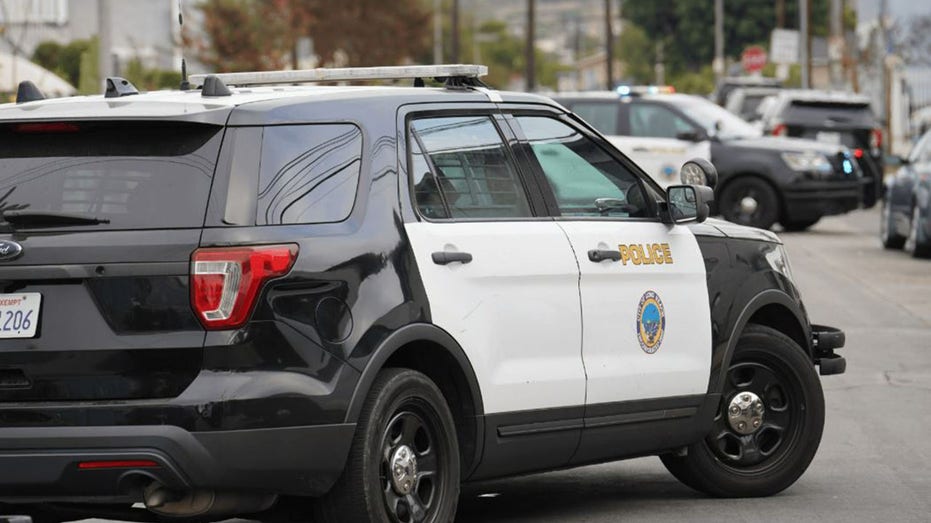
A driver already facing a felony case was back behind the wheel when police say two more people were killed in a second collision. How she was able to return to the street, and under what conditions, has not been fully explained to the public.
Two Fatal Crashes, Three Months Apart
According to Long Beach police, 24-year-old Ahkeyajahnique Owens was first arrested in connection with an October collision in Long Beach, California, that left a bicyclist dead. She was charged with felony vehicular manslaughter and later released on bail while that case moved forward, Fox News reported.
Police say that on a January evening, roughly three months after the first crash, Owens was driving again when another collision occurred. In that second incident, described by investigators as a hit-and-run, 21-year-old Gilberto Lopez and 24-year-old Bobbi Smith were killed and three additional people were injured, according to the same report.
Owens, a Southern California resident, turned herself in to the Long Beach Police Department several days after the January crash. She was booked into jail with bail set at $200,000, police told reporters. The department has not publicly disclosed whether she is still in custody.
Prosecutors have already charged her with felony vehicular manslaughter related to the October crash. Police say they expect to present the January case to the Los Angeles County District Attorney’s Office for potential additional charges once their investigation is complete. At the time of publication, those additional charges had not yet been filed, and Owens has not entered any plea on the new allegations.
A Bail Decision With Few Public Details
One key fact remains missing from official statements. The public still does not know the amount of bail that allowed Owens to leave custody after the first fatal crash, or what specific conditions, if any, were attached to her release.
The Fox News report notes that “The department didn’t say how much her bail was after the first crash.” In response to a broader review of pretrial release practices, California courts have said that individual bail decisions are based on a combination of statutory guidelines, local rules, and a judge’s assessment of risk to public safety and likelihood of court appearance. Those decisions are typically recorded in case files, but they are not always easy for the public to access.
Bail in California is governed by the state constitution and statutes, with detailed offense-by-offense schedules set at the county level. Judges have the authority to depart from those schedules in either direction. State law also allows judges to impose non-monetary conditions, such as restrictions on driving, substance use, or contact with alleged victims, as alternatives or supplements to cash bail. The relevant framework is outlined on the state’s legislative information site at leginfo.legislature.ca.gov.
In this case, Long Beach police have not said whether any conditions related to driving were imposed after the October arrest. The Los Angeles County Superior Court has not publicly commented on the earlier bail decision, and court documents that might answer those questions have not yet been widely reported.
What Investigators Say They Can Prove
While key pretrial decisions remain opaque, investigators have been more direct about how they say they linked Owens to the two collisions. According to the Fox News report, police say she has been connected to both crashes using a combination of video footage and forensic evidence. They have not released those materials or described them in detail.
Police told reporters that they are still analyzing the causes of both crashes. Fox News quoted the department as saying, “Police have not yet detailed the causes of the crashes.” That leaves important questions unanswered, including whether speed, impairment, distraction, or mechanical failure may have played any role.
Without a completed traffic investigation or a filed criminal complaint for the January incident, it is not yet clear what exact charges prosecutors will pursue. In California, felony vehicular manslaughter can apply when a person drives unlawfully and with gross negligence and another person dies as a result. The statute sets possible prison terms of up to six years for the most serious form of the offense, according to the California Penal Code provisions available through the state legislative site at leginfo.legislature.ca.gov.
Owens is presumed innocent unless and until prosecutors prove any charge beyond a reasonable doubt. As of now, she has been charged only in connection with the first crash. For the second crash, police have described her as a suspect and have booked her into jail, but the filing decision rests with the District Attorney’s Office.
Victims, Community, And Context
The October crash killed a person who had been riding a bicycle in Long Beach. Police have not publicly released that individual’s name, and next of kin have not spoken on the record in major media reports as of this writing. In the January collision, family and friends of Lopez and Smith now face a criminal process that appears to have stretched across two separate death investigations.
Long Beach, like many California cities, has been grappling with serious traffic safety concerns. Statewide, traffic fatalities have climbed in recent years, according to data from the California Office of Traffic Safety, which reports statewide trends at ots.ca.gov. Those figures include a rise in deaths among people walking or biking, a category that includes the first victim in this case.
The Long Beach Police Department regularly publishes traffic enforcement and collision information through its public information channels at longbeach.gov/police. As of now, the agency has not posted a full reconstruction of either crash, nor has it publicly released collision diagrams, body camera footage, or other detailed evidence in these incidents. That is common in active homicide or manslaughter investigations, but it can also limit what the broader community understands about patterns on local roads.
Unanswered Questions Around Oversight
Even with sparse public records, the outline of a timeline is clear. A bicyclist dies in October. A driver is arrested and charged with felony vehicular manslaughter. That driver is then released on bail. About three months later, two more people die and three others are injured in a crash that police say involves the same driver, who is again taken into custody.
What remains unclear is who weighed the risks at each step and what information they had at the time. Members of the public still do not know what arguments prosecutors made at the first bail hearing, what factors the judge emphasized, or whether any agency monitored compliance with release conditions in the weeks that followed.
For the families of the three people who died, and for residents who share the same roads, those details are not academic. They speak directly to how local institutions balance the rights of people awaiting trial with the safety of others who encounter them in everyday spaces.
Owens will have the opportunity to contest the allegations in court, and investigators still have work to do. Until fuller records are released, basic questions about the first bail decision, the second collision, and how officials coordinated their responses will continue to hang over a case that spans two deaths, then three, in just a few months.