

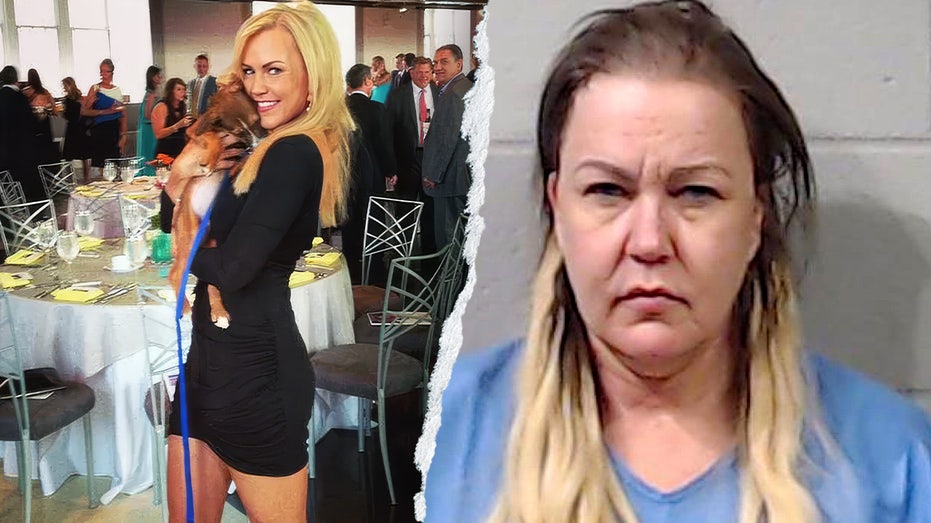
The woman accused of stabbing her mother in their Wichita home reportedly told officers she did it “to save herself.” Yet the murder case has stopped before a jury ever heard those words.
In Sedgwick County District Court in Kansas, former television news anchor Angelynn “Angie” Mock, 48, has been charged with first-degree murder in the stabbing death of her 80-year-old mother, Anita Avers. According to reporting by Fox News, Judge Jeffrey Goering recently ruled that Mock is not mentally competent to stand trial, which has paused the criminal proceedings while she undergoes psychiatric treatment at a state hospital.[1]
A Killing Inside A Shared Wichita Home
According to information attributed to police and court records in Fox News reporting, officers were dispatched on the morning of Halloween to the Wichita home that Mock shared with her mother. Dispatch logs cited in that coverage state that when officers arrived, they found Mock outside with cuts on her hands. Inside, they found Avers with multiple stab wounds.
Avers was taken to a hospital and later died. Mock was treated for her injuries, then booked into the Sedgwick County Jail the same day, where she has remained in custody, according to that same reporting.[1]
A probable cause affidavit described in the Fox News account states that while at the scene, Mock made statements while talking to herself that suggested she believed her mother was the devil. Dispatch records also reportedly show that Mock told authorities she stabbed her mother “to save herself.” Those statements have not yet been tested in court through cross-examination because the case has not gone to trial.
A neighbor told local outlet KAKE, as summarized by Fox News, that Mock approached her vehicle with blood on her hands and body and asked for help calling 911. That neighbor has not yet testified in open court in this case, and full transcripts of any interviews have not been made public in statewide databases.
A Former News Anchor, Now A Defendant
Mock previously worked as a morning news anchor at KTVI in St. Louis between 2011 and 2015, then as an anchor at KOKH in Oklahoma City, according to Fox News reporting that reviewed her work history and public profiles.[1] At the time of her arrest, she was reportedly working in sales for a data management software company, based on her LinkedIn page.
Her public career as a local TV journalist has no known direct connection to the alleged offense, apart from drawing national attention once her name appeared in court filings and news reports. At this stage, Mock is presumed innocent of the murder charge. No jury has heard evidence, and no verdict has been reached.
The Court’s Competency Finding
During a recent hearing in Sedgwick County District Court, Judge Goering found that Mock is not mentally competent to stand trial, according to the Sedgwick County District Attorney’s Office statement cited by Fox News. The office said she has been ordered to a state psychiatric hospital for further evaluation and treatment and that all criminal proceedings are stayed during that period.[1]
The prosecutor’s office also stressed a point that often gets lost in public discussion. According to its statement, a finding of incompetency does not dismiss the case and does not mean the defendant is released. Instead, the case is effectively paused. If clinicians later find that Mock has been restored to competency, the court can restart proceedings and move toward trial.
The District Attorney’s Office did not publicly release the full mental health reports behind the judge’s ruling. Those details typically remain sealed or highly restricted, which means the specific diagnoses, test results, and expert opinions the judge relied on are not available for public review.
Mental Illness Allegations Enter The Record
According to court documents obtained by Wichita TV station KAKE and described in the Fox News article, Mock’s stepfather told investigators that she had previously been diagnosed with schizoaffective disorder and had experienced delusions and depression.[1] Those statements are allegations contained in investigative records, not yet tested through trial testimony.
Schizoaffective disorder is a mental health condition that includes symptoms of schizophrenia such as hallucinations or delusions along with mood disorder symptoms, according to the National Institute of Mental Health.[2] The condition can significantly affect a person’s ability to think clearly, manage emotions, and function in daily life. Whether and how any such diagnosis applies to Mock at the time of the alleged offense would be a question for experts in a courtroom setting.
The probable cause affidavit referenced in news coverage, which says Mock referred to her mother as the devil and spoke of needing “to save herself,” fits the description of persecutory or religiously themed delusions that clinicians sometimes see in serious mental illnesses. That does not, by itself, answer the legal questions about her current competency or her criminal responsibility at the time of the killing.
What Kansas Law Requires On Competency
Under Kansas law, a defendant cannot be tried if they are found incompetent to stand trial. The key statute, K.S.A. 22-3301, defines an incompetent person as someone who, because of mental illness or developmental disability, is unable to understand the nature and purpose of the proceedings against them or to assist in making their defense.[3]
In practical terms, judges and mental health evaluators look at questions such as:
Item 1: Can the defendant understand the charges and the possible penalties?
Item 2: Does the defendant grasp the roles of the judge, prosecutor, defense attorney, and jury?
Item 3: Can the defendant communicate reasonably with their lawyer and make decisions about strategy?
If clinicians and the court conclude that a defendant cannot meet those basic thresholds, Kansas law requires the judge to suspend the criminal case and order treatment intended to restore competency. That can involve hospitalization, medication, and ongoing evaluation.
Competency to stand trial is separate from an insanity defense or a finding of diminished criminal responsibility. Competency focuses on a defendant’s current ability to participate in the legal process. Insanity defenses, which have their own strict requirements under Kansas law, address the person’s mental state at the time of the alleged crime. Prosecutors in Sedgwick County have not said publicly whether they anticipate any future insanity-related defense in Mock’s case.
What Happens Next In The Mock Case
For now, Mock’s case is in a holding pattern. She remains charged with first-degree murder, she remains in custody, and the state’s psychiatric system now has responsibility for her care and evaluation. The length of her stay at the hospital will depend on treatment progress and findings by clinicians, which are reviewed periodically by the court.
If doctors report that Mock has regained competency, Judge Goering can order the case back onto the active criminal docket. At that point, the usual pretrial process would resume, including motions, potential plea discussions, and, if no agreement is reached, a trial where a jury would hear the evidence and decide guilt or innocence.
If, on the other hand, clinicians ultimately conclude that she is unlikely to ever be competent, Kansas law provides mechanisms for longer-term civil commitment or other legal dispositions, but those options depend on detailed findings that are not yet before the court.
What remains unknown in public records is how quickly Mock’s condition might change, how closely her reported statements match the full investigative record, and whether a future jury will ever hear from the neighbor who says she saw Mock asking for help with blood on her hands. Until the court receives new reports from the state hospital and holds another hearing, the killing of Anita Avers sits in a legal pause, with a serious charge filed and the central question of Mock’s mental state still unresolved.