

By the time deputies reached the Bradenton neighborhood shortly after midnight, one man lay dead in the street, and investigators were already treating the shooter as a victim, not a suspect.
Local prosecutors have since ruled the killing a justified act of self-defense. The account that supports that conclusion, however, comes almost entirely from law enforcement, with little public record yet available beyond brief statements and news summaries.
What Investigators Reported That Night
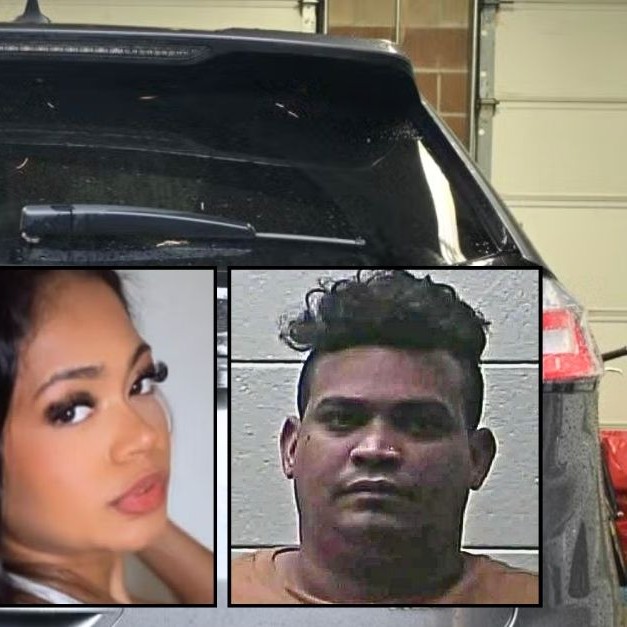
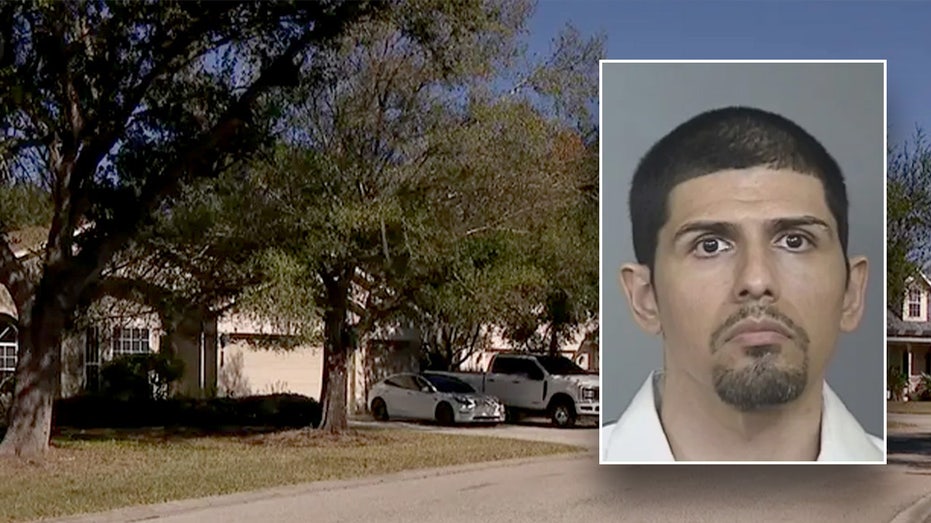
According to reporting by Fox 13 Tampa Bay, citing the Manatee County Sheriff’s Office, 36-year-old Nicholas Palomo followed a woman who was out walking her dog in Bradenton, Florida, in the early minutes of New Year’s Day. Deputies said Palomo, a previously convicted felon, attempted to force the woman into his vehicle.
The woman was described as managing to escape and run back toward her home. She alerted her husband, who then armed himself and went outside to confront Palomo, according to the sheriff’s office account as reported by Fox 13 and Fox News Digital.
Detectives told reporters that Palomo began acting in a threatening manner and advanced toward the husband. At that point, investigators say, the husband fired a single shot that struck Palomo in the chest.
Manatee County deputies arrived at approximately 12:27 a.m. and attempted life-saving measures. An autopsy later found that Palomo died at the scene from that single gunshot wound, according to Fox News Digital’s summary of the sheriff’s office findings.
Before the alleged abduction attempt, Palomo had reportedly caused a disturbance at a nearby Circle K convenience store while appearing to be under the influence of drugs. That detail also comes from the sheriff’s office, as relayed through local media.
A Prior Kidnapping Conviction
Both Fox 13 Tampa Bay and Fox News Digital report that Palomo had previously served time in prison for kidnapping and other crimes, citing information from Manatee County authorities.
Those past convictions are central to how officials have publicly framed the case. They underscore the narrative that the woman and her husband were confronted by someone with a history of serious violence, not simply an unknown stranger at their curb.
What has not been made public so far is the specific case history. Court files for the prior kidnapping, including charging documents and sentencing records, have not been released in connection with this incident. Without those, members of the public must rely on the brief description of Palomo as a “36-year-old felon who had previously gone to prison for kidnapping and other crimes” that appears in the media coverage.
The Self-Defense Determination
After reviewing the shooting, the local State Attorney’s Office determined that the husband’s actions were justified and that he would not face criminal charges, according to Fox 13 and Fox News Digital.
Prosecutors in Florida evaluate such cases under the state’s self-defense laws, including what is commonly known as the Stand Your Ground statute. Under section 776.012 of the Florida Statutes, a person is justified in using deadly force if they reasonably believe it is necessary to prevent “imminent death or great bodily harm” to themselves or another person and if the person against whom force is used is attempting to commit a forcible felony.
The same statute also states that a person who is in a place where they have a right to be “has no duty to retreat and has the right to stand his or her ground” if those conditions are met.
Based on the publicly available summary, investigators concluded that Palomo had just attempted a violent felony against the woman and that he advanced on the armed husband in a threatening way. Within that framework, the State Attorney’s Office found the shooting aligned with the statute’s protections for defensive use of deadly force.
The exact materials prosecutors reviewed, such as written reports, any surveillance footage, and statements from the husband or potential witnesses, have not been released. The State Attorney’s Office’s full written justification has also not been posted publicly at the time of this writing, at least in the outlets that have covered the case.
Information the Public Has Not Seen
While the narrative presented by law enforcement is relatively clear, significant elements of the incident remain outside public view.
Item 1: Independent witnesses. It is not yet clear whether any neighbors or bystanders witnessed the confrontation or provided statements that corroborate or complicate the official account. Local reporting has not identified any such witnesses.
Item 2: Video or audio evidence. Authorities have not said whether home security cameras, doorbell video, or store surveillance captured either the alleged attempted abduction or the shooting itself. No 911 recordings related to the incident have been released in the coverage to date.
Item 3: Palomo’s condition. Officials told reporters that Palomo appeared to be under the influence of drugs earlier that night, based on his behavior at a Circle K. Toxicology results, if obtained during the autopsy, have not yet been made public in news accounts.
Item 4: The decision to confront. The sheriff’s office summary describes the husband going outside after being warned by his wife. It does not detail whether he called 911 before or after confronting Palomo, whether he considered remaining inside, or how much time passed between the wife’s escape and the shot being fired.
Item 5: The precise threat. Investigators have said Palomo acted in a threatening way and advanced toward the husband. They have not publicly described his exact movements, words, or gestures, nor have they said whether he possessed any weapon.
Without these elements, the public view of the case rests on a relatively narrow set of claims: that Palomo had just attempted an abduction, that he advanced menacingly toward the husband, and that a single gunshot ended the encounter.
Privacy, Marsy’s Law, and Public Accountability
The names of the husband and wife have not been released. Authorities cite Marsy’s Law, a 2018 amendment to the Florida Constitution that expanded rights for crime victims, including the right to keep information that could identify them out of public records.
Article I, Section 16 of the Florida Constitution states that a victim has the right “to prevent the disclosure of information or records that could be used to locate or harass the victim or the victim’s family.” In this case, Bradenton authorities have treated the husband and wife as victims of an attempted kidnapping, and that status has shielded their identities from public release.
Supporters of Marsy’s Law argue that anonymity can protect people who have already suffered trauma and may be at risk of retaliation. Critics, including some open-government advocates, have raised concerns that broad application of the law can limit transparency in high-stakes cases, especially when police officers or armed civilians use deadly force in public settings.
Here, the combination of Marsy’s Law, Florida’s expansive self-defense protections, and a relatively quick prosecutorial decision means that the core facts presented to the public come almost entirely from one source: the sheriff’s office investigation, as filtered through local media.
An Open Record That Is Not Fully Open
For now, the Bradenton shooting sits in a familiar space for Florida self-defense cases. Prosecutors have spoken with their decision. The person who fired the fatal shot is legally described as a victim. The person who died is described as an armed felon who had just committed a forcible crime.
What remains unknown outside official circles is how fully the private evidence, from potential video to forensic reports, lines up with that story, and whether any of it will become accessible to the wider public. Until more of that record is released, the only detailed account of those minutes between a woman walking her dog and a man dying in the street will remain the version written by law enforcement.