

Donors thought they were backing street outreach and food drives in Boston. Today, the organizer who asked for that money has admitted in federal court that some of it paid for personal bills instead, and she will not serve a day in prison.
According to a recent Justice Department announcement cited by Fox News, Boston activist Monica Cannon-Grant, founder of the nonprofit Violence in Boston, has been sentenced in a federal fraud case to four years of probation and ordered to repay $106,003. Federal prosecutors had urged the court to impose an 18-month prison term instead.
From Celebrated Organizer to Federal Defendant
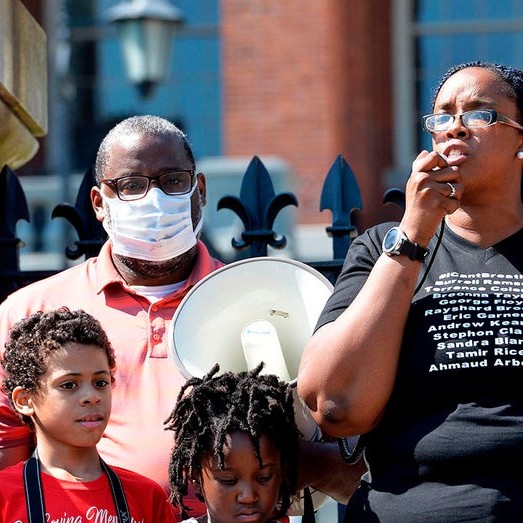
Cannon-Grant built a public profile as a forceful voice on racial justice and community violence in Boston. She and her late husband, Clark Grant, founded Violence in Boston, often referred to as VIB, to support shooting victims, organize food distributions, and advocate for policy changes in the city’s neighborhoods.
Her prominence surged during the nationwide protests that followed the 2020 killing of George Floyd. Boston Globe Magazine named her one of its “Bostonians of the Year” in 2020, praising her organizing work, and the Boston Celtics honored her with a Heroes Among Us award the same year, recognition documented on Boston Globe and team platforms.
Violence in Boston presented itself as a grassroots nonprofit that could channel donations directly into street-level aid. The group ran mutual aid programs, community events, and violence prevention efforts. That public image helped attract tens of thousands of dollars in private donations and government-linked pandemic support.
Behind the scenes, federal investigators say, key financial details were very different from what donors and public agencies were told.
What Investigators Say Went Wrong
In early 2022, federal prosecutors in Massachusetts announced an indictment charging Cannon-Grant and Clark Grant with a series of financial crimes tied to Violence in Boston and pandemic-era benefit programs. The indictment, described in Justice Department materials, laid out 27 counts, including wire fraud, mail fraud, unemployment fraud, and tax offenses.
According to the government’s allegations, which Cannon-Grant has now partly admitted as part of her guilty plea, the couple did the following:
Item 1: Diverted charitable donations given to Violence in Boston into personal spending, including travel and other household costs.
Item 2: Obtained nearly $54,000 in pandemic relief funds and used some of that money, along with other nonprofit funds, to cover personal expenses such as an auto loan and car insurance.
Item 3: Misrepresented their income to Boston’s Office of Housing Stability to secure roughly $12,600 in rental assistance that they were not entitled to receive.
Item 4: Worked to obtain nearly $44,000 in unemployment benefits for a family member by submitting forged employment documents to the Massachusetts Department of Unemployment Assistance.
Item 5: Filed false federal tax returns for 2017 and 2018 and failed to file returns at all for 2019 and 2020.
Postal inspectors and federal prosecutors framed the pattern as systematic abuse of both charitable trust and emergency relief programs created during the COVID 19 crisis. Nicolas Bucciarelli, acting inspector in charge of the U.S. Postal Inspection Service’s Boston Division, was quoted by Fox News as saying, “Ms. Cannon-Grant’s actions were crimes of greed and opportunity.”
Those allegations fit a broader national picture. The Justice Department has documented widespread fraud targeting pandemic-era assistance, and it maintains a dedicated portal for such cases. The Cannon-Grant prosecution placed a high-profile local activist within that larger wave of financial crime cases.
The Guilty Plea and a Lenient Sentence
According to Fox News’s summary of the case, Cannon-Grant pleaded guilty in September 2025 to 18 of the 27 counts she originally faced. The counts she admitted to include wire fraud, mail fraud, and failing to file tax returns. Other counts were not pursued to conviction as part of the resolution.
That plea changed the status of many of the original allegations. Conduct that had been described as “alleged” in the 2022 indictment is now criminal behavior Cannon-Grant has acknowledged in court, at least with respect to the specific counts included in the plea agreement. The details of that agreement, including any concessions by prosecutors, are contained in federal court records that have not been fully reported in public summaries.
Sentencing took place in federal court in Boston before U.S. District Judge Angel Kelley. Prosecutors asked for a term of 18 months in prison, according to Fox News, citing the breadth of the fraud and the misuse of charitable funds. Instead, Judge Kelley imposed a significantly lighter punishment. Cannon-Grant received four years of probation and an order to pay $106,003 in restitution.
The available reporting does not spell out Judge Kelley’s full reasoning for rejecting a prison term. Federal judges must consider advisory sentencing guidelines, the defendant’s history, the nature of the offense, and the need for deterrence when they decide on a sentence. Within that framework, they retain wide discretion, which can produce outcomes that differ sharply from what prosecutors request.
Clark Grant, who had been charged alongside Cannon-Grant, is described in recent coverage as her late husband. His death means the criminal case now centers solely on Cannon-Grant, including responsibility for repayment of the ordered restitution.
What Happens to Violence in Boston and Its Donors
Violence in Boston announced in 2022 that it was suspending operations and shutting down in light of the federal indictment. Yet, as Fox News noted, the nonprofit’s Facebook page has continued to post content since then, leaving some confusion about whether any programs or fundraising have quietly continued.
Public records filed with the Internal Revenue Service and state charity regulators, which are accessible through official portals and nonprofit databases, would show whether VIB has submitted recent financial disclosures or formally dissolved. Those filings have not been widely discussed in national coverage of the sentencing, so the current legal and financial status of the organization remains only partly documented in the public record.
For donors and community members, several practical questions are still open. The restitution order of $106,003 is meant to repay specific losses identified by the court, but it is not yet clear how much of that money will ultimately be collected or how it will be distributed among victims, which can include government agencies and private donors. Federal restitution processes can take years, especially when a defendant’s earning capacity is limited.
The case also highlights gaps in oversight. Violence in Boston grew quickly in visibility and fundraising during a period of intense public focus on racial justice. Small nonprofits often lack the layers of governance and auditing found in larger charities. City agencies, private foundations, and individual donors all contributed resources to VIB despite limited independent scrutiny of its finances. The federal indictment suggests that irregularities persisted for years before investigators intervened.
At the same time, Cannon-Grant’s history of visible community work and her national recognition complicate public reaction to the sentence. For some residents, the admissions in her guilty plea may coexist with memories of concrete help provided through food distributions, marches, and mutual aid events. Others may see the probationary sentence as too lenient for a leader who used the language of justice to solicit funds that prosecutors say were partly misused.
What is certain, based on court filings and federal statements, is that a figure once celebrated as a symbol of Boston’s fight against violence is now a convicted fraud defendant who avoided incarceration. Less clear is how much of the financial harm will ultimately be repaired, and how Boston’s institutions will change their approach to oversight of charismatic leaders who ask the public to trust them with both money and a mission.