

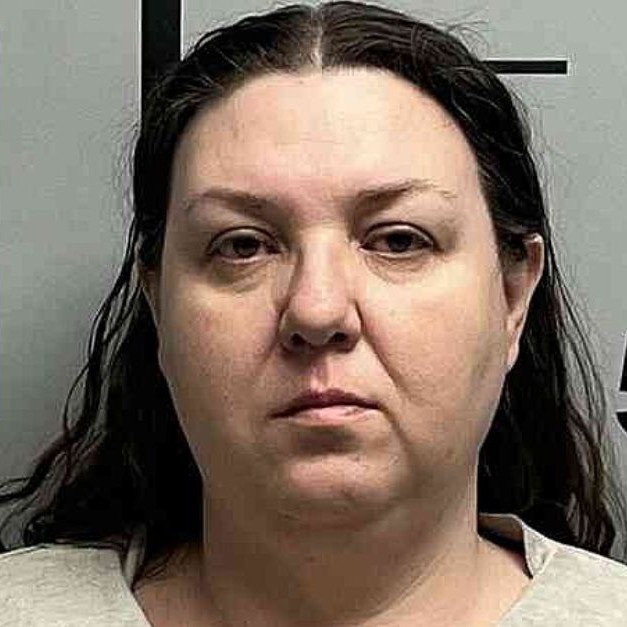
In a Benton County courtroom, prosecutors secured two life-without-parole sentences for Amber Dawn Waterman, yet the plea agreement that spared her from the death penalty still raises unresolved questions about how a Facebook conversation turned into a deadly ambush of a pregnant woman.
The 45-year-old Arkansas resident admitted to killing 33-year-old Ashley Bush and Bush’s unborn daughter, Valkyrie Grace Willis, in 2022 after luring Bush with a fake job offer. According to court records and prosecutors’ statements, the same conduct already yielded federal convictions, creating a rare state-federal overlap that had to survive a double jeopardy challenge before the state case could proceed.
State Case Ends With Consecutive Life Sentences
In a February 2026 hearing described by Law & Crime and local reporters, Benton County Circuit Judge Brad Karren accepted Waterman’s guilty plea to two counts of premeditated and deliberate capital murder. The counts covered Bush and the unborn child as separate victims under Arkansas law.
Judge Karren ordered two sentences of life in an Arkansas state correctional facility without the possibility of parole. The judge directed that those terms run consecutively to each other and consecutive to Waterman’s federal sentences for kidnapping resulting in death and causing the death of a child in utero, according to Law & Crime.
Waterman’s plea in state court followed earlier federal proceedings, in which she admitted to the kidnapping that prosecutors say led directly to both deaths. By pleading guilty in Arkansas, she avoided a capital trial and the possibility of a death sentence that state prosecutors had publicly sought.
According to Law & Crime, the plea agreement also obligates Waterman to provide additional information about the crime to prosecutors, a condition described as aimed at giving Bush’s family more complete answers about what happened.
Federal Conviction and Double Jeopardy Fight
Before Waterman faced capital murder charges in state court, federal prosecutors charged her with kidnapping resulting in death and causing the death of a child in utero. She pleaded guilty to those counts in July 2024 in federal court, according to Law & Crime and a U.S. Department of Justice news release.
The dual prosecutions raised a predictable defense question: whether the state case was barred by double jeopardy. Waterman’s lawyers argued that after the federal conviction, Arkansas could not prosecute her again for the same underlying conduct.
The Arkansas Supreme Court rejected that argument. In an opinion summarized by Law & Crime, the court held that the state prosecution was not barred, reasoning that the state and federal governments are separate sovereigns with authority to enforce their own criminal laws arising from the same events. That ruling cleared the way for Benton County prosecutors to proceed toward a capital trial, which ultimately ended with the guilty plea instead.
The result is a layered punishment structure. Waterman now faces federal sentences for the kidnapping conduct and state life sentences for the intentional killings. In practical terms, the consecutive nature of the state terms and their placement after the federal time mean she is not expected to be released from custody.
Facebook Contact and the Job Offer Ruse
The factual narrative of the crime is drawn largely from federal charging documents, plea admissions, and local reporting. According to those records, Waterman contacted Bush on Facebook using a false name, “Lucy,” while Bush was 31 weeks pregnant. She represented herself as someone who could help Bush find work and told her she had a job opportunity Bush could fill.
That online contact led to an in-person meeting on October 28th, 2022, at a public library in Gravette, Arkansas. Prosecutors say that at the library, Waterman offered Bush a work-from-home position for a company that she claimed operated out of Arkansas.
Authorities allege that the contact was never about legitimate employment. Instead, they say, it was part of a plan to gain Bush’s trust and isolate her while she was visibly pregnant.
October 31st: Abduction and a Contradictory Birth Claim
The federal news release, quoted by Law & Crime, sets out the crucial timeline for October 31st, 2022. At roughly 11:45 a.m., Bush met Waterman at the Handi-Stop convenience store in Maysville, Arkansas. Under the pretext of going to meet a supervisor to discuss employment, Bush got into a truck driven by Waterman.
Prosecutors say Waterman then drove Bush to the Waterman residence in Pineville, also in Arkansas. What happened inside that home is not fully described in public filings, but its outcome is documented in medical and law enforcement records that were referenced in court.
At about 5 p.m. on October 31st, first responders were called to the Longview store in Pineville for an emergency involving a baby who was not breathing. According to the federal news release, Waterman initially told first responders she had given birth to the child in the truck while on the way to the hospital.
That account did not hold. In her later admissions, prosecutors say, Waterman acknowledged that the baby was Bush’s child, who died in utero as a result of the kidnapping that also resulted in Bush’s death. The contradiction between the roadside birth claim and her subsequent admissions is one of the starkest examples in the record of how investigators say Waterman tried to frame her actions before the evidence, and ultimately her own plea, caught up.
Autopsy Findings and Alleged Mutilation
A subsequent autopsy, as reported by Law & Crime, determined that Bush’s manner of death was homicide. The cause of death was listed as penetrating trauma of the torso.
Authorities say Waterman shot and killed Bush, then used a knife to attempt to remove the unborn child from Bush’s uterus. Investigators also allege that Waterman tried to burn Bush’s body. Those details, which stem from investigative findings and court records rather than from the plea colloquy alone, were referenced in prior coverage and have not been disputed in public filings by the defense.
Federal prosecutors linked the trauma and the timing to the death of the unborn child, which supported the separate federal charge for causing the death of a child in utero. Arkansas law, in turn, allowed state prosecutors to treat the fetus as a separate homicide victim in the capital murder case.
Victim Impact and Community Response
After the sentencing, the Benton County Sheriff’s Office issued a public statement underscoring how the case affected investigators and residents. “This case represents one of the most tragic and heinous crimes our detectives have ever encountered,” the agency said in a news release quoted by Law & Crime. “It deeply impacted our community and will remain with us forever.”
During the plea and sentencing hearing, Benton County Prosecuting Attorney Josh Robinson read victim impact statements from Bush’s family and friends, according to reporting by KNWA, an NBC affiliate in Northwest Arkansas. The statements focused on Bush’s desire to become a mother and the multilayered grief caused by the loss of both her and her unborn child.
“More than anything in this world, Ashley wanted to be a mother,” Bush’s aunt wrote, according to KNWA. “Trauma layered with shock and horror. A plea deal must not be interpreted as mercy or forgiveness.”
The aunt’s statement captures a tension that often surrounds plea agreements in high-profile violent cases. Prosecutors secured the maximum penalty short of death and avoided the uncertainties of trial, yet family members emphasized that they did not view the resolution as leniency.
What Remains Unanswered
As part of the plea deal, Law & Crime reported, Waterman is required to provide prosecutors with further information about the crime to help give Bush’s family additional closure. Officials have not publicly detailed what information remains unknown or what specific questions they hope she will address.
Key aspects of the case are documented: the online contact under a false name, the staged job opportunity, the abduction from a convenience store, the conflicting story about childbirth, the autopsy findings, and the overlapping federal and state convictions. What is less visible in the public record is any detailed account from Waterman about planning, motivations, or any other participants, if there were any, beyond what is contained in bare factual stipulations.
Procedurally, the criminal case against Waterman is now effectively closed, with life-without-parole sentences in both federal and state systems. Substantively, the long-term impact will continue through Bush’s family, who have signaled that legal finality does not equate to emotional resolution, and through investigators and judges who confronted one of the most disturbing cases in recent county history.
Whether Waterman’s required cooperation will add meaningful new information or simply confirm what is already in court records remains an open question.
Sources
- Law & Crime: Woman Who Killed Pregnant Victim She Met on Facebook Cut Fetus from Womb and Claimed Child as Her Own Is Sentenced
- KNWA: Amber Waterman Pleads Guilty in Benton County to Capital Murder Receives Two Life Sentences
- U.S. Department of Justice: Amber Waterman Pleads Guilty to Kidnapping Resulting in Death
- Arkansas Supreme Court: State of Arkansas v. Amber Dawn Waterman Double Jeopardy Opinion