

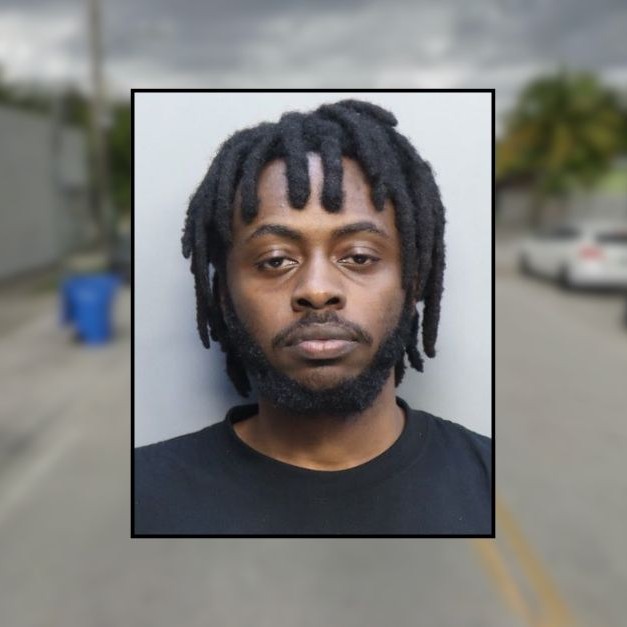
Police describe a fatal stabbing inside a small Miami-Dade home as the violent end of a dispute over a shared CashApp account. Prosecutors have charged 21-year-old Jawan McBride with first-degree murder in his brother’s death, yet public records leave open key questions about the argument, the alleged planning, and the victim’s identity.
TLDR
Miami-Dade prosecutors have charged 21-year-old Jawan McBride with first-degree murder after police say he stabbed his brother during a dispute over a shared CashApp account, with an arrest report citing prior messages, an 8-inch knife, and a fatal torso wound as key evidence.
A Digital Dispute in a Small Living Room
According to Law & Crime, which reviewed Miami-Dade County court records, McBride is charged with first-degree murder in connection with his brother’s death at a home on Northwest Fifth Court, just north of Miami. An arrest report summarized in multiple news accounts describes a confrontation that began not in a street or bar, but in the living room of the home the brothers shared.
On January 21st, McBride’s brother allegedly approached him about money in a joint CashApp account. The brother believed McBride had taken funds that belonged to him. The arrest report, as quoted by WPLG, states: “The victim was asking the defendant for money that was owed to him.” The dispute centered on digital funds that moved through a phone application, but unfolded face-to-face in a small residence.
Authorities say McBride told investigators that his brother was convinced he had taken money from the account and threatened to take McBride’s paycheck as payback. That alleged threat, framed by police as part of a growing feud over money, sets the stage for how prosecutors may argue motive and escalation in court.
In accounts described by the Miami Herald and WPLG, the confrontation did not end with the argument. The crucial details about what each brother did next now form the heart of the criminal case.
What the Arrest Report Alleges
The arrest report does more than describe a sudden fight. It lays out what police say is evidence of advance planning. According to the document, cited by Law & Crime and the Miami Herald, investigators found messages sent about three hours before the stabbing that described a plan to kill the victim.
One passage in the report, as quoted in coverage of the case, states: “There was evidence of messages (3) hours prior to the stabbing of the defendants’ plan to kill the victim on this same day.” That language, if presented at trial, will likely be central to the state’s argument that the killing was premeditated rather than an act of spontaneous rage or self-defense.
The arrest narrative goes on to describe McBride allegedly going into his room, arming himself with an 8-inch knife, and concealing it behind his leg as he exited. WPLG reported that when McBride returned to the common area, his brother was in the living room and began to yell and charge toward him. At that point, authorities say, McBride “swung the knife” into his brother’s torso.
Police and medical personnel were called to the home, and the injured brother was transported to a nearby hospital. Despite medical intervention, the victim was pronounced dead later that night. The arrest report, as summarized in these outlets, presents a sequence in which a dispute over mobile-app funds escalated into a deadly stabbing that investigators characterize as both planned and deliberate.
Autopsy Findings and the First-Degree Charge
An autopsy described in McClatchy-owned reporting found extensive internal injuries. According to that account, the victim suffered a perforated lung, stomach, diaphragm, and small intestine, and one of his lower left ribs was chipped. The medical examiner determined the cause of death to be sharp force injuries and ruled the death a homicide.
Law & Crime reported that McBride allegedly admitted to stabbing his brother during the argument over money. Those alleged statements, combined with the physical evidence and the messages cited in the arrest report, are part of what prosecutors now rely on to support a first-degree murder charge.
In Florida, a first-degree murder charge typically reflects an allegation of premeditation or a killing committed in the course of certain other serious felonies. Prosecutors do not publicly try their cases in detail in early filings, but the references to prior messages about a plan to kill, the alleged decision to retrieve and conceal a knife, and the fatal single blow to the torso all align with a theory that the stabbing was intentional and planned.
Separately, the question of pretrial release has already been addressed. According to Law & Crime’s review of court records, McBride was denied bond and remains held at the Turner Guilford Knight Correctional Center. In Florida, judges consider factors such as the seriousness of the charge, the strength of the evidence described in affidavits, and public safety when deciding whether to grant bond. A first-degree murder charge frequently results in continued detention while the case moves through the courts.
Unreleased Details and Conflicting Narratives
Even with these detailed allegations, the public record remains incomplete. The victim’s name had not been released in the reporting reviewed, and there is no publicly stated figure for how much money was at issue in the CashApp dispute. It is also not clear from available accounts how long the brothers had been sharing the account or whether previous conflicts over money had been reported to authorities.
The arrest report’s description of messages about a plan to kill appears to conflict, at least in tone, with its account of the immediate confrontation, in which the victim allegedly yelled and charged at McBride before the stabbing. How defense attorneys eventually reconcile those two elements, and whether they raise arguments about self-defense, diminished capacity, or other factors, is not yet reflected in available filings.
Additionally, the arrest report, as described in media accounts, does not quote the full text of the prior messages or specify who else, if anyone, saw them in real time. The context of those messages, their language, and how they are authenticated will likely be important evidentiary questions if the case proceeds to trial.
The involvement of a shared CashApp account places this case among a growing number in which routine digital financial tools appear in serious criminal allegations. Yet, in legal terms, the presence of a mobile payment platform is less significant than the core questions that will face a judge or jury: what McBride intended, what he believed was about to happen in the moments before he used the knife, and how much weight to give the alleged prior messages compared with the immediate physical confrontation.
What Comes Next in the Case
As of the reporting reviewed, no trial date had been publicly detailed, and prosecutors had not filed a full narrative beyond what appears in the arrest report and initial court records. That means important procedural steps, including formal discovery, possible motions to suppress statements or digital evidence, and any plea negotiations, remain out of public view for now.
For the victim’s family, whose loved one’s name has not yet appeared in court documents cited in the press, the case represents both a personal loss and a pending legal process. For McBride, the first-degree murder charge and denial of bond mean he is likely to remain in custody while attorneys litigate what happened on Northwest Fifth Court on January 21st and why. How a conflict over a shared CashApp account came to feature in an allegation of premeditated murder will ultimately be a matter for the courtroom, recorded in motions, testimony, and verdicts rather than in arrest reports alone.