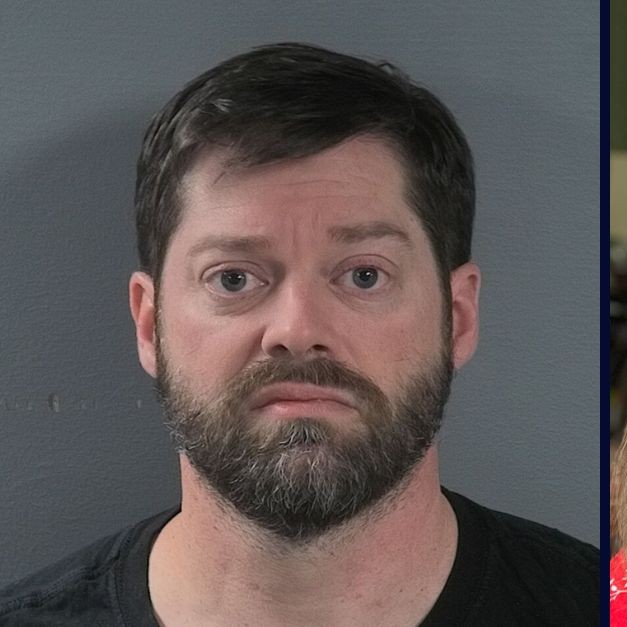


A 53-year-old Indiana man has been sentenced to 126 years in prison for killing his ex-wife and adult son inside a rural home that later burned, while prosecutors’ theory that he planned the attack with his then-wife will be tested again when she faces trial.
TLDR
Indiana’s Michael R. Kegg Jr received a 126-year sentence for killing his ex-wife, Malisa Kegg, and their son, Michael Kegg III, after a divorce hearing. Investigators say the house fire that followed was set to hide the shootings, as alleged accomplice Amanda Kegg awaits trial.
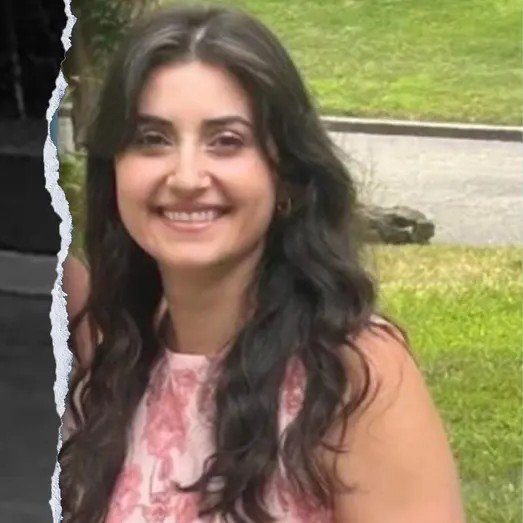
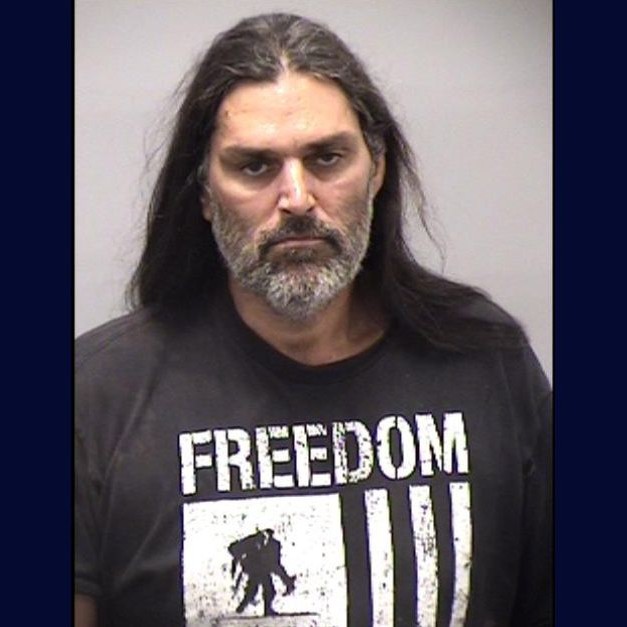
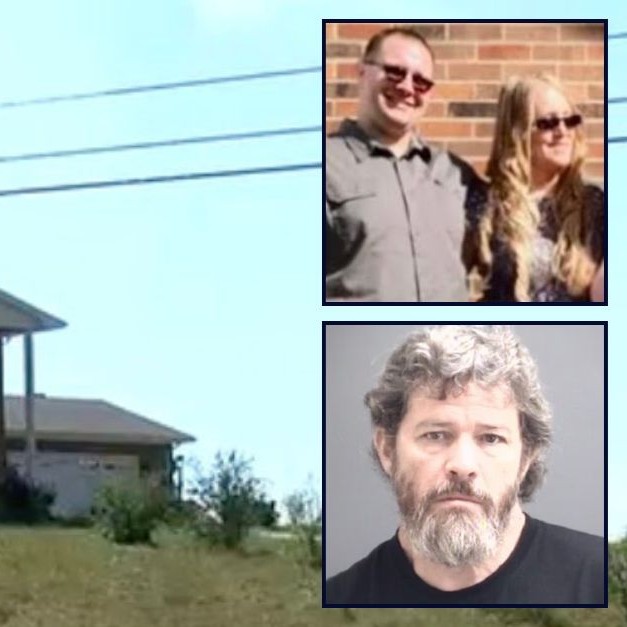
Inset, top to bottom: Michael Kegg III and Malisa Kegg (GoFundMe) and Michael Kegg Jr. (Gibson County Sheriff’s Office). Background: The house where the victims were killed in Francisco, Indiana.
Sentencing Marks End of One Prosecution
According to court records reviewed by Law&Crime, Gibson County Circuit Court Judge Jeffrey F. Meade ordered Michael R. Kegg Jr to serve the maximum sentence available under the charges. The judge imposed 64 years for the murder of 34-year-old Michael Kegg III and 62 years for the murder of 51-year-old Malisa Kegg, to be served consecutively, for a total of 126 years in an Indiana state prison.
Law&Crime reported that the killings took place about two weeks after Michael and Malisa appeared together for a divorce hearing. At that proceeding, a judge instructed Michael Kegg to complete a series of requirements within a short period, according to separate reporting by Town & Courier, a local outlet.
By the time of sentencing, a jury had already found Kegg guilty of killing his ex-wife and their son inside Malisa’s home near Francisco, a small community about 125 miles south of Indianapolis. The case moved from a fire call to a homicide investigation within hours of the first 911 report.
Fire Investigation Reveals Earlier Gunshots
According to a probable cause affidavit obtained by Law&Crime, the Gibson County Sheriff’s Office and the Francisco Fire Department responded on December 31st, 2024, to a report of a structure fire at a residence in the 7000 block of East State Road 64.
When crews brought the fire under control and entered the home, they found a body in the kitchen next to a container of accelerant. The remains were later identified as those of Michael Kegg III. A second body, identified as Malisa Kegg, was discovered in the living room.
Both victims had been burned, but the affidavit states that they also had gunshot wounds to the chest. Autopsies later concluded that the mother and son died from those gunshot wounds and that the shots were fired before the fire started. That finding undercut any suggestion that the blaze itself caused their deaths.
Investigators documented two spent .410-gauge shotgun shells near Malisa Kegg’s body and another spent shell next to her son’s body. A shotgun, also a .410-gauge, was discovered propped against a wall inside the home with an unfired shell still in the chamber, according to the affidavit.
Based on the scene, investigators wrote that they believed the shooter fired on the victims, staged the accelerant, and then set the fire in an attempt to erase evidence of what had happened. In the affidavit, they said Michael and his then-wife, Amanda Kegg, had “formulated a plan” to kill Malisa and Michael III and then lit the house on fire “to cover up the murders.”
Conflicting Accounts and a Bank Withdrawal
How the couple spent the hours around the fire became a central focus of the investigation. According to the affidavit, detectives first interviewed Amanda Kegg, who was Michael’s wife at the time and is now charged as an alleged co-conspirator.
Investigators wrote that Amanda initially told them she and Michael had argued on the night of December 30th, 2024, and that she did not see him at all on December 31st. Later, she changed her account. She said that in the early morning hours of December 31st, Michael told her to leave her phone at home and drive him to Francisco so he could “take care of something.” She said he also left his phone behind.
Amanda told detectives she dropped Michael at a park and waited in the car for about two hours before leaving. According to Law&Crime’s summary of the affidavit, investigators later learned that she went to Michael’s bank during that window and withdrew $800 from an ATM, which the affidavit describes as the maximum allowed per day.
When questioned, Michael Kegg gave his own version of the same period. According to the affidavit, he said he walked from the park to his ex-wife’s home to work on a vehicle. He told investigators he spoke with Malisa and their son, and that the pair told him “he needed to leave.” He claimed he left while both were still alive.
The affidavit records his statement in detail: “Michael Kegg (Jr.) advised that he left the residence and walked through the field out of the back of the house, and toward Hopkins Park. Michael Kegg (Jr.) advised that as he was walking away from the residence, he heard and saw lights and sirens responding toward Francisco.”
Those statements now sit next to physical evidence that indicates the victims were shot before the fire and that accelerant was present near one of the bodies. At trial, jurors were asked to weigh the competing accounts against the forensic findings and the timing of the fire response.
Divorce Hearing and Utility Shutoff Request
The killings occurred in the shadow of a long-running marital split. Law&Crime reported that Michael and Malisa had appeared for a divorce hearing roughly two weeks before the fire. Town & Courier reported that, during the hearing, the judge ordered Michael to complete multiple tasks in a compressed time frame, including financial obligations.
Town & Courier also reported that, one day before the fire, Michael went to the Francisco town hall and demanded that the water be shut off at Malisa’s home. According to that reporting, he told officials he did not want to keep paying her utility bills.
Those steps, combined with the investigators’ account of the fire scene, fed into the prosecution’s narrative that the killings were not spontaneous. In the affidavit, investigators wrote that Michael and Amanda “formulated a plan” ahead of time, framing the divorce hearing and the utility dispute as part of a broader breakdown in the relationship.
Legally, the two cases are now on different tracks. Michael has been convicted of the murders and sentenced to a 126-year term in state custody. Amanda is charged with two counts of murder and two counts of conspiracy to commit murder, according to Law&Crime. She is scheduled to stand trial in November.
Amanda remains presumed innocent unless prosecutors prove the charges beyond a reasonable doubt in court. Her trial is expected to revisit the same evidence that convicted Michael, including the changing statements to detectives, the bank withdrawal, the forensic findings inside the burned home, and the investigators’ conclusion that the fire was set “to cover up the murders.”
Defendants convicted of serious felonies in Indiana generally have the right to appeal their convictions and sentences, so Michael’s 126-year term may still face review by higher courts. For now, the Gibson County case continues in two directions at once, with one defendant already sentenced and another waiting to see how a jury interprets the same timeline, records, and contested accounts.