


Case overview
Between 1986 and 1989, eight young people were killed or disappeared along Virginia’s Colonial Parkway and nearby areas in what investigators came to view as a connected series of crimes. Four incidents involving couples targeted in isolated locations produced overlapping evidence patterns, but no arrest has ever been made.
The first incident
On October 12, 1986, Cathleen Thomas, a 27-year-old Naval Academy graduate, and Rebecca Dowski, a 21-year-old college student, were found dead inside Thomas’s Honda Civic in a pulloff along the Colonial Parkway near Williamsburg. Both had been strangled and their throats cut. The car had been pushed partway into the woods. Gasoline had been poured inside the vehicle and over the bodies, though no fire was set. The keys were missing.
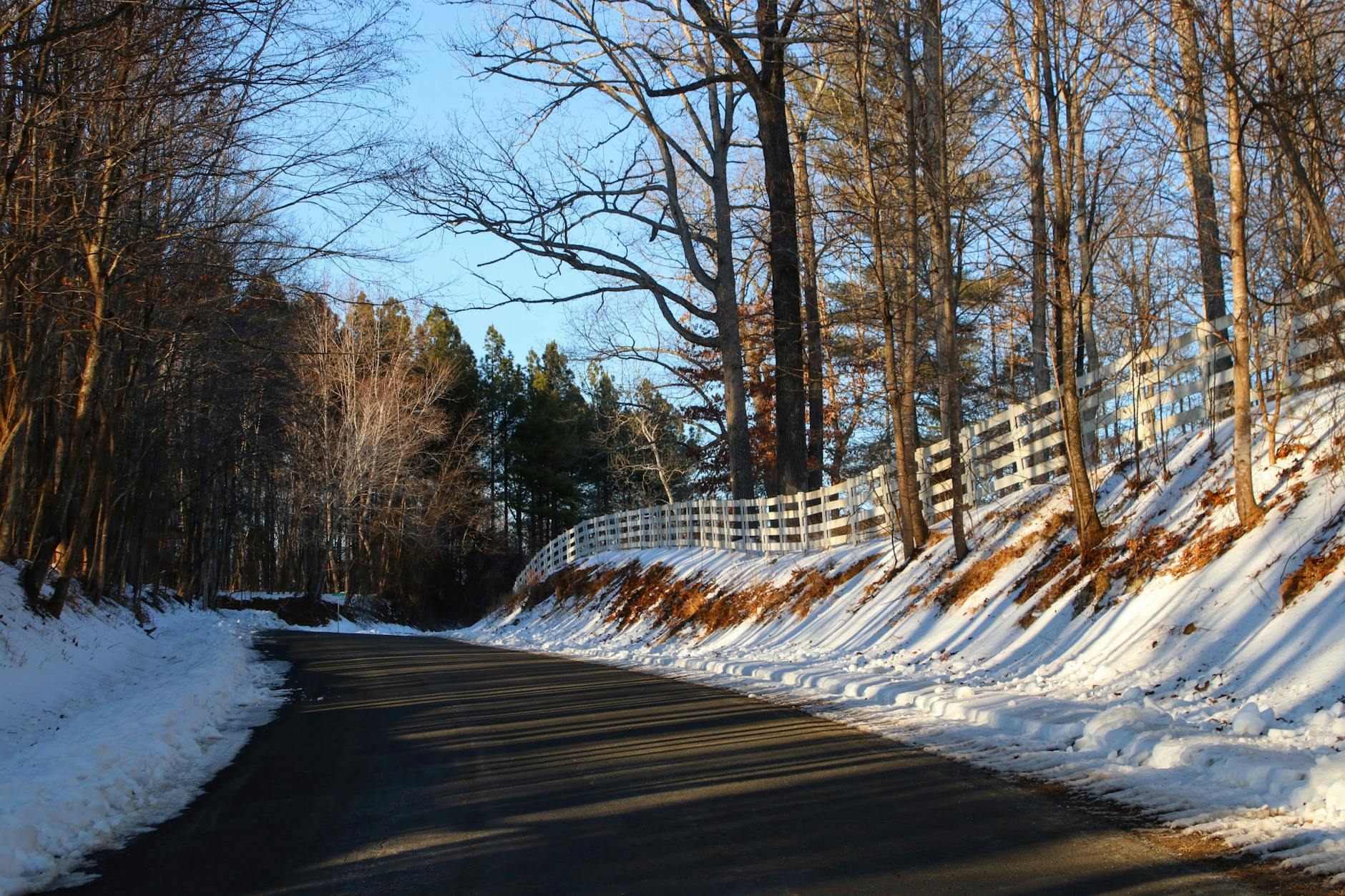
The crime scene was partially concealed but not remote. The Colonial Parkway, a scenic roadway connecting historic sites in the area, was known for secluded overlooks used by couples. The choice of location would become a recurring feature.
The second case
On September 20, 1987, David Knobling, 20, and Robin Edwards, 14, were found shot to death at the Ragged Island Wildlife Refuge near the James River, roughly 20 miles from the first crime scene. Knobling’s pickup truck was found at a nearby boat landing with the doors open and the radio on. Their bodies were discovered three days later along the shore. Both had been shot in the head.
The location was isolated and accessible by vehicle. The age gap between the victims and the presence of a firearm introduced variables that complicated direct linkage, but the targeting of a couple in a rural area raised early questions about a potential connection.
The disappearance that followed
On April 9, 1988, Richard Call, 20, and Cassandra Hailey, 18, vanished after leaving a party. Call’s Toyota Celica was found the next day on the Colonial Parkway with the doors unlocked, keys in the ignition, and Hailey’s purse and shoes inside. No signs of a struggle were evident. Their bodies have never been found.
The abandoned vehicle, once again positioned along the parkway in a quiet area, reinforced the pattern. Investigators began treating the cases as potentially linked, though no forensic evidence connected them at the time.
The final known incident
On September 5, 1989, Daniel Lauer, 21, and Annamaria Phelps, 18, disappeared while traveling from Virginia Beach to Lauer’s family home. Lauer’s car was found abandoned at a rest stop along Interstate 64. Their bodies were discovered on October 19, 1989, in a wooded area near the New Kent rest stop, heavily decomposed. Cause of death could not be determined. Personal items were missing.
This case marked the last in the suspected series. It differed in location, occurring off the Colonial Parkway itself, but shared key victim and situational characteristics with the earlier incidents.
What linked the cases
Investigators identified several overlapping features across the four incidents. All victims were young and traveling in pairs. All were found in or near their vehicles. All crimes occurred in rural or semi-secluded areas within a confined geographic zone in southeastern Virginia. Three of the four incidents took place along or near the Colonial Parkway.
Despite these commonalities, hard forensic links remained elusive. No DNA, fingerprints, or ballistic evidence connected the scenes. Investigators considered the possibility of multiple offenders or copycat crimes, but the cluster of victims, timing, and geography suggested coordination or repetition by a single actor.
The FBI joined the investigation in 1987. A task force was established. Profilers suggested the offender likely had familiarity with the area, access to transportation, and comfort operating in isolated environments. The crimes appeared planned, not opportunistic.
Investigative challenges
The cases were handled by multiple jurisdictions, complicating coordination. The York-Poquoson Sheriff’s Office, Virginia State Police, and FBI all participated at various points, but no unified command structure governed the investigation in its early years. Evidence protocols varied. Communication between agencies was inconsistent.
Crime scene contamination was alleged in at least one case. Investigators later acknowledged that some physical evidence was not preserved according to modern standards. DNA testing was not widely available during the initial investigations, and retroactive testing of existing evidence produced limited results.
Publicity around the cases generated hundreds of tips, but none led to an arrest. Several persons of interest were identified and questioned over the years, but no charges were filed. Some suspects died before being conclusively ruled in or out.
Theories and suspects
Public speculation centered on the possibility of a serial killer targeting couples in isolated areas. Some investigators floated the theory of a perpetrator posing as law enforcement, given the victims’ apparent willingness to stop or exit their vehicles. Others considered whether the offender had military or institutional ties, given the proximity of several military installations.
No public suspect has been named. In 2010, former FBI profiler Jim Clemente stated publicly that he believed the cases were linked and that the offender was likely dead. Other investigators have expressed uncertainty about linkage, particularly regarding the second incident involving gunfire.
In recent years, renewed attention has been paid to DNA testing and genealogical databases. Virginia State Police confirmed in 2018 that evidence from some of the cases was being reexamined using modern forensic methods.
The families and public pressure
Families of the victims have maintained consistent pressure on law enforcement to treat the cases as active and connected. In 2018, the FBI faced public backlash after crime scene photographs were leaked to the media, prompting an internal investigation and public apologies. The leak reignited public interest and led to renewed calls for transparency and progress.
Several family members formed advocacy groups and worked with investigative journalists and documentary producers to keep the cases visible. They have criticized what they describe as jurisdictional fragmentation and insufficient prioritization of cold case resources.
Current status
As of 2025, the Colonial Parkway murders remain unresolved. No arrests have been made. No definitive forensic link has been established across all four incidents. Virginia State Police continue to classify the cases as open and under investigation. The FBI has stated that it remains available to assist, though the cases are not currently assigned to a dedicated task force.
Advances in forensic genealogy have raised the possibility of future breakthroughs, but investigators have not publicly confirmed whether viable genetic material exists in sufficient quantity or quality to support such efforts. The cases remain among the most studied unresolved serial crime clusters in the eastern United States.
Where to look next
- Documentary: “Lovers’ Lane Murders” (Oxygen)
- Book: “A Special Kind of Evil” by Fred Atwell and Maureen Callahan
- Podcast: “Colonial Parkway Murders” (“Dark Poutine”, Curiouscast)