
Case overview
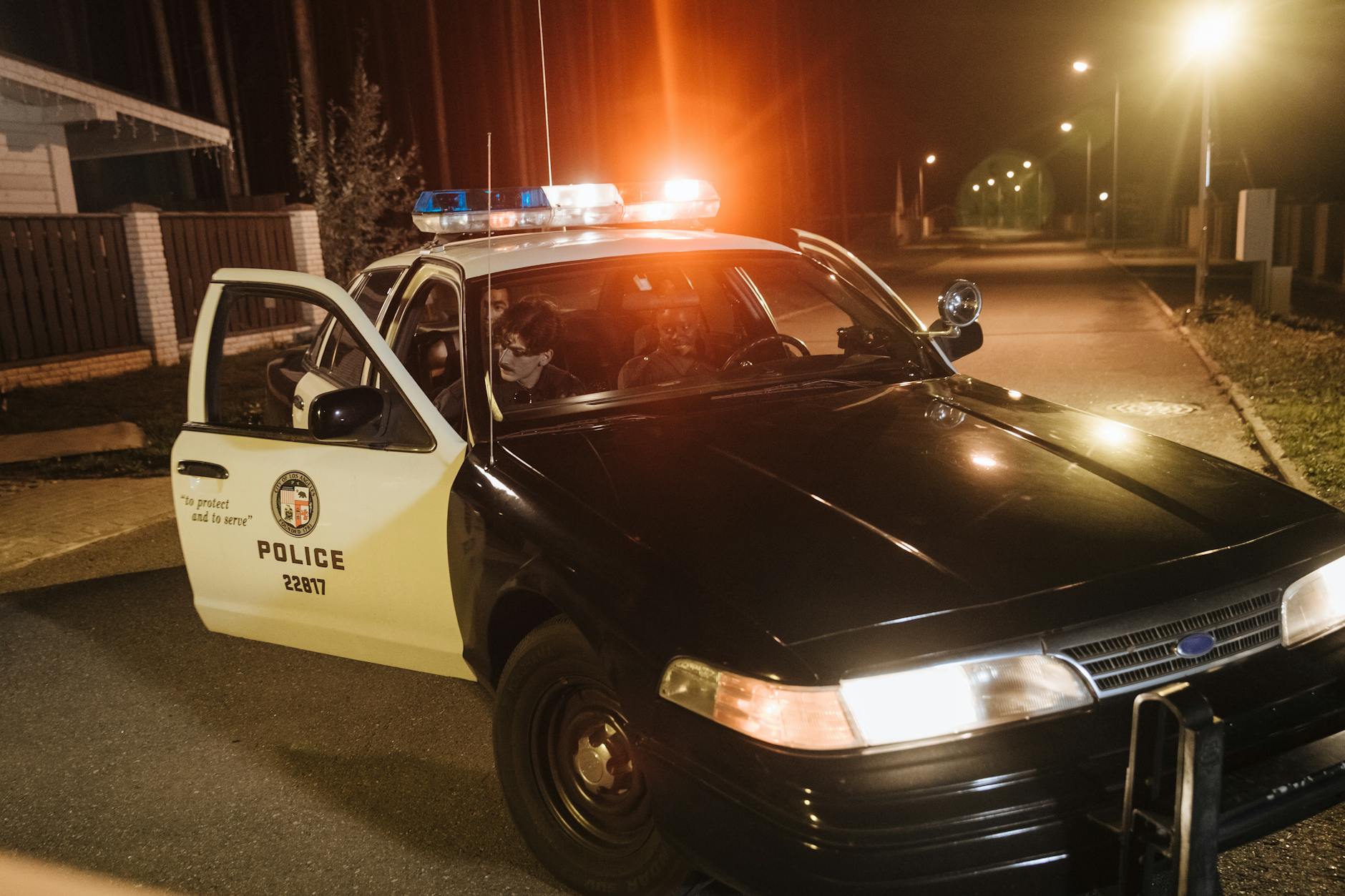
On December 27, 1986, 20-year-old San Diego State University student Cara Knott was found dead beneath a remote freeway bridge after what appeared to be a routine traffic stop. The California Highway Patrol officer who had pulled her over became the primary suspect. The case turned on circumstantial evidence, conflicting statements, and forensic findings that prosecutors used to argue a deadly encounter had been staged to look like an accident.
The last known movements
Cara Knott left her boyfriend’s home in Escondido, California, around 7:00 p.m. on December 27, 1986. She was driving north on Interstate 15 toward her parents’ home in El Cajon, a route that took her through a stretch of freeway known for limited visibility and sparse traffic after dark.
CHP Officer Craig Peyer was on duty that evening. Radio logs and witness accounts placed him along the same section of Interstate 15. Peyer had a documented pattern of making traffic stops in isolated areas, often involving young women. Multiple drivers had filed informal complaints about his behavior during stops, though none had resulted in formal disciplinary action.
Cara’s family reported her missing when she did not arrive home. The following morning, her body was discovered at the base of a 65-foot embankment beneath the Mercy Road bridge. Her car was found parked on the shoulder above.
The investigative turn
Investigators initially treated the scene as a possible accident or suicide. The location was remote, and there were no immediate signs of foul play visible from the roadway. The medical examiner determined that Cara had died from strangulation, not from a fall. Abrasions and injuries suggested a struggle.
Attention shifted to the traffic stop. Witnesses reported seeing a CHP vehicle near Cara’s car on the night she disappeared. Craig Peyer acknowledged making contact with a vehicle matching Cara’s description but claimed the driver had been a male motorist, not a young woman. He offered no further detail about the stop.
Search warrants were executed on Peyer’s vehicle and equipment. Investigators found a single strand of blonde hair in the trunk of his patrol car. Forensic analysis matched the hair to Cara Knott. Rope fibers recovered from the scene were consistent with equipment stored in Peyer’s vehicle.
The prosecution’s theory
Prosecutors argued that Peyer had used his position as a law enforcement officer to isolate Cara in a location where she would be vulnerable. They contended that he lured her to the Mercy Road bridge under the pretense of conducting a traffic stop, then attacked her. The strangulation occurred on or near the bridge, and her body was pushed or thrown over the side to simulate an accidental fall.
The case relied heavily on circumstantial evidence. There were no eyewitnesses to the killing. Peyer maintained that he had not interacted with Cara Knott that night. His defense team challenged the forensic evidence, questioning the reliability of hair comparison analysis and the handling of physical evidence at the scene.
The trial and conviction
Craig Peyer was charged with first-degree murder in 1987. His trial began in 1988 and lasted several months. The prosecution presented testimony from women who described troubling interactions with Peyer during prior traffic stops. Several said he had behaved inappropriately or had stopped them in isolated areas without clear cause.
The defense argued that the forensic evidence was insufficient to establish guilt beyond a reasonable doubt. They pointed to the lack of direct witness testimony and suggested that other explanations for Cara’s death had not been adequately investigated.
The jury convicted Peyer of second-degree murder in June 1988. He was sentenced to 25 years to life in prison. The conviction was upheld on appeal.
The disputed evidence
Debate over the forensic findings has continued for decades. Hair comparison analysis, widely used in the 1980s, has since been criticized for its lack of scientific rigor. The single hair found in Peyer’s patrol car became a focal point for those who questioned the conviction. Defense advocates argued that the hair could have been transferred inadvertently or mishandled during evidence collection.
Rope fibers were also central to the prosecution’s case. Investigators found fibers on Cara’s body that were similar to those from rope carried in Peyer’s vehicle. However, the fibers were never conclusively matched using more advanced forensic methods. Critics of the conviction have pointed to this gap as evidence that the case was built on weak science.
Prosecutors countered that the totality of the evidence, including Peyer’s pattern of behavior, his presence on the highway that night, and the forensic findings, supported the conviction. They maintained that Peyer’s inability to account for his movements and his inconsistent statements to investigators undermined his defense.
The appeals and parole hearings
Craig Peyer has been denied parole multiple times. His most recent hearing took place in 2019. Cara’s family members have attended each hearing, advocating against his release. Peyer has continued to deny responsibility for her death.
His legal team filed multiple appeals over the years, challenging aspects of the trial and the forensic evidence. None succeeded in overturning the conviction. California courts have repeatedly affirmed the jury’s verdict.
Peyer remains incarcerated. His next parole hearing is scheduled for 2027.
The shadow over the record
The murder of Cara Knott exposed systemic failures in how complaints against law enforcement officers were handled. Multiple women had reported uncomfortable or troubling interactions with Peyer before Cara’s death, but those complaints had not triggered a formal investigation. The case prompted changes in CHP policies regarding officer conduct and the documentation of civilian complaints.
Questions about the forensic evidence continue to fuel debate. Supporters of Peyer’s conviction argue that the case was strong enough to meet the legal standard for guilt. Critics contend that advances in forensic science have revealed weaknesses in the methods used at trial. The lack of DNA evidence, a technology not widely available in the 1980s, has been cited as a significant gap.
Cara Knott’s family has maintained that the conviction was just. They have spoken publicly about the impact of her death and the importance of holding those in positions of authority accountable. The case remains a reference point in discussions about officer misconduct and the investigative challenges in cases involving law enforcement personnel as suspects.
Where to look next
- Documentary: “Nightmare on Mercy Road” (Investigation Discovery)
- Book: “Badge of Betrayal: The Devastating True Story of a Rogue California Highway Patrolman and the Woman Who Paid the Ultimate Price” by Joe Cantlupe and Lisa Petrillo
- Podcast: “Casefile True Crime”