


TLDR
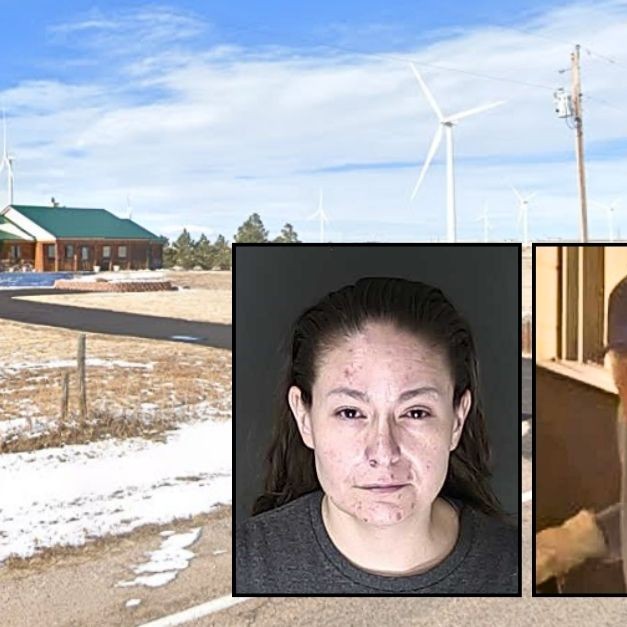
Authorities have charged 37-year-old Amy Dalton with vehicular homicide, DUI, reckless driving, and related counts after investigators say her Subaru left a rural road in Calhan and fatally struck 79-year-old Robert “Bob” Selle while he was mowing his front yard.
Crash on Rural Colorado Road
According to an arrest affidavit described by Law & Crime, the collision happened on August 24th in Calhan, Colorado, a small town roughly 80 miles southeast of Denver. Investigators say Robert “Bob” Selle was using a riding lawn mower in front of his home when a 2016 Subaru Outback driven by Dalton left the paved roadway.
Selle’s wife told officers she was watching her husband through the front window when she saw a silver car traveling at what appeared to be a high speed. The affidavit states that she saw the vehicle become airborne and then strike her husband, ejecting him from the mower.
Police and emergency responders arrived to find Selle initially conscious and speaking with his wife on the front lawn. He soon lost consciousness and was pronounced dead at the scene. The affidavit characterizes the sequence as a fatal crash occurring entirely on or adjacent to the couple’s property after the car had already left the public road.
Investigators say a neighbor’s security camera captured the event from a distance. That footage is referenced throughout the affidavit and, according to the document, shows the Subaru leaving the roadway, going airborne over a driveway, and traveling into the yard where Selle was working.
Affidavit Describes Video and Vehicle Data
In the affidavit, investigators describe a crash sequence that combines eyewitness accounts, home security video, and data from the Subaru’s airbag control module, often referred to as the ACM. The document states that as the Subaru left the road, it became airborne over a driveway before landing in a yard bordered by a barbed-wire fence.
The affidavit says that upon landing, the vehicle hit the fence, continued into the yard or field, and collided with Selle and the riding mower. According to investigators, the video then shows the Subaru overturning in the field and eventually coming to rest on its roof close to where Selle came to rest on the ground.
Beyond the video, the affidavit highlights information downloaded from the ACM, which records vehicle actions such as speed, braking, and steering in the seconds before a collision. Investigators wrote that, based on this data, Dalton never applied the brakes or took any evasive steering action in the moments leading up to the crash.
The affidavit summarizes this evidence with a central assertion about Dalton’s control of the vehicle: “For no obvious reason at the time, Dalton failed to maintain control of the Subaru and the vehicle drifted off the right/west side of the roadway.” That characterization will likely be a focus of any eventual courtroom challenge, because it frames the loss of control as unexplained apart from alleged impairment.
Impairment Allegations and Driver’s Account
Dalton, who is described in the affidavit as 37 years old, spoke with officers after the crash. According to the document, troopers reported a strong smell of marijuana coming from her and described her demeanor as “mellow” and not very responsive to questions from EMS personnel. One trooper wrote that Dalton’s eyelids “seemed very heavy.”
Law & Crime reports that Dalton allegedly admitted to officers that she uses marijuana daily, takes multiple medications, and had recently tried methamphetamine for the first time. She also consented to a voluntary drug test. Investigators say that the test revealed at least two substances in her system that they believe contributed to the crash, although the specific levels and substances are not detailed in the reporting.
Dalton, however, reportedly offered a mechanical explanation for the events. According to the affidavit, she told officers that she had “two bad tires” and thought she might have overcorrected. She also said the steering began to feel “weird” and “funny.” The affidavit does not include any documented mechanical inspection that supports or definitively refutes this explanation, and the publicly reported material does not describe any tire failure analysis.
This creates a central tension in the case: Dalton’s statements reference vehicle problems and a possible overcorrection, while the ACM data, as summarized in the affidavit, is said to show no braking and no evasive steering. The extent to which those data points can be reconciled, or whether the defense will challenge the state’s interpretation of them, is not yet clear from public records.
Charges, Legal Standards, and Bond
Authorities arrested Dalton and charged her with vehicular homicide, driving under the influence, reckless driving, and operating a vehicle without insurance, according to the affidavit described by Law & Crime. She is currently free on a $10,000 bond and is scheduled for a preliminary hearing on March 17th.
Under Colorado law, vehicular homicide can be charged when a driver operates a vehicle recklessly or while under the influence of alcohol or drugs and causes another person’s death. A conviction can carry significant prison time, especially when paired with DUI and reckless driving counts.
In DUI cases involving marijuana or multiple substances, prosecutors typically must prove not only the presence of drugs, but also that a driver’s ability to operate a vehicle was impaired at the time of the crash. The affidavit’s references to Dalton’s demeanor, reported admissions about drug use, and the lack of braking or evasive maneuvers are likely to be central to that argument.
The charging document, as described, does not specify whether Dalton has entered a plea. In Colorado, a preliminary hearing allows a judge to determine whether there is probable cause to move the felony charges forward toward trial. That hearing can also surface early disputes over how investigators collected and interpreted evidence, such as ACM data and blood tests.
Remembering Robert ‘Bob’ Selle
While the criminal case focuses on Dalton’s alleged conduct, the public record also includes details about Selle’s life. An obituary quoted by Law & Crime describes him as a community “pillar” and a grandfather of five. The obituary lists tributes from those who knew him, emphasizing his roles as husband, teacher, and leader.
According to the obituary, many remembered Selle as a “legacy,” “inspiration,” and “class act.” One passage, quoted by Law & Crime, captures how family and friends chose to frame his memory: “As condolences continue to pour in, Bob Selle is being remembered as a legacy, an inspiration, a hero, a great human being, a role model, kind, caring, generous, an amazing person, a class act, a loving husband, a teacher, a leader, a great man, one of the best, and as respect personified.” The obituary notes that among many titles, his favorite was “Grandpa Bob.”
The fact that Selle’s wife reportedly witnessed the crash from their front window, rushed outside, and spoke with him in his final minutes adds a layer of personal detail that is unusual even in fatal crash cases. Police say she was present as he went from alert to unconscious, and that he died before he could be transported for treatment.
Unresolved Questions and the Road Ahead
Several elements of the case are documented in unusual detail for a rural traffic fatality. Investigators have referenced home security video, crash data from the Subaru, Dalton’s own statements about drug use and mechanical issues, and eyewitness accounts from the victim’s wife. Yet some of the most consequential issues remain open.
Public reporting so far does not describe any independent mechanical inspection that might support or undermine Dalton’s statements about bad tires or steering problems. The affidavit suggests impairment, citing the odor of marijuana, Dalton’s demeanor, and drug test results, but the full toxicology findings and any expert analysis have not been released in detail.
It also remains to be seen how a court will weigh the ACM data that investigators say shows no braking or evasive steering. Defense attorneys in other cases have sometimes challenged how such data are retrieved, interpreted, or matched to driver behavior, while prosecutors often treat them as a near real-time record of what happened.
As the case moves toward Dalton’s preliminary hearing, the key questions are likely to include how much weight to place on drug use versus possible mechanical explanations, how to interpret the split-second data from the Subaru’s systems, and whether the evidence supports a finding that Dalton’s alleged impairment rose to the level required for vehicular homicide under Colorado law.
References