



TLDR
In Hartford, 55-year-old Pedro Grajales received a 30-year sentence after pleading guilty to murdering his girlfriend, Nilda Rivera, in his car after a planned stop at a McDonald’s, in a case built on his confession and a detailed arrest warrant.
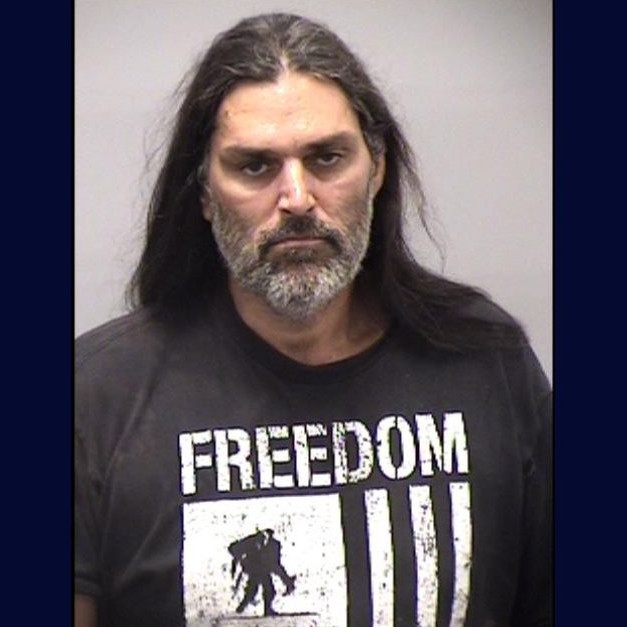
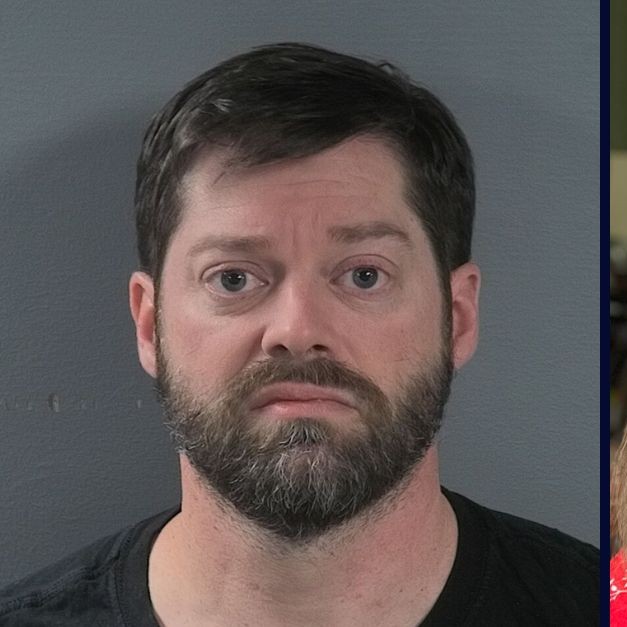
Left inset: Pedro Grajales (Hartford Police Department). Right inset: Nilda Rivera (WTIC). Background: The McDonald’s in Hartford, Connecticut, that Pedro Grajales took Nilda Rivera to before stabbing her in a nearby parking lot.
Planned Killing After a Seemingly Ordinary Outing
According to the arrest warrant affidavit described by Law & Crime, the killing took place in April 2023. Rivera, 57, lived in New Britain, and Grajales, then 55, lived in Hartford. The warrant states that on the night of the attack, he picked her up for what appeared to be a routine outing.
Investigators wrote that Grajales had hidden a knife in his pants pocket before arriving. He then drove Rivera to a McDonald’s on Brainard Road in Hartford, ordered food at the drive-thru, and parked so she could eat. Nothing in that moment, according to the affidavit, signaled that the trip was anything other than a casual meal.
Only after Rivera finished her food, the warrant says, did Grajales steer the car to a more secluded lot nearby. He allegedly told her he needed to pick up lumber and acted as if he was getting out of the car to retrieve it, setting up the position he wanted inside the vehicle.
At that point, investigators wrote, Grajales moved his driver’s seat “all the way back so he could have enough room to swing the knife.” The affidavit states that he then took the knife from his left pocket and stabbed Rivera multiple times as she sat in the front passenger seat, inflicting what authorities described as “upwards of 25” stab wounds.
Confession and the Arrest Warrant Record
After the stabbing, the warrant indicates that Grajales did not attempt to hide Rivera’s body or leave the region. Instead, he is described as driving to a nearby police station with Rivera still in the car, then walking inside to tell officers what had happened.
The affidavit recounts that in a subsequent interview, Grajales told detectives he had been “planning to murder her for several days” because he believed Rivera had cheated on him. Investigators wrote that he “was intentionally treating her very nice so she would not suspect there was an issue,” characterizing the McDonald’s trip and the drive as part of that plan.
Guilty Plea, Sentencing, and Legal Framework
According to Law & Crime, which reviewed online court records, Grajales was charged with murder under Connecticut law after his arrest. In December, he pleaded guilty to that charge, and in February 2026, a judge in Hartford Superior Court sentenced him to 30 years in prison.
Under Connecticut statutes, murder is a class A felony that typically carries a potential sentence of 25 to 60 years in prison. A 30-year term places Grajales’s punishment toward the lower end of that range while still representing decades of incarceration for a defendant who was already in his mid-50s.
By accepting a guilty plea, prosecutors avoided the uncertainties of a trial, and Grajales waived his right to contest the state’s evidence before a jury. The plea also meant Rivera’s family would not have to hear detailed testimony about the killing in a public courtroom, although they still had the opportunity to address the court at sentencing.
In murder cases, judges generally weigh the brutality of the offense, the defendant’s criminal history, any expression of remorse, and impact statements from victims’ relatives. The 30-year term imposed on Grajales falls within that framework and within the limits set by state law.
Family Accounts and Patterns of Control
Rivera’s relatives have described the relationship in terms that differ starkly from the seemingly calm fast-food outing detailed in the warrant. In comments to WTIC that were later cited by Law & Crime, family members said Grajales was “very jealous” and would look through Rivera’s phone, delete content, and remove people from her social media accounts.
Her daughter, Daniella Valle, emphasized who Rivera was beyond the circumstances of her death. “My mom was just looking for love,” she said. “She was a mother. She was a grandmother. She was a friend.”
The behaviors Rivera’s family described, including monitoring her messages and altering her online connections, are consistent with what many advocates and researchers identify as coercive control in intimate partner relationships. In many domestic violence homicides, the final act of lethal violence is preceded by jealousy, isolation, and efforts to limit a partner’s independence.
At the same time, the public reporting in this case does not describe previous police reports, restraining orders, or court filings involving the couple. That lack of documented history does not mean there were no earlier warning signs in the relationship, only that any such concerns, if they existed, did not result in a formal legal record.
The narrative preserved in the arrest warrant is built largely on what investigators say Grajales told them after he came to the station and confessed. It offers granular detail about how he prepared for the killing and how he carried it out, yet leaves unanswered questions about what, if anything, might have disrupted his plans before Rivera got into his car that night.
In the legal system’s terms, the case is now closed. Grajales has admitted guilt and begun serving his 30-year sentence. For Rivera’s family, the consequences will extend far beyond the courtroom, and for communities watching cases like this, the central challenge remains how to identify and confront patterns of control and jealousy before they culminate in irrevocable violence.
References