

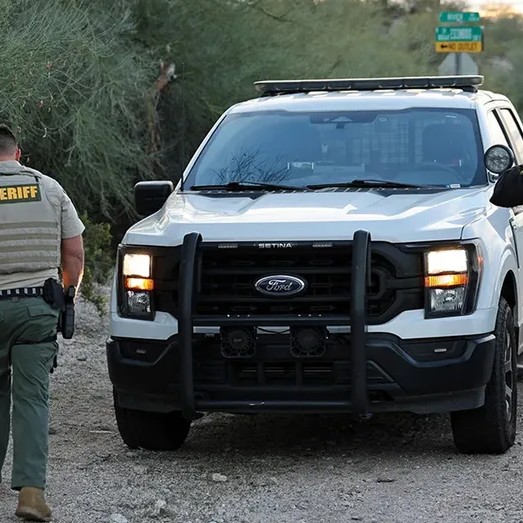
A new A&E series is taking cameras inside the Pima County Sheriff’s Office, even as the same department remains in the middle of an unresolved investigation into the apparent kidnapping of 84-year-old Nancy Guthrie from her Tucson home.
TLDR
A&E’s limited series “Desert Law” profiles daily work inside the Pima County Sheriff’s Office while deputies and the FBI continue to investigate the disappearance of 84-year-old Nancy Guthrie from her Tucson home on February 1st, 2026, which investigators are treating as an apparent kidnapping.
“Desert Law,” a 10-episode limited series that premiered on A&E in early January 2026, follows patrol deputies, night detectives, and a DUI unit in Pima County, Arizona, one of the largest sheriff’s departments in the United States, according to Fox News.
The timing means routine calls, weapons investigations, and traffic stops are airing on national television as the department works with the FBI in a high-stakes search for Guthrie, the mother of NBC Today co-host Savannah Guthrie, whose disappearance remains unsolved.
Television Access While a Kidnapping Case Remains Open
According to Fox News, filming for the first two installments of “Desert Law” took place across the spring and summer of 2025. Crews rode along with patrol deputies, followed night shift detectives, and documented DUI enforcement across Pima County.
The county sheriff, Chris Nanos, does not appear on camera, but he worked with producers to coordinate access to deputies and scenes, The Hollywood Reporter noted. The show focuses on routine and high-intensity calls across a jurisdiction that includes Tucson and surrounding desert communities.
The series continued to roll out episodes in early 2026, by which time the sheriff’s office was deeply engaged in the search for Nancy Guthrie. Fox News reported that the department was working in tandem with the FBI on the case, bringing federal resources into what local investigators have described as an apparent kidnapping.
It is not yet clear how, or whether, the Guthrie investigation itself will appear in the series. The network’s description of a recent episode, titled Weapons Found, highlights deputies patrolling in a region with what the show describes as “some of the loosest gun laws in the country,” rather than focusing on a single ongoing case.
The Pima County Sheriff’s Office and A&E did not respond to Fox News Digital’s questions about the show’s rollout in the context of the active kidnapping investigation, leaving open how the department balances public visibility with investigative secrecy.
What Is Known About Nancy Guthrie’s Disappearance
According to Fox News reporting, Nancy Guthrie disappeared from her Tucson home in the early morning hours of February 1st, 2026. Investigators have publicly framed the incident as an apparent kidnapping, indicating they believe another person or persons were involved, rather than a voluntary disappearance.
The sheriff’s office has not, as of the latest reporting, announced any arrests, named any suspects, or detailed a clear motive. Fox News has reported that family members were cleared as suspects, and that investigators were reviewing multiple pieces of physical and digital evidence connected to the home.
One Fox News article described advanced video equipment seen at Guthrie’s residence and highlighted expert speculation about how that technology could factor into the case. Another report focused on a $10 gun holster purchased at Walmart that investigators believe could help identify a suspect. These items have been publicly discussed as potential evidence, but investigators have not released a full evidentiary record.
A separate Fox News story cited an unnamed law enforcement source who called a burglary-gone-wrong theory in the Guthrie case “ridiculously rare.” That characterization underscores how investigators appear to be weighing competing explanations, but it remains a single, anonymously sourced assessment rather than a formal conclusion by the agencies involved.
What remains undisputed in public reporting is narrow but stark. Guthrie, age 84, is missing. She was last known to be at her home in Tucson. The Pima County Sheriff’s Office and the FBI are treating her disappearance as a crime, not as a voluntary absence, and have asked for the public’s help with information.
In a video message posted to social media, Savannah Guthrie addressed whoever may be responsible for her mother’s disappearance and urged them to release her. According to Fox News, she said, “It is never too late to do the right thing,” and pleaded for anyone with information to come forward.
How the Show Portrays the Sheriff’s Office
“Desert Law” opens a different window into the same agency, following deputies through calls that range from traffic enforcement to violent crime. According to Fox News, a recent episode included footage of deputies responding to a supermarket altercation in which a pistol was drawn, as well as a suspected armed home invasion.
The show’s own description emphasizes the gun policy landscape in Arizona, describing deputies as operating amid “some of the loosest gun laws in the country.” That framing situates daily policing within a broader legal environment that shapes both public behavior and law enforcement tactics.
Reality-style programming about police has a long history in the United States, from Cops to Live PD and its successors. “Desert Law” fits that lineage, promising what A&E markets as “elite” or behind-the-scenes access to deputies’ work.
Unlike formal body camera releases, which are typically governed by specific policies, television crews are invited, scheduled, and managed. According to The Hollywood Reporter, Sheriff Nanos worked with producers to coordinate when and how filming would occur, while choosing not to appear personally on screen.
That arrangement raises familiar questions about control and selection. Viewers see the incidents that are filmed, cleared legally, and edited into episodes. They do not see scenes that are withheld for investigative reasons, rejected for legal risk, or simply left on the cutting room floor.
Transparency, Public Trust, and Open Investigations
Departments facing intense scrutiny sometimes turn to cameras in the name of transparency. Allowing the public to see deputies respond to volatile calls, interact with residents, and process crime scenes can humanize officers and offer a sense of how decisions are made.
At the same time, inviting a television crew into an agency during an open, high-profile kidnapping investigation introduces tensions that are not easy to resolve. Investigators must protect victim privacy, preserve evidence, and avoid compromising potential prosecutions.
If a camera crew is nearby when a relevant tip comes in, a search is launched, or a witness is located, investigators have to decide, often in real time, whether that footage can exist, and if so, whether it will ever be broadcast. They also have to weigh how edited portrayals of their work might influence jurors, witnesses, or potential suspects in future proceedings.
None of the publicly available descriptions of “Desert Law” indicate that the series is centered on the Guthrie case. The program appears to focus on a cross-section of calls rather than a single investigation. Still, the national attention brought by both the series and the kidnapping make the department’s public image inseparable from how it handles Guthrie’s disappearance.
Community trust is likely to hinge less on television storytelling and more on what residents see in official briefings, court filings, and, if the case is solved, prosecutions. For now, most operational details remain within law enforcement files, not on television episodes.
What Happens Next in the Guthrie Investigation
In an apparent kidnapping case involving an older adult, standard investigative steps typically include canvassing neighbors, reviewing surveillance and home security footage, examining phone and financial records, and processing any physical evidence for DNA or fingerprints. The reported presence of advanced video equipment at Guthrie’s home suggests that digital forensics could play a central role.
Sheriff: DNA may hold the answer in the Nancy Guthrie kidnapping case 🧬👮♂️ #TrueCrimeNews #Investigation #NancyGuthrie #DNA pic.twitter.com/BKTRwVnFX7
— @CelebupdateHQ (@Israel_Udo1) February 19, 2026
FBI involvement often brings additional analytical capacity, from behavioral analysis to specialized search teams. It can also facilitate coordination across jurisdictions if investigators believe a suspect may have traveled or if federal kidnapping statutes could apply. Authorities have not publicly specified which federal tools are in use in this case.
As of the most recent reporting cited by Fox News, investigators have not publicly disclosed a suspect description, released composite sketches, or announced any charges. That absence of public detail does not mean activity has stopped, but it does highlight how little of the case file is visible from the outside.
The parallel stories now unfolding in Pima County, one on A&E and one in investigative files, are connected by a single institution: the sheriff’s office. Whether the added attention from “Desert Law” leads to new public tips, greater trust, or sharper criticism will depend on developments that have not yet occurred, starting with a still unanswered question at the center of the case: what happened to Nancy Guthrie, and who is responsible.
References
- Fox News: Sheriffs Office Center Nancy Guthrie Case Spotlighted In New Desert Law TV Series
- Fox News: Law Enforcement Source Disputes Burglary Gone Wrong Theory Guthrie Case
- Fox News: 10 Walmart Gun Holster Could Help Identify Suspect Nancy Guthrie Case
- Fox News: Nancy Guthrie Case 5 Key Evidence Pieces So Far
- The Hollywood Reporter: Sheriff Nancy Guthrie Case Reality Show