

Federal officials say local decisions in Minnesota have freed hundreds of immigrants with criminal records. State and city leaders insist they follow the law while protecting community trust. Both can be entirely right, at least not in the way the public is being told.
A High Profile ICE Operation In Minnesota
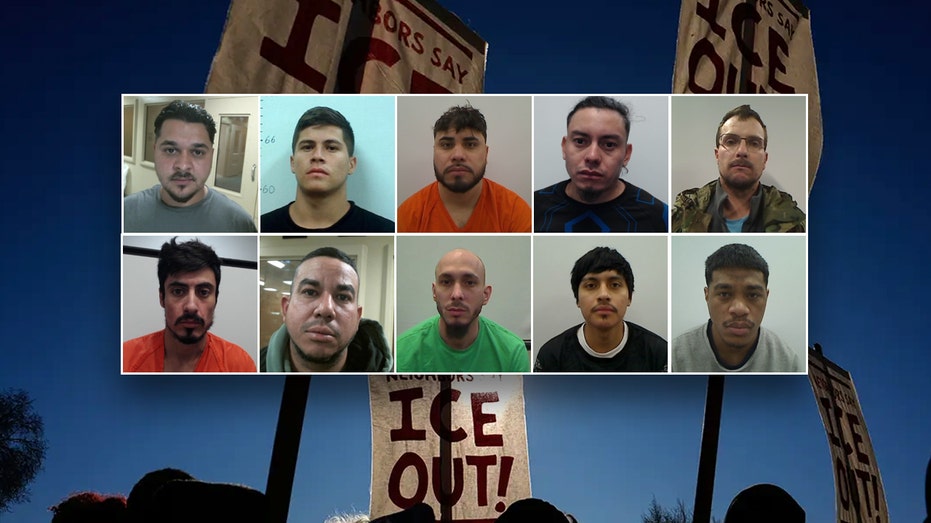
In an operation described by the Department of Homeland Security as targeting the \”worst of the worst\” noncitizens with criminal records, federal immigration officers recently carried out arrests in Minnesota as part of what DHS calls Operation Metro Surge. The details were first reported by Fox News, citing DHS officials and agency data for the state.
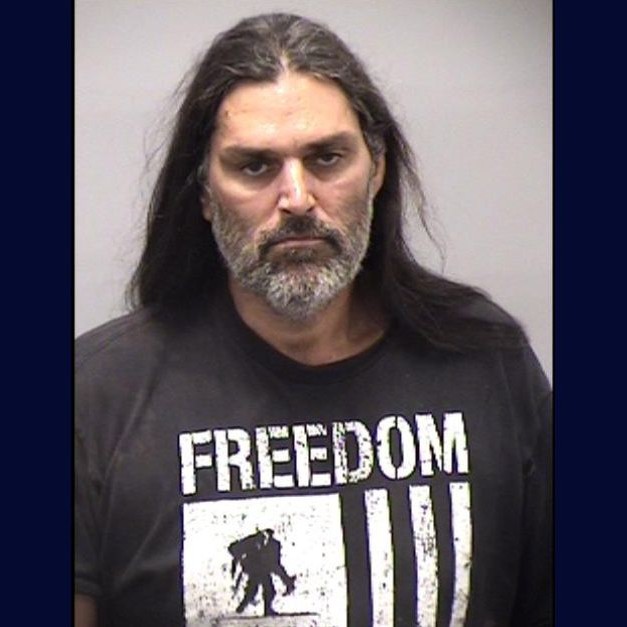
According to that reporting, the operation focused on people DHS labels as \”criminal illegal immigrants\” who were living in Minnesota communities after prior encounters with the criminal legal system. Among those highlighted by DHS was Brian Anjain, a national of the Marshall Islands whom the department says has 24 criminal convictions, including assault causing bodily injury, domestic abuse, theft, trespassing, interference with official acts, public intoxication and public nudity.
DHS also pointed to two other cases. Officials said they arrested Hien Quoc Thai, a Vietnamese national previously convicted of murder, and Eddy Xol-Lares, a Venezuelan national convicted in federal court of conspiracy to possess with intent to distribute five kilograms or more of cocaine while aboard a vessel. Others taken into custody during the operation were described by DHS as nationals of Guatemala, Cuba, Mexico, Honduras, South Africa and Romania, with convictions that include domestic violence, fraud, identity theft, forgery, property damage and multiple drunken driving offenses.
Tricia McLaughlin, an assistant secretary at DHS, used the Minnesota arrests to criticize state and local leaders who limit cooperation with federal immigration authorities. “As our law enforcement are facing rampant violence against them, they arrested murderers, drug traffickers and an illegal with 24 criminal convictions in Minneapolis,” she said, according to Fox News. “These are the criminals Governor [Tim] Walz and Mayor [Jacob] Frey are protecting. No American wants these criminals for neighbors.”
The Department of Homeland Security is calling on Minnesota officials to honor federal immigration detainers for more than 1,360 people in state custody.
FULL STORY: https://t.co/m8WPwRIH6N pic.twitter.com/1ddQP0dbP9— KMOT (@KMOT_TV) January 13, 2026
\n\n\n
DHS argues that its data show a broader pattern. Since the start of the Trump administration, the department claims that nearly 470 noncitizens with criminal records have been released from custody into Minnesota communities because state or local agencies declined to honor federal immigration detainers. It also says it has lodged more than 1,360 detainers in Minnesota that remain outstanding for people, including some with violent convictions, who are still in local custody. Those figures were not accompanied by a public list of names or case files that would allow outside verification of each entry.
What ICE Detainers Actually Are
At the center of this dispute is a technical but important tool: the immigration detainer. A detainer is a written request from U.S. Immigration and Customs Enforcement that asks a jail or prison to notify ICE before releasing a person and to hold that person for up to 48 additional hours so federal officers can take custody. ICE describes detainers on its own website at ice.gov.
Detainers are issued by immigration officers, not by judges. Federal courts have repeatedly found that they are requests rather than binding orders. In one influential 2014 decision, the U.S. Court of Appeals for the Third Circuit held that local agencies are not required to comply with ICE detainers and can be held liable if they unlawfully hold someone without probable cause of a new offense. That legal backdrop has led many cities and counties across the country to adopt policies that sharply limit compliance with detainers unless they are supported by a judicial warrant or court order.
Critics of detainers, including civil liberties groups, argue that honoring them in every case can lead to constitutional violations and wrongful detention of U.S. citizens or lawful residents. They point to documented examples in which detainers were issued in error and to the absence of a neutral judicial review step before someone is held longer solely for immigration purposes. ICE and DHS counter that detainers are an essential public safety tool that allow them to take custody of noncitizens who have been arrested or convicted of crimes, rather than tracking them down later in the community.
How Minneapolis And Minnesota Limit Cooperation
DHS singled out Minnesota Governor Tim Walz and Minneapolis Mayor Jacob Frey for criticism, arguing that their so-called sanctuary policies have led to the release of people the federal government wanted to deport. The term \”sanctuary\” does not have a precise legal definition. In practice it refers to a set of local rules that restrict how much police or jail officials can assist federal immigration agencies.
The City of Minneapolis has for years had an ordinance that limits officers from inquiring about a person’s immigration status in most routine encounters. City leaders have said publicly that they will not hold people past their release dates based solely on an ICE detainer without a separate court order. Information about these policies is available on the city website at minneapolismn.gov. Hennepin County, which operates the main jail that serves Minneapolis, has adopted similar guidelines that prioritize judicial warrants and court orders over administrative requests from ICE.
Statewide, Minnesota does not have a single law that either requires or prohibits cooperation with immigration detainers. Instead, sheriffs and local governments set their own rules. Some Minnesota counties have chosen to honor many ICE requests. Others, including larger urban counties, have adopted more restrictive policies in response to legal advice and community pressure.
From DHS’s perspective, those choices have direct consequences. The department claims that hundreds of noncitizens with criminal convictions have been released \”back into Minnesota communities\” because local agencies declined to hold them for ICE. From the perspective of local officials and immigrant advocates, the same policies are framed as compliance with constitutional limits and as a way to avoid discouraging victims and witnesses from reporting crimes or cooperating with investigations.
What We Know About The 24 Convictions
One of the most specific claims DHS has made about the Minnesota operation concerns the Marshall Islands national with 24 convictions. According to the department, those convictions span a range of offenses, from assault causing bodily injury and domestic abuse to theft, public intoxication, trespassing and public nudity. The agency did not provide court case numbers or a publicly accessible docket that would allow reporters or the public to examine the underlying files.
Without access to state and local court records, it is not possible from the outside to confirm the exact nature or severity of each of the 24 convictions, or to see how many involved physical harm to another person compared with non-violent behavior or probation violations. It is also unclear how many of those convictions occurred in Minnesota, how many in other states and over what time span.
DHS presents the number 24 as evidence that this individual should have been a high priority for removal. Local agencies, by contrast, tend to focus on the specific charge that led to a particular arrest and the legal standards governing that arrest. A jail confronted with an ICE detainer at the end of a sentence has to decide whether it has legal authority to hold the person based only on a form signed by a federal officer, regardless of the number of prior convictions listed in immigration records.
Crime, Immigration Status And Public Risk
The cases highlighted by DHS in Minnesota involve serious criminal histories, including a prior murder conviction and a large-scale federal narcotics case. Those facts are not in dispute. The broader question is to what extent they represent a pattern created by sanctuary-style policies, or instead a subset of cases in a much larger immigration enforcement system.
National research paints a complicated picture. Multiple studies using statewide data in Texas and other jurisdictions have found that immigrants, including those without legal status, are on average less likely to be convicted of crimes than native born U.S. citizens, even as there are clearly individual noncitizens who commit serious offenses. Those findings have been published by organizations across the political spectrum, including the libertarian Cato Institute and several academic researchers, and are publicly available at sources such as cato.org.
Those studies do not resolve what should happen in specific cases like the Minnesota arrests, or how much discretion local agencies should have when ICE files a detainer. They do provide context for any claim that noncitizens with criminal records are driving crime trends in a particular state. DHS has not publicly released Minnesota-wide data that would allow a direct comparison between the criminal histories of people subject to detainers and those of the broader population.
Gaps In The Record
Some information about Operation Metro Surge is verifiable. The names of several people arrested, their nationalities, and at least some of their prior convictions appear in federal court records and agency statements that match what DHS shared with Fox News. The existence of an ICE detainer system, and the legal uncertainty surrounding it, is documented in federal case law and in agency materials on ice.gov.
Other pieces of the story remain less clear. DHS has not published a detailed breakdown of the roughly 470 people it says were released in Minnesota since 2017 because of non-cooperation, including how many had completed their sentences, how many were found not guilty or had charges reduced, or how many were ultimately detained by federal authorities at a later time. Nor is there a public list of the more than 1,360 detainers the agency says are currently pending in the state.
Without that level of detail, it is difficult for residents to reconcile federal claims that sanctuary policies are releasing \”the worst of the worst\” with local officials’ assurances that they are following the law and prioritizing serious threats. The DHS database cited by the department, available at wow.dhs.gov, contains information about some enforcement actions involving serious offenders, but it does not yet offer a complete public cross-check for all of the Minnesota numbers now being used in this political and legal fight.
In the meantime, state and local agencies will continue to decide, case by case, whether to honor ICE detainers. DHS will continue to argue that failing to do so endangers the public. The question for Minnesota residents is how much detail they will be given to judge those competing claims for themselves.