

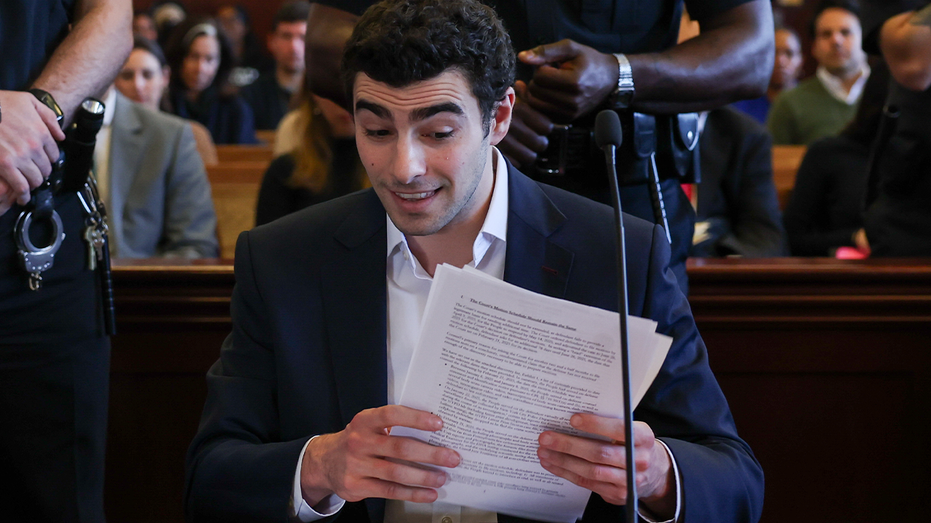
Federal prosecutors say a key court filing in a high-profile CEO killing case presents an “incomplete and misleading” picture of the Attorney General’s past. Whether the judge agrees could shape a rare federal death penalty bid long before any jury ever hears evidence.
The defendant is Luigi Mangione, who is accused in federal court of murdering UnitedHealthcare CEO Brian Thompson outside a Manhattan hotel that was preparing to host a shareholder conference. At the center of the latest fight is Attorney General Pam Bondi, who previously worked at a lobbying firm that once represented Thompson’s company. Mangione’s lawyers argue that Bondi’s decision to personally approve a death penalty prosecution shows prejudice. The Justice Department counters that the attack on her role has no legal or factual basis.
The conflict claim against Pam Bondi
According to federal filings reported by Fox News (source), Mangione’s defense team asked the court to find that Bondi has a disqualifying conflict of interest and should have recused herself from decisions in the case.
Before becoming Attorney General in 2025, Bondi was a partner at Ballard Partners, a lobbying firm whose clients have included UnitedHealthcare. Defense attorneys say that prior relationship matters because Thompson, the alleged victim, led the same company.
In a December filing, defense lawyer Karen Friedman Agnifilo wrote, “When Ms. Bondi left Ballard Partners to become the Attorney General in 2025, the very first defendant she personally selected to be executed was the man accused of killing the CEO of her former client.” The defense characterizes this history as evidence of prejudice and has used the word “prejudice” directly in their submissions.
The logic of the motion is straightforward. If Bondi had a significant and recent financial relationship with a firm tied to Thompson’s company, the defense argues, she should not have been involved when the Justice Department chose to seek the death penalty against a man accused of killing Thompson. At a minimum, they contend, another senior DOJ official without those ties should have made the call.
Conflict of interest concerns for federal prosecutors are not new. Justice Department policy instructs officials to avoid participating in matters where their impartiality might reasonably be questioned, including when a former employer or client is involved (DOJ ethics overview). The key question in Mangione’s case is whether Bondi’s past role at Ballard Partners and the firm’s reported ties to UnitedHealthcare meet that threshold.
Prosecutors push back
In their written response, prosecutors rejected the disqualification effort and described the defense account as “incomplete and misleading,” according to the same Fox News report. They emphasized several points.
First, they say Bondi no longer works at Ballard Partners and does not receive money from the firm or from its clients. Second, they argue that her prior position did not influence the department’s decision to pursue the death penalty in Mangione’s case. Prosecutors say the decision was based on the facts of the alleged assassination and on the federal death penalty protocol, not on any “corporate interests.”
Federal ethics rules include cooling-off periods for former private sector lawyers who join the government, but those rules are targeted. They typically bar work on specific matters that the lawyer handled personally in private practice, or on matters involving a former client in which the government is a party (U.S. Office of Government Ethics). Prosecutors appear to be signaling that Bondi’s work for Ballard Partners did not involve Mangione, Thompson, or this criminal investigation, and that UnitedHealthcare itself is not a defendant.
The prosecution’s brief also makes a practical argument. Removing an Attorney General from a single criminal case is an extraordinary step. Courts generally require a clear showing that the official’s personal interests are at odds with the public interest. On the current record, DOJ says, that has not been shown.
What is known about the killing
Public reporting describes a targeted attack in Manhattan. Surveillance video cited by Fox News shows a man approach 50-year-old Thompson from behind and shoot him outside a hotel that was scheduled to host a UnitedHealthcare shareholder conference that morning.
Thompson, a Minnesota resident, was married and had two children. There is no public suggestion in the available reporting that he knew Mangione. Prosecutors have not publicly laid out an alleged motive beyond the basic accusation that Mangione acted as an assassin.
Mangione was later arrested at a McDonald’s in Pennsylvania. According to defense filings, he spoke with police both before and after that arrest. His lawyers initially asked the court to suppress those statements, arguing they were improperly obtained, but they have since withdrawn that motion.
Mangione has pleaded not guilty, and the charges remain allegations. He is entitled to a presumption of innocence unless and until a jury finds him guilty beyond a reasonable doubt.
The backpack search and the inevitable discovery fight
Even with the statements issue off the table for now, the defense is still attacking what may be some of the most important physical evidence in the case.
Attorneys for Mangione want the court to suppress items taken from his backpack at the time of his arrest in Altoona, Pennsylvania. According to Fox News, police searched the bag without a warrant and reported finding the suspected murder weapon and journals that prosecutors describe as incriminating.
The defense position is that the warrantless search violated the Fourth Amendment. They have asked for an evidentiary hearing where officers would testify about why and how the backpack was searched. The Justice Department has opposed that request and says such a hearing is unnecessary.
Prosecutors argue that the items would have been discovered regardless of the initial search. That is a reference to the “inevitable discovery” doctrine, which allows evidence to be admitted if the government can show it would have been found through lawful means even if a particular search was flawed. The Supreme Court endorsed that doctrine in Nix v. Williams in 1984 (Cornell Law School).
They also suggest the officers did not need a warrant in the first place. Under longstanding precedent, police may typically search a person and items within the person’s immediate control during a lawful arrest, a concept known as “search incident to arrest” (United States v. Robinson). Legal experts quoted by Fox News said such searches of bags are common practice, although each case turns on its specific facts.
The judge must now decide whether to hold a hearing on the backpack search, and eventually whether the gun and journals can be used at trial. Those rulings could significantly shift the balance of the case for either side.
Other motions and the death penalty decision
The conflict motion and the backpack dispute are not the only matters in play. Mangione faces four federal counts, including a charge of murder through use of a firearm, which carries the possibility of a death sentence. His attorneys are seeking to dismiss at least two of those counts, including that most serious one.
Luigi Mangione is due back in federal court for a pretrial hearing on Friday, as prosecutors say they plan to seek the death penalty. pic.twitter.com/xFLPGdygFa
— Eyewitness News (@ABC7NY) January 9, 2026
In capital cases, defense teams often challenge both the underlying charges and the process by which the government authorized a death penalty prosecution. DOJ has an internal review system for such decisions, including committee recommendations and final approval by the Attorney General (DOJ death penalty protocol). The attack on Bondi’s role targets that final step.
A status conference in federal court is expected to address several of these pending motions. According to Fox News, federal public defender Paresh Patel, a Maryland-based appellate specialist, has joined Mangione’s team as special counsel for that hearing, a sign that the defense views the coming arguments as strategically important.
Another disputed point, mentioned in earlier reporting, involves what a police sergeant did or did not hear Mangione’s mother say about the CEO’s killing. That issue appears to relate to potential witness testimony and credibility, though the latest filings focus more squarely on Bondi’s role and the search of the backpack.
What remains unresolved
The court has not yet ruled on the request to disqualify Attorney General Bondi, on the admissibility of the backpack evidence, or on the defense bid to drop the most serious firearm murder charge. Each decision could alter the shape of any future trial and sentencing phase.
For now, prosecutors maintain that their ethics are intact, their evidence is solid, and their death penalty authorization stands. The defense says key evidence was unlawfully obtained and that the government’s top lawyer should never have been part of the case at all.
Whether the judge finds a genuine conflict of interest or a legitimate Fourth Amendment violation will determine not only what the jury eventually sees, but also who is allowed to speak for the United States when a man’s life is on the line.