

Killings in one of the country’s most closely watched cities have fallen to levels residents have not seen in years. The top prosecutor says the explanation is simple. The evidence suggests it is anything but.
A City Celebrates a Drop in Killings
In recent reporting, Fox News Digital highlighted a steep decline in homicides in Baltimore, Maryland, citing data from the Baltimore City State’s Attorney’s Office. According to that account, killings dropped from 334 in 2022 to 263 in 2023, 202 in 2024, and 134 in 2025, a reversal after eight consecutive years above 300 homicides.
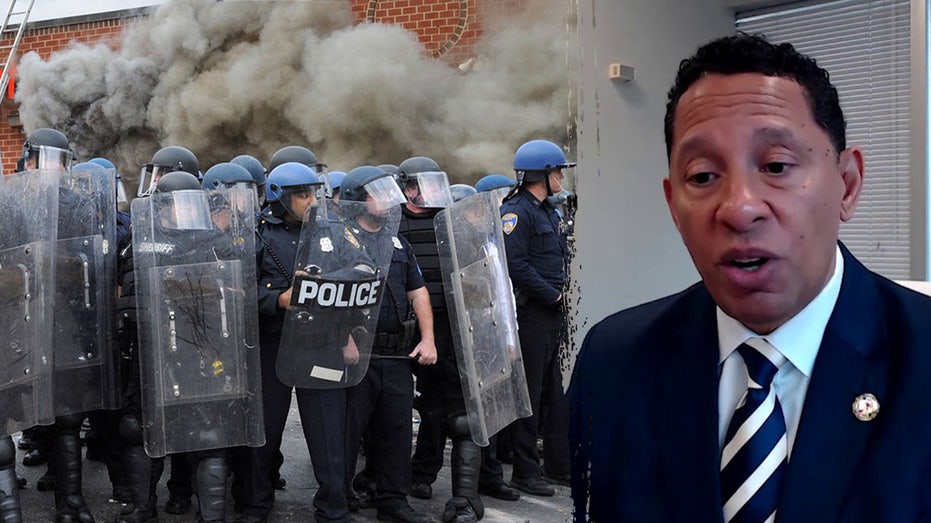
Baltimore City State’s Attorney Ivan Bates, who took office in January 2023, has framed the change in stark terms. He told Fox News Digital that, in his view, “The only way you’re going to focus on violent crime in Baltimore City is you must put repeat violent offenders in prison,” and said his office has aggressively pursued mandatory minimum sentences for repeat gun offenders.
The core claim is clear. Killings are down, and local officials argue that tougher prosecution of a relatively small group of repeat offenders is the reason. To understand how much that explanation holds up, you have to look at three layers of evidence. Baltimore’s own long-term homicide trends, what has changed in enforcement and sentencing, and how those patterns compare with national crime data.
What the Numbers Show About Baltimore
Long before Bates took office, Baltimore had become a symbol of sustained, high levels of lethal violence. The city recorded 344 homicides in 2015, 318 in 2016, and 342 in 2017, according to Baltimore Police Department year-end data and local media tallies that compile medical examiner and police reports. Those figures meant some of the highest big-city homicide rates in the country on a per capita basis.
After a brief dip in 2018 and 2019, killings climbed again, reaching at least 335 in 2022. That set the baseline for Bates’ tenure. The Fox News report, relying on data from the State’s Attorney’s Office, describes a drop to 263 homicides in 2023. That decrease of roughly one-fifth in a single year is consistent with other accounts from local outlets and city officials that celebrated the fewest homicides in nearly a decade.
There is less independently verifiable public data available yet for 2024 and 2025 than for earlier years. The counts for those years in the Fox News piece come from Bates’ office and have not yet been posted in a consolidated annual report on the Baltimore Police or FBI crime data portals. For now, they should be understood as prosecutorial figures, not yet audited or reconciled across all agencies.
Even if you stop at 2023, the one year for which multiple sources line up, the direction is unmistakable. Killings in Baltimore dropped sharply in the first year of Bates’ term. The question is why.
Inside Bates’ Repeat Offender Strategy
The Fox News article attributes much of the decline to a more aggressive focus on “repeat violent offenders.” Here, the office has supplied specific numbers. In 2022, before Bates took office, state data cited by Fox News show 1,577 people classified as repeat violent offenders were arrested. Of those, 869 were convicted, and only 267, or 31%, received a sentence.
After Bates won the 2022 election and took office in early 2023, those ratios changed. According to figures he shared, the share of repeat offenders who were sentenced rose to 58% in 2023, 69% in 2024, and 65% in 2025. For 2025 alone, he said there were 1,160 repeat violent offender arrests, 682 guilty findings, and 443 prison sentences.
This strategy is tied to a specific state law. Maryland allows prosecutors to seek a mandatory minimum five-year prison sentence without parole for certain repeat offenders found in illegal possession of a firearm. The relevant provisions appear in Maryland’s Criminal Law and Public Safety codes, which outline enhanced penalties for people with prior convictions who are caught with guns they are not allowed to have. Bates has presented strict use of that statute as central to his approach.
In the Fox interview, he argued that a comparatively small number of people were responsible for a large share of shootings and killings, saying that by identifying and sentencing this group, “they’re now removed from the community for a minimum of five years without the possibility of parole.” He also pointed to decreasing arrests of repeat gun offenders over three years as evidence that fewer such individuals remain on the street.
Those claims are difficult to fully verify from public data alone. Police agencies generally report aggregate gun arrests and homicide suspects, but “repeat violent offender” is a prosecutorial category that can depend on how offices define and track prior convictions. The State’s Attorney’s Office has not yet released a public methodology for that designation for all years in question.
What is clearer is that the office has grown and changed. Bates has said he increased the number of prosecutors from about 140 to 200, and that his team rebuilt specialized units that focus on gun violence. He has also highlighted more frequent partnerships with federal agencies, including the FBI, DEA, and ATF, which can move some gun and drug cases into federal court under stiffer sentencing rules.
The Role of Group Violence Reduction
Bates is not the only official claiming credit. City leaders and researchers have pointed to Baltimore’s Group Violence Reduction Strategy, or GVRS, as an important factor. The strategy, adapted from focused deterrence models used in other cities, concentrates outreach, social services, and enforcement on small networks of people identified as being at the highest risk of shooting or being shot.
An early assessment by researchers at the Johns Hopkins Bloomberg School of Public Health, released in 2023, found that the initial GVRS pilot area in the Western District saw double-digit percentage reductions in homicides and nonfatal shootings compared with similar areas that did not receive the intervention. The report, which used police incident data and statistical controls for neighborhood characteristics, cautioned that the results were preliminary and that “causal attribution remains uncertain,” but said the trends were consistent with GVRS having a positive impact.
GVRS relies on cooperation between outreach workers, police, prosecutors, and community groups. Participants who accept help may receive job training, housing support, or other services. Those who do not, or who continue shooting, face the prospect of heightened enforcement. Bates’ emphasis on repeat offenders fits within that broader framework, but is not the only intervention the city has tested.
In that sense, the story of Baltimore’s recent homicide decline cannot be cleanly separated into “tough on crime” versus “prevention” camps. Both are operating at the same time, backed by overlapping coalitions of city and federal officials.
National Crime Trends Complicate the Story
Any attempt to explain a single city’s crime trends has to account for what is happening elsewhere. The Fox News report cites a year-end 2025 analysis from the Council on Criminal Justice, an independent research organization that tracks crime in dozens of U.S. cities using police department data.
That CCJ report, which examined 13 types of offenses in 40 cities that consistently publish monthly statistics, found that 11 of 13 categories fell in 2025 compared with 2024. Nine of those categories declined by at least 10%. Homicides were down 21% overall. The organization noted that national homicide levels remained above pre-pandemic lows but had retreated significantly from their 2020 and 2021 peaks.
Earlier CCJ reports show that this national downward trend did not begin in 2025. Many cities saw homicides level off or decline in 2022 and 2023, even before the most recent federal administration took office. The declines occurred in jurisdictions with very different political leadership and prosecution strategies, including cities whose prosecutors explicitly rejected broad use of mandatory minimums.
That context does not disprove Bates’ argument that aggressive prosecution of repeat offenders helped Baltimore. It does make it harder to isolate how much of the drop is due to his policies versus broader forces that appear to be affecting many cities at once. Criminologists frequently cite factors such as changes in drug markets, the return of in-person schooling and work after the pandemic, and shifts in community behavior as possible contributors to national crime trends. There is no consensus that any single enforcement tactic, in one office, can explain a national pattern.
Politics, Credit, and Blame
The national framing has quickly become political. The Fox News article notes that White House press secretary Karoline Leavitt shared the CCJ chart on social media and wrote, “President Trump promised to bring back Law and Order to the United States of America. This is what happens when you have a President who fully mobilizes federal law enforcement to arrest violent criminals and the worst of the worst illegal aliens.”
That statement attributes the national homicide decline primarily to federal enforcement under the current administration. The CCJ report itself does not make that claim. It describes the data and offers limited hypotheses but does not assign causal responsibility to any single policy or branch of government. Federal law enforcement agencies do support local gun and drug prosecutions in cities like Baltimore, but the vast majority of criminal cases remain in state and local courts.
At the local level, critics of mandatory minimums and aggressive gun prosecutions have raised concerns that such strategies can deepen racial disparities and impose long prison terms without clear long term crime reductions. Organizations such as The Sentencing Project and the Vera Institute of Justice have published research arguing that mandatory minimums have not demonstrated consistent public safety benefits and can increase prison populations without addressing the underlying causes of violence.
Bates himself has acknowledged that sentencing alone will not be enough. He warned in his Fox News interview that without “investing and giving individuals an opportunity in an exit lane to get out of the criminal life,” the city could see violent behavior return. He has said his office is working with state leaders on reentry programs for people coming home from prison, but has not detailed public metrics yet for how those programs affect recidivism rates.
What Is Still Unresolved
Even as Baltimore’s homicide tally falls, not all forms of violence have followed the same path. The Fox News report notes that entertainment districts, including Federal Hill, continue to experience shootings. A policing expert told local station WBFF that while homicides and nonfatal shootings are down, other crimes that shape people’s sense of safety and their willingness to visit or live in the city remain a concern.
There are also important questions about sustainability. Early focused deterrence programs in cities such as Boston and Cincinnati produced significant short-term reductions in gun violence, only to see some of those gains erode when funding, leadership, or community trust waned. Baltimore’s GVRS and its current prosecution strategies have only been in place for a few years. It is too soon to know whether they will maintain their apparent impact over a decade or more.
For now, several things can be said with confidence. Baltimore’s homicide count is down compared with the most recent high years, and that decline aligns with a broader national pattern of falling killings. Local officials, including Bates, point to tougher treatment of repeat gun offenders and stronger partnerships with federal agencies as key tools. Independent researchers highlight focused deterrence efforts like GVRS and national post pandemic shifts that extend beyond any one prosecutor or president.
The real test will come in the next stretch of years. If killings remain low, and if nonfatal shootings and other violent crimes also retreat, researchers will have more stable data to parse which mix of punishment, prevention, and politics mattered most. Until then, Baltimore’s rare good news on homicides is both a local victory and an open question.