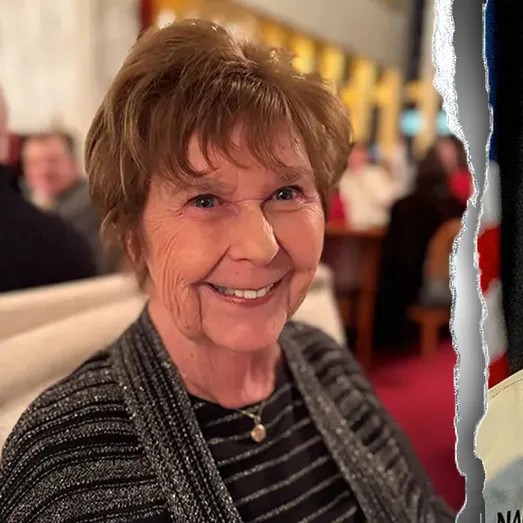
Mixed DNA from 84-year-old Nancy Guthrie’s Arizona home, and a sheriff’s warning that the technology to decode it may take months to catch up, are slowing a high-stakes search, even as local businesses say FBI agents have already shown them lists of names that investigators publicly insist do not exist.
TLDR
Pima County Sheriff Chris Nanos says mixed DNA from Nancy Guthrie’s home and evolving lab tools are slowing new leads, even as businesses report FBI name lists. No arrests have been announced, and investigators say they are still pursuing multiple avenues in the disappearance.
Guthrie, an 84-year-old resident of the Catalina Foothills area near Tucson, was last seen on the night of January 31st, 2026, after someone dropped her off at home. Investigators have described the case as an abduction. According to Fox News, there have been no arrests, and she remains missing weeks into the investigation.
In an interview with NBC Nightly News that aired in mid-February, Pima County Sheriff Chris Nanos said detectives were not looking into any new names tied to Guthrie’s disappearance, even as he maintained that “In terms of leads and working and getting out there,” the investigation was still growing.
Sheriff Describes DNA Difficulties
That same televised conversation highlighted a central obstacle. Nanos said DNA collected from inside Guthrie’s home contained genetic material from more than one person, a so-called mixed sample that current software at the Florida laboratory working with his department has struggled to interpret well enough to run cleanly through national databases.
According to Nanos, laboratory staff have told his office that newer tools are advancing rapidly and may be able to extract more information from the data in the coming months. “Our lab tells us that there are challenges with it,” he said, adding that scientists believe the issues could resolve “just in a matter of weeks, months, or maybe a year.”
Mixed DNA is common in real-world crime scenes, where multiple people may live, visit, or touch the same objects. Separating contributors, especially when one person’s genetic signal is faint or closely related to others in the home, often requires additional interpretation, validation, and sometimes reanalysis as new algorithms become available.
For a family waiting for answers in a missing-person case, that technical caution can feel like inaction. Nanos acknowledged the tension, saying criticism about the pace of work was understandable. “It’s never fast enough for the Sheriff,” he said, before adding that “But the reality is, I also know that sometimes things take time.”
He also stressed that detectives are pursuing other forms of evidence beyond DNA. Referring to items recovered during the search for Guthrie, Nanos said investigators were getting closer to identifying “not just that backpack” but also “the shoes, the pants, the shirt or jacket” linked to the case.
Day 21 in the search for Nancy Guthrie — still no answers.
This week, CSI expert Sheryl McCollum joined me to break down what should happen next, why DNA testing isn’t over, and how the public could play a critical role in this investigation.
Watch the full conversation now on… pic.twitter.com/E6YIoVIg0C
— Laura Ingle (@lauraingle) February 21, 2026
Businesses Report FBI Name List
The question of what, exactly, investigators are doing with potential suspects or witnesses has been complicated by accounts from local businesses. The same Fox News report described owners who said FBI agents had visited and showed them a list of names and images connected to the Guthrie investigation.
Those descriptions appear to conflict with Nanos’ televised remark that investigators are not looking into any new names. On NBC Nightly News, he emphasized that while leads were “still growing,” there was no expanding roster of individuals under examination beyond those already known to the sheriff’s office.
Publicly available reporting does not indicate whether federal or local officials have explained how the business visits fit with that explanation. It is not clear whether the names on the FBI lists were long-standing persons of interest, newly identified individuals, or simply people whose images happened to appear in nearby surveillance footage.
Without that clarification, residents are left to reconcile two strands of information. In one, the sheriff suggests a focused investigation working a stable set of leads while waiting on science to catch up. In the other, federal agents are broadening their outreach, carrying photographs and names from place to place in search of something that might crack the case.
Technology, Timelines, and Expectations
In that coverage, a retired FBI agent urged investigators to expedite scientific testing, arguing that in a time-sensitive disappearance, crucial samples should not sit in transit over a weekend en route to a distant laboratory. The comment reflected frustration that a vulnerable victim’s fate might turn, in part, on shipping schedules and laboratory queues.
Experts generally note that rapid DNA technology can deliver quick results in certain controlled settings, such as confirming identities during booking, but complex mixtures like those described in the Guthrie case usually demand more specialized analysis. That work still often happens at regional or private laboratories, which can introduce both transportation delays and backlogs.
Nanos has framed his department’s reliance on an out-of-state laboratory as a pragmatic response to those realities. By his account, the Florida facility is using cutting-edge software to make sense of overlapping genetic signals, betting that ongoing technological improvements will yield clearer answers from data that, today, looks muddled.
For the public, those distinctions between routine DNA profiles and more intricate mixtures are rarely visible. What many people see instead is a gap between the urgency conveyed in missing person alerts and the slower, methodical pace of forensic work and case building described in interviews and press statements.
What Remains Unclear in the Guthrie Investigation
Weeks into the search, several critical questions remain unresolved. It is not known whether scientists will ultimately be able to separate the DNA recovered at Guthrie’s home into profiles strong enough to identify or eliminate potential suspects. There has been no public announcement of any arrest or of anyone being formally named as a suspect.
Fox News has also highlighted earlier reporting that referenced a ransom deadline and additional evidence in the case. Law enforcement agencies have not publicly released full descriptions of that material, and its precise relationship to the mixed DNA and any lists carried by FBI agents has not been explained in public accounts.
Nanos has repeatedly insisted that his office is continuing to work the case, saying “We’re not quitting” and promising, “We’ll find her.” Whether evolving forensic tools, interagency coordination, and traditional detective work can align in time for an 84-year-old who vanished after returning home on a January night is a question that, for now, remains open.
References
- Fox News: Pima County Sheriff Warns in NBC Interview Over DNA Tech Issues in Nancy Guthrie Case
- NBC News: Investigators Press Ahead as Search for Nancy Guthrie Enters 20th Day
- Fox News: Retired FBI Agent Urges Rapid DNA Testing in Guthrie Case
- Fox News: Ransom Deadline Passes as New Evidence Emerges in Nancy Guthrie Case