

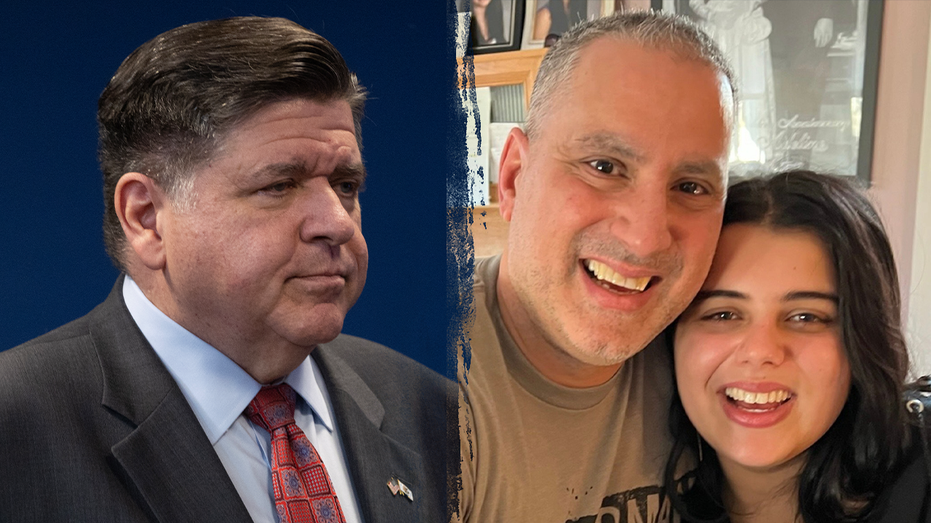
In a congressional hearing room in Washington, Illinois Governor J.B. Pritzker testified about immigration policy while, just a few feet away, Joe Abraham waited for some acknowledgment of his daughter’s death. According to Abraham, it never came.
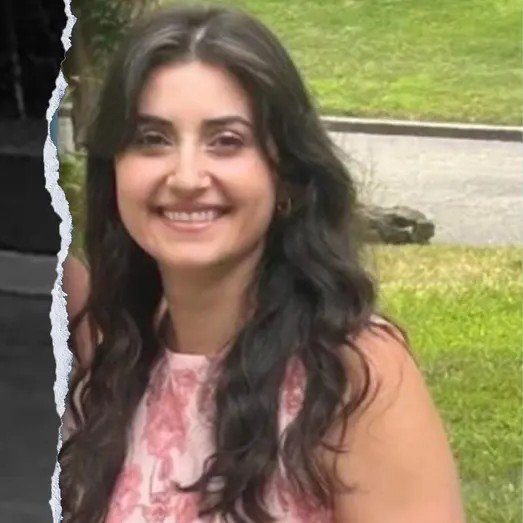
Abraham’s daughter, 22-year-old Katie Abraham, was killed in Urbana, Illinois, in what police called a drunk driving hit-and-run involving a previously deported Guatemalan national. A second young woman, 21-year-old Chloe Polzin of Deerfield, died from her injuries the following day. Abraham now argues that Illinois’ “sanctuary” approach to immigration, along with federal failures at the border, helped create the conditions for the crash. State and local officials, he says, have yet to publicly engage with that claim.
A fatal crash and a 30-year sentence
The basic outline of the criminal case is not in dispute. In early 2025, Katie Abraham was riding with friends in Urbana when their Honda Civic was rear-ended at high speed near a hospital intersection. Joe Abraham told Fox News Digital that the other vehicle struck them from behind “at almost 80 mph” while its driver was allegedly drunk.
Abraham said his daughter died at the scene. Polzin died in the hospital the next day. Local police described the incident as a hit-and-run and identified the suspected driver as Julio Cucul-Bol, whom Abraham says is a Guatemalan national who had been living in the United States without legal status.
According to Fox News Digital’s account of court proceedings, Cucul-Bol later accepted a plea deal in Illinois state court. He was sentenced to 30 years in prison on charges that included leaving the scene of a crash resulting in death, aggravated driving under the influence resulting in death, and reckless homicide.
Separately, the U.S. Department of Justice charged him with immigration-related and document-fraud offenses. Those federal charges included possessing a false Social Security card, possessing a false permanent resident card, making a false statement on a bank application, and false use of a passport, again according to Fox’s reporting on the case.
A previous deportation and unanswered questions
One of the case’s most contested features is what should have happened before the crash. Fox News Digital, citing federal authorities, reports that Cucul-Bol had previously been deported from the United States. Abraham says that when he reentered the country there were “no background checks” and “no health checks,” and that court records showed he was living with HIV.
Those specific medical details have not been independently confirmed through publicly accessible court documents. They are presented here as Abraham’s description of what he says he found in the file.
Abraham also told Fox that Cucul-Bol could not read or write, spoke a Mayan language rather than English or Spanish, and “wasn’t working and wasn’t productive.” Abraham further claimed that this was “not his first foray into drunk driving,” suggesting a prior history of impaired driving, although the underlying records are not cited in detail in the Fox report.
What is clear is that by the time of the Urbana crash, Cucul-Bol was in the country again after at least one prior removal. How he crossed the border, what federal databases showed about him, and what contact he had with local law enforcement before the fatal collision are critical questions for understanding the role, if any, of state and local policy. Those specifics have not been fully documented in the public reporting so far.
What Illinois’ ‘sanctuary’ policies actually do
Abraham frames his criticism around what he calls “weak policy” in Illinois. “If you’re going to nullify federal law, you better have a process to fill that void,” he told Fox News Digital. That view reflects a broader national debate over so-called sanctuary laws.
Illinois formally limited cooperation with federal immigration enforcement in 2017 with the TRUST Act, signed by then-Governor Bruce Rauner. The law bars state and local police from detaining people solely on the basis of federal immigration detainers or administrative warrants and from stopping individuals solely to investigate immigration status. The text of the TRUST Act is available through the Illinois General Assembly at Public Act 100-0463.
Chicago and several other cities in the state go further under local “Welcoming City” ordinances. Chicago, for example, restricts city agencies from inquiring about immigration status in most circumstances and limits when local officials may assist federal immigration agents. The city describes those policies on its own website as measures intended to encourage cooperation with local police and access to services, regardless of status, while still allowing cooperation in cases involving serious crime.
None of these laws prevent Illinois police from arresting people accused of state crimes, including DUI and homicide. Instead, they regulate when local jails will hold someone at the request of U.S. Immigration and Customs Enforcement (ICE) and how much information is shared with federal immigration authorities on purely civil immigration matters.
ICE itself explains that detainers are “requests” that local facilities hold an individual for up to 48 hours after their scheduled release to allow federal agents to take custody, and that cooperation is voluntary under current law. That description appears in an agency fact sheet on detainers available at ice.gov.
Abraham’s argument is that by limiting these forms of cooperation and by presenting Illinois as welcoming to immigrants regardless of legal status, the state helped create an environment in which someone like Cucul-Bol could live and drive without sufficient oversight.
A DHS operation named in her memory
After the crash, the Department of Homeland Security launched an immigration enforcement initiative in the Midwest that it called Operation Midway Blitz. Fox News Digital reports that the operation targeted people in the region who lacked legal status and also had criminal records, and that it was dedicated internally in honor of Katie Abraham.
Abraham has publicly supported that initiative and has appeared in a video produced as part of The American Border Story, which describes itself as a project to document the “human impact” of U.S. border policy. He told Fox that those who want to come to the United States need to “do things the right way” and that “there has got to be an orderly process where people have to understand how to behave here.”
At the same time, Illinois state officials and the city of Chicago have taken a sharply different view of the federal operation. According to Fox’s account of a lawsuit they filed, those governments argue that Operation Midway Blitz violated the Tenth Amendment by effectively commandeering local officers and facilities and by using what the suit calls “unlawful and violent” enforcement tactics.
The legal theory is similar to one Chicago advanced in earlier litigation over federal conditions on public-safety grants. In a 2018 decision in City of Chicago v. Sessions, the U.S. Court of Appeals for the Seventh Circuit held that the U.S. Attorney General could not unilaterally impose new immigration-cooperation conditions on certain grants without congressional authorization. The opinion is publicly available through the Seventh Circuit’s website at ca7.uscourts.gov.
The new lawsuit over Operation Midway Blitz, which postdates that ruling, appears to extend that conflict from the realm of money and paper conditions to on-the-ground enforcement tactics. The federal government has not, in the Fox story, publicly detailed its legal response, so the full contours of that dispute remain unclear.
Silence from state leaders, attention from Washington
Alongside the policy debate, Abraham describes a more personal grievance. He told Fox that in the year since the crash he has heard “utter silence and indifference” from Illinois leaders, including Governor Pritzker and U.S. Senators Dick Durbin and Tammy Duckworth. “Katie got disrespect and silence,” he said.
Abraham recalled traveling to Washington for a congressional Oversight Committee event where Pritzker and other governors from states with sanctuary policies testified. Katie’s case was cited during the hearing. “We were sitting several feet away from him in Congress, and he didn’t spend two seconds – didn’t even look in our direction,” Abraham told Fox. “Father to father – I expected him to care.”
In the same interview, Abraham contrasted that experience with an invitation he says he received from former President Donald Trump. According to Abraham, Trump hosted his family at the White House, told him that “things are out of control,” and promised to work on the problem.
Governor Pritzker’s office, and the offices of Durbin and Duckworth, did not provide responses in the Fox article. As a result, the public record on their private outreach to the family, if any, remains one-sided, presented only through Abraham’s description.
Policy gaps and what is still unknown
Abraham’s core claim is that Illinois’ approach to immigration left federal agents to fill a gap after people like Cucul-Bol were already in the community. “ICE has to go out on the streets now, because Illinois won’t cooperate,” he told Fox. “You can’t throw out the welcome mat to anyone and everyone, unchecked and unvetted, and then wash your hands of the consequences.”
Supporters of Illinois’ laws point to a different risk. They argue that when local police act as extensions of immigration enforcement, immigrant communities become less likely to report crimes or serve as witnesses, which can undermine public safety overall. That argument appears in policy papers and public statements by organizations that backed the TRUST Act and Chicago’s Welcoming City Ordinance, although those groups have not commented directly on the Abraham case.
Several factual issues in this specific incident remain unresolved in public reporting. It is not yet clear whether Cucul-Bol had prior DUI convictions in the United States, what his exact immigration history was, and what, if any, contacts he had with Illinois or local law enforcement before the crash. It is also not publicly established whether federal ICE detainers were ever issued for him in Illinois or other states after his earlier deportation.
Those details matter for assessing which failures were primarily federal, which were local, and which stem from broader structural gaps that neither level of government has fully addressed. For now, the documented facts show a fatal crash, a 30-year sentence, a federal prosecution for document fraud, and a grieving father who believes his daughter’s case is evidence that current “sanctuary” policies carry a cost that state leaders have not yet been willing to discuss with him directly.
Whether further court filings, internal ICE records, or future oversight hearings will fill in those missing pieces remains an open question.