Case overview
Fashion designer Gianni Versace was shot twice on the front steps of his Miami Beach mansion on the morning of July 15, 1997, by Andrew Cunanan, a serial killer already wanted for four other homicides. Cunanan died by suicide eight days later in a houseboat less than three miles from the crime scene. The motive behind Versace’s murder remains unresolved, with no confession, no forensic link between victim and killer prior to the shooting, and no conclusive evidence explaining why Cunanan targeted him.
The morning of July 15, 1997
Gianni Versace left his Ocean Drive mansion shortly after 8:30 a.m. to walk to News Cafe, a routine he followed regularly while in Miami Beach. He purchased magazines and returned home alone. At approximately 8:45 a.m., as Versace unlocked the gate to his property, Andrew Cunanan approached from behind and fired twice at close range. One bullet struck Versace in the left cheek, the other in the back of the head. He was pronounced dead at Jackson Memorial Hospital less than an hour later.
Witnesses reported seeing a man in a gray tank top flee on foot. Cunanan discarded his clothing in a parking garage several blocks away, where investigators later recovered a shirt and a gun. The weapon, a .40-caliber Taurus semiautomatic pistol, had been taken from Cunanan’s fourth victim, William Reese, a cemetery caretaker killed in New Jersey two months earlier.
Cunanan’s pattern before Versace
Andrew Cunanan had been on the FBI’s Ten Most Wanted list since May 12, 1997. Between late April and early July, he killed four men across three states. The first two victims, Jeffrey Trail and David Madson, were murdered in Minneapolis. Both had prior social connections to Cunanan. Trail was beaten to death with a claw hammer on April 27. Madson’s body was found May 3 near Rush Lake, Minnesota, with gunshot wounds to the head.
On May 4, Cunanan killed Lee Miglin, a Chicago real estate developer, in a sustained assault that included blunt force trauma and stab wounds. Miglin had no known connection to Cunanan. On May 9, Cunanan shot and killed William Reese at Finn’s Point National Cemetery in New Jersey, stealing his red Chevrolet pickup truck. Reese was also a stranger.
By mid-May, Cunanan was driving Reese’s truck and moving south. He arrived in Miami Beach in early July. The truck was found abandoned on July 16, less than a mile from Versace’s residence, with the interior wiped clean. It had been parked there since at least July 10.
Investigative gaps and surveillance
Cunanan had been living undetected in Miami Beach for more than a week before the shooting. He stayed at the Normandy Plaza Hotel under his own name from July 7 to July 12. Hotel staff later confirmed checking him in. He pawned a stolen gold coin on July 8 at a shop on Collins Avenue, signing his real name on the transaction form. Neither interaction triggered law enforcement attention, despite his status as one of the nation’s most wanted fugitives.
Miami Beach Police and the FBI faced immediate scrutiny over whether surveillance failures contributed to the murder. Cunanan’s name appeared in databases accessible to local pawn shops, but the coin transaction was not flagged in time. The delay in identifying his presence became a central focus of post-homicide review.
No evidence emerged to suggest Versace and Cunanan had ever met. Law enforcement interviewed Versace’s partner, family members, employees, and associates. None confirmed any prior relationship. Investigators also searched Cunanan’s known writings, communications, and travel records for references to Versace. None were found.
The unresolved motive
The question of why Cunanan killed Gianni Versace has never been definitively answered. Several theories were examined during and after the investigation. Some speculated that Cunanan, who had expressed admiration for wealth and status, may have been drawn to Versace as a symbolic target. Others suggested he sought notoriety by killing a globally recognized figure. A third possibility centered on obsession, though no documentation supported the claim that Cunanan had stalked or fixated on Versace before the murder.
Cunanan died by suicide on July 23, 1997, after a caretaker discovered him aboard a houseboat in the Indian Creek area of Miami Beach. He shot himself once in the head with the same firearm used to kill Versace. Investigators found no suicide note. Personal items recovered from the houseboat, including newspaper clippings about the manhunt, offered no insight into his reasoning.
The FBI closed its investigation without establishing a motive. Versace’s family maintained that the two men had never met. Maureen Orth, a journalist who reported extensively on the case, suggested in her book that Cunanan may have encountered Versace briefly in San Francisco years earlier. That claim was never corroborated by law enforcement.
Forensic evidence and the crime scene
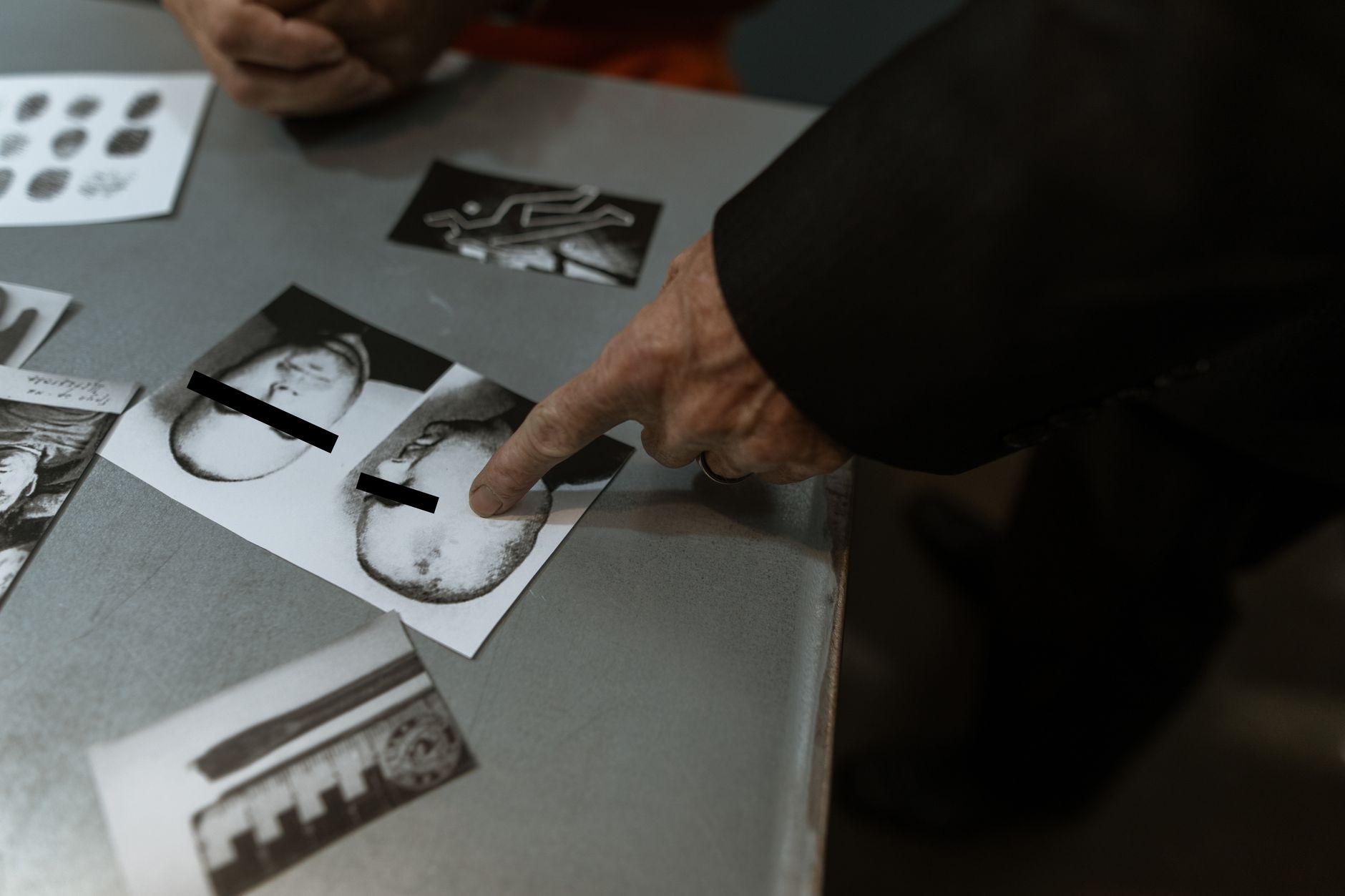
Ballistics analysis confirmed that the gun recovered after Versace’s murder was the same weapon used to kill William Reese. The firearm also matched ammunition found in Cunanan’s possession when his body was discovered. Gunshot residue and blood evidence at the mansion matched the sequence described by eyewitnesses. Cunanan’s fingerprints were lifted from the interior of Reese’s truck and from the houseboat.
The medical examiner determined Versace’s cause of death to be gunshot wounds to the head. Time of death was estimated between 8:40 and 8:50 a.m. Surveillance footage from nearby businesses showed Cunanan in the area earlier that morning, but no cameras captured the shooting itself.
Investigators also recovered a backpack containing a change of clothes, identification documents, and press clippings from the houseboat. The backpack did not contain any written explanation or manifesto. No forensic connection between Cunanan and Versace prior to July 15 was ever documented.
Aftermath and lasting questions
Gianni Versace’s murder became one of the most publicized homicides of the 1990s. His funeral was held in Milan on July 22, 1997, attended by international figures from fashion, entertainment, and politics. His sister, Donatella Versace, assumed creative leadership of the fashion house. His longtime partner, Antonio D’Amico, who was inside the mansion at the time of the shooting, later spoke publicly about the trauma of that morning.
The case prompted internal reviews within the FBI and Miami Beach Police Department. Criticism centered on Cunanan’s ability to move freely despite his fugitive status and the delayed response to the pawn shop transaction. Changes to fugitive tracking systems and pawn shop reporting protocols were implemented in the years that followed.
The absence of a motive continues to define the Gianni Versace murder. Unlike Cunanan’s earlier victims, who were either known to him or encountered during acts of theft, Versace’s death appeared premeditated yet unexplained. The question of whether the killing was opportunistic, symbolic, or driven by an undocumented obsession remains part of the record, unanswered by evidence or confession.
Where to look next
- Documentary: “The Assassination of Gianni Versace: A Fusion Event” (History Channel)
- Book: “Vulgar Favors: Andrew Cunanan, Gianni Versace, and the Largest Failed Manhunt in U.S. History” by Maureen Orth
- Podcast: “The Assassination of Gianni Versace” (“Casefile True Crime”, Casefile Presents)