



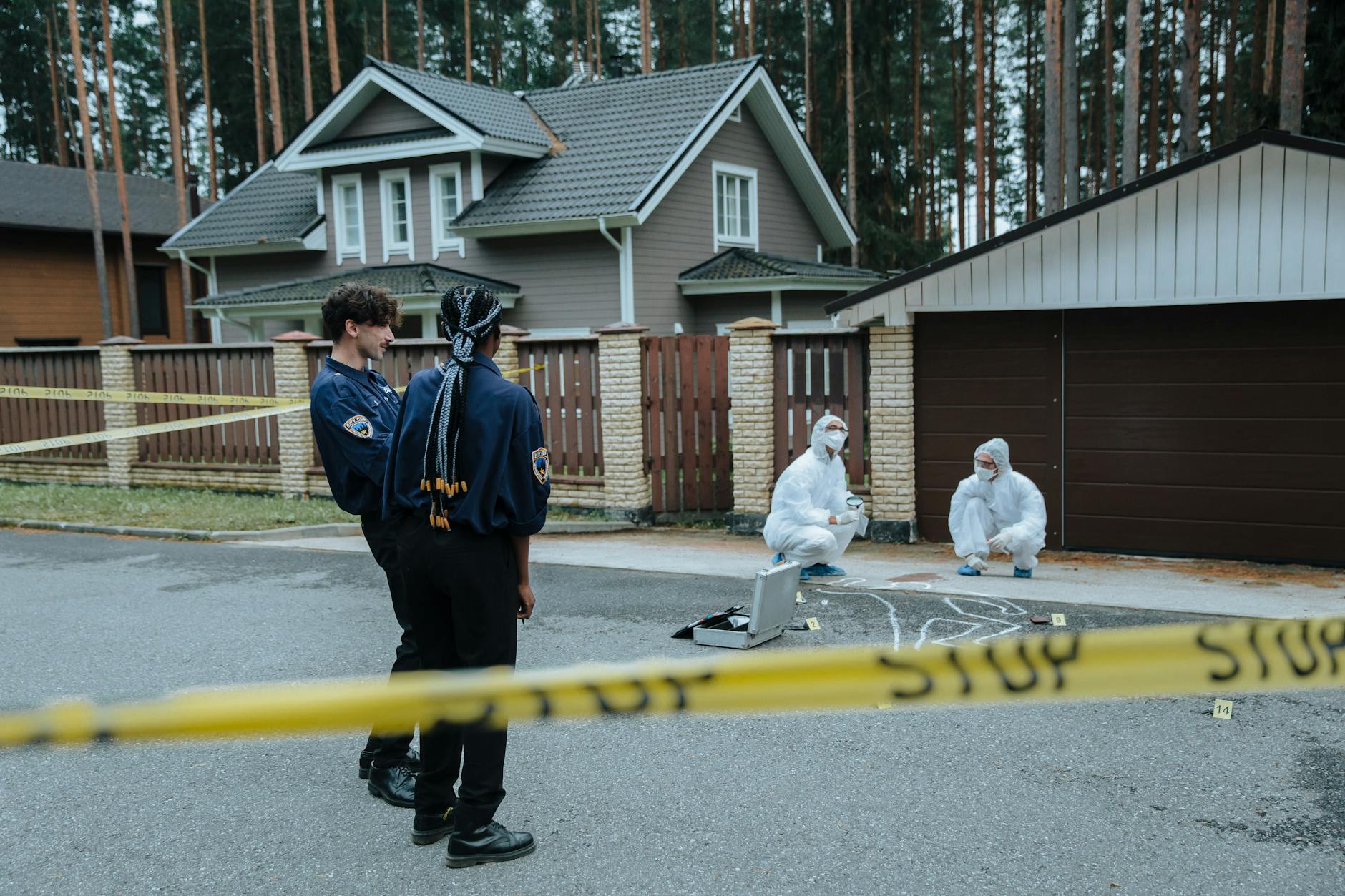
Case overview
Lawrence Bittaker and Roy Norris were convicted in 1981 for the kidnapping, torture, and murder of five teenage girls in Southern California between June and October 1979. The case became known as the toolbox killers investigation after prosecutors presented audio recordings Bittaker made during the assaults, along with testimony from a surviving victim who escaped before the killing phase began. The evidence linked the defendants to a methodical pattern of abduction along coastal highways, with remains recovered across remote areas of the San Gabriel Mountains.
The partnership and planning
Lawrence Sigmund Bittaker and Roy Lewis Norris met in 1978 while both were incarcerated at the California Men’s Colony in San Luis Obispo. Bittaker was serving time for assault with a deadly weapon and had prior convictions for robbery and burglary. Norris had multiple convictions for rape and attempted rape. Both were classified as sexual offenders with documented histories of violent behavior.
According to court records, the two discussed fantasies of kidnapping and assaulting young women during their incarceration. After their releases in late 1978 and early 1979, they reconnected in the Los Angeles area. Bittaker purchased a silver 1977 GMC van, which he customized with a sliding door, no rear windows, and a reinforced bed frame. Norris later testified that Bittaker referred to the van as “Murder Mack” and that both understood its intended use.
The van became central to their operation. Bittaker and Norris drove Pacific Coast Highway and surrounding areas looking for teenage girls who were hitchhiking or walking alone. Their approach was to offer assistance or a ride, then force victims into the rear of the van once trust was established.
The victim pattern
Between June 24 and October 31, 1979, Bittaker and Norris abducted five victims. All were teenage girls taken in daylight or early evening along coastal or suburban roads and transported to remote locations in the San Gabriel Mountains.
Lucinda Lynn Schaefer, 16, was abducted on June 24, 1979, in Redondo Beach while walking home from a church event. Her body was not recovered until months later, after Norris provided investigators with a map.
Andrea Joy Hall, 18, was abducted on July 8, 1979, in Redondo Beach while hitchhiking. Her body was found in a remote canyon.
Jacqueline Doris Gilliam, 15, and Jacqueline Leah Lamp, 13, were taken together on September 3, 1979, while standing at a bus stop in Hermosa Beach. Their remains were later recovered in separate mountain locations.
Shirley Lynette Ledford, 16, was abducted on October 31, 1979, in Sunland after leaving a Halloween party. Ledford’s case became the prosecution’s focus because Bittaker recorded portions of the assault on audio tape, and her body was discovered shortly after.
The surviving witness
In late September 1979, Bittaker and Norris picked up a woman in her twenties in Hermosa Beach. She was forced into the van, assaulted, and photographed. Norris later testified that Bittaker released her as part of an experiment to see if they could avoid detection. She was threatened with death if she reported the crime.
She went to police. She provided a description of the van, partial details of the interior, and descriptions of both men. Investigators took her statement but did not initially connect it to open homicide cases. That link became clear only after Norris was arrested in November 1979.
The arrest and cooperation
Roy Norris was arrested on November 20, 1979, after confiding details of the crimes to an acquaintance who contacted authorities. During questioning, Norris agreed to cooperate in exchange for a plea deal. He provided maps showing body disposal sites, described the interior of the van, and gave a detailed chronology of each abduction.
Norris also told detectives about the audio recordings. He said Bittaker had used a tape recorder during the assault on Shirley Ledford and that the tape was likely still in his possession.
Lawrence Bittaker was arrested the same day. A search warrant was executed on his van and residence. Investigators recovered the tape recorder, the audio cassette, photographs of victims, and various tools that matched descriptions provided by Norris and the surviving witness. The tools included pliers, hammers, and screwdrivers later determined to have been used as instruments of torture.
The evidence and trial
The prosecution’s case relied on the audio recording, the testimony of Roy Norris, and the testimony of the surviving victim.
The audio tape of Shirley Ledford’s assault was played during trial. It contained screaming, pleading, and verbal threats. Several jurors and courtroom observers required breaks during playback. The tape became one of the most significant pieces of physical evidence, documenting Bittaker’s direct participation.
Norris testified in detail about each abduction and murder. He described the planning, the method of approach, the use of the van, and the disposal of bodies. His testimony was consistent with physical evidence and the locations where remains were recovered.
The surviving victim testified about her abduction and assault. Her account matched details found in the van and corroborated Norris’s description of their methods. Her willingness to come forward despite threats became critical in establishing the pattern of behavior.
Lawrence Bittaker did not testify. His defense argued that Norris was the primary aggressor and that Bittaker’s participation was overstated. The jury rejected that argument.
Sentencing and appeals
Lawrence Bittaker was convicted on five counts of first-degree murder, along with multiple counts of kidnapping, rape, and conspiracy. He was sentenced to death on March 24, 1981. He remained on death row at San Quentin State Prison until his death from natural causes on December 13, 2019.
Roy Norris accepted a plea agreement and testified against Bittaker. He was sentenced to 45 years to life in prison. Norris was denied parole multiple times and died in prison on February 24, 2020.
Bittaker’s case went through numerous appeals, none of which resulted in reversal of conviction or sentence. His attorneys challenged the admissibility of the audio tape, the reliability of Norris’s testimony, and the fairness of the trial. Courts consistently upheld the conviction.
Investigative gaps and response
The toolbox killers case exposed gaps in case linkage and information sharing across jurisdictions. The abductions occurred in multiple beach cities, and early reports were not cross-referenced. The surviving victim’s report in September did not immediately trigger a broader investigation, even though it matched the profile of other missing persons cases in the region.
Only after Norris’s confession were investigators able to connect all five murders and understand the full scope of the crimes. The delays in linking cases allowed Bittaker and Norris to continue their pattern for several months without detection.
The case became a reference point in the development of multi-agency task forces and databases for tracking similar patterns of violent crime. It was also incorporated into training materials used by the FBI’s Behavioral Science Unit to illustrate how offenders with shared criminal history and psychological profiles can collaborate in serial violence.
Where to look next
- Documentary: “The Toolbox Killer” (Peacock)
- Documentary: “Most Evil” (Investigation Discovery)
- Book: “The Toolbox Killers” by Jack Rosewood
- Podcast: “The Toolbox Killers” (“Casefile True Crime”, Casefile Presents)








