

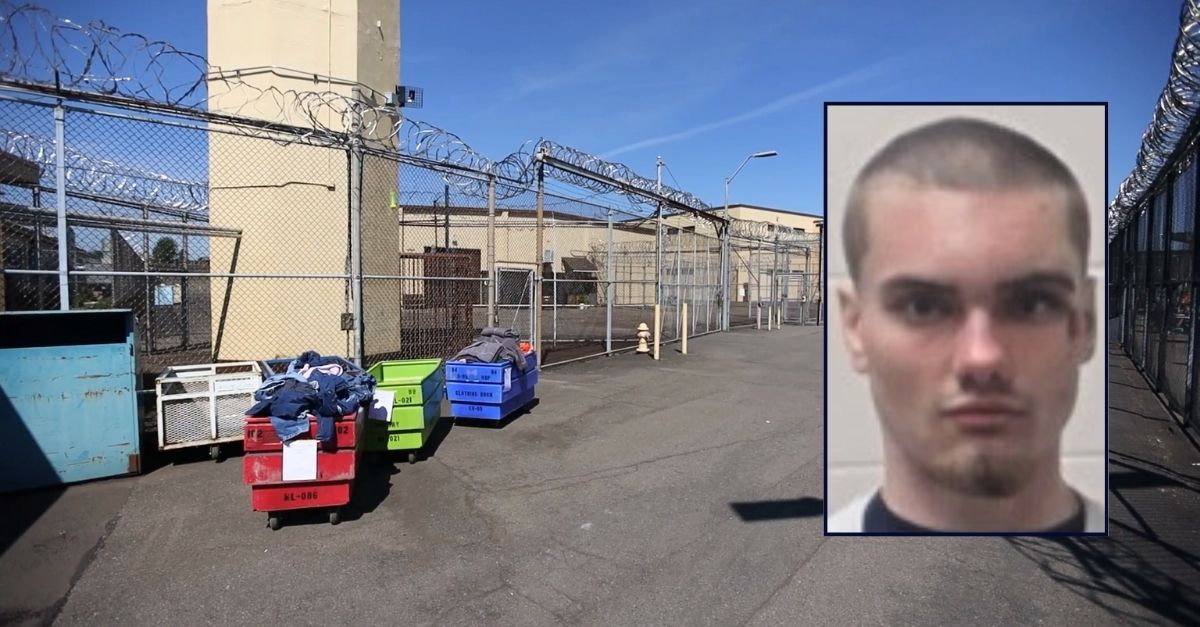
State prison staff in Oregon are supposed to stop people in crisis from dying by suicide. In one isolation cell, a new lawsuit says, officers did the opposite, and then the state quietly agreed to pay millions.
A Death in Solitary and a Multimillion Dollar Settlement
The Oregon Department of Corrections has agreed to pay $2.3 million to settle a civil rights lawsuit brought by the family of Grayson Painter, a 22-year-old who died by suicide in a solitary confinement unit at the Oregon State Correctional Institution in Marion County.
The settlement, first reported by Law&Crime, resolves claims that officers failed to protect Painter despite his documented mental health history and instead verbally encouraged him to kill himself. The Oregon Department of Corrections, often referred to as ODOC, did not respond to Law&Crime’s requests for comment and has not publicly addressed the detailed allegations.
Painter had been incarcerated on charges of assaulting a public safety officer, first-degree criminal mischief, and second-degree criminal mischief. After his death in late June 2023, ODOC issued a brief press release stating that he had died in custody and that his earliest possible release date had been in March 2025, according to the family’s complaint summarized by Law&Crime. The agency did not, at that time, disclose the nature of his mental health history or the specific conditions of his confinement.
The ‘Black Box’ Cell and the Final Hours
According to the lawsuit, Painter was moved into a segregation unit, referred to in court filings as a “black box” cell, measuring roughly six feet by nine feet, with minimal time allowed outside. His family alleged that he had been brought there for a urine test and that a urinalysis later came back negative for intoxicants.
The complaint says staff attributed what they viewed as “erratic behavior” to substance use rather than to mental illness. Painter’s relatives argue that his actions in the hours before his death were consistent with a severe psychiatric crisis. They claim he was experiencing delusions, becoming suspicious of his surroundings, and yelling from inside his cell.
Another detail in the lawsuit concerns surveillance within the unit. Painter’s cell was equipped with a camera, but his family says it had stopped functioning before his death. The complaint states that sergeants requested he be placed in a cell that allowed 24-hour monitoring, yet there is “no indication” that staff repaired the camera or increased in-person checks after it failed.
Hours later, a correctional officer conducting a check allegedly found Painter hanging from the cell bars by a bedsheet. According to the complaint, staff cut him down, then shackled his ankles on the floor even as they attempted to respond to the medical emergency.
Documented Mental Illness, Disputed Response
The central factual dispute in the case is not how Painter died but how staff responded to the risks leading up to that moment. By the family’s account, his mental health needs and history of self-harm were well known to ODOC.
The civil complaint, as quoted by Law&Crime, states that “Painter was clearly experiencing a mental health crisis” and describes a long list of diagnoses and conditions, including a traumatic brain injury from a 2019 motor vehicle crash, a psychotic disorder, attention deficit hyperactivity disorder, substance use disorder, and a “documented history of suicidal ideation and self-harm.” Those assertions are based on medical records and prior treatment history, according to the filing.
Despite that record, the lawsuit alleges that officers inside the solitary unit treated Painter as a disciplinary problem rather than a patient in crisis. Neighboring adults in custody told investigators that officers called him names and taunted him, according to the complaint. One allegation stands out. The filing claims that an officer told the weeping young man to kill himself, using a profanity, while he sat in isolation.
As Painter cried and asked officers for a book, another incarcerated person reportedly tried to console him from a nearby cell and offered to share books. The complaint says Painter ultimately declined, telling the other person that he would not be around much longer.
Allegations of ‘Deliberate Indifference’
In legal terms, the family framed the case as a violation of the Eighth Amendment prohibition on cruel and unusual punishment. They argued that officers and ODOC as an institution were “deliberately indifferent” to a serious risk of harm.
According to their filing, prison staff:
- Placed a person with “severe persistent mental illness” into solitary confinement instead of a higher level of psychiatric care.
- Attributed signs of crisis to drugs despite a negative urine test, as alleged by the family.
- Failed to act after observing self-harm behavior earlier in the day.
- Did not initiate suicide watch procedures or move Painter to a setting with continuous observation.
- Did not address the camera failure in his cell or increase monitoring after it stopped working.
- Used punitive measures instead of treatment during what the complaint describes as a severe mental health crisis.
The complaint concluded that “defendants were deliberately indifferent to Mr. Painter’s serious medical needs and were deliberately indifferent to a serious risk of harm to him, in violation of his right to be free from cruel and unusual punishment under the Eighth Amendment of the United States Constitution.”
The family also argued that even if Painter had been using illegal substances, which they say he was not, ODOC staff could not “deliberately choose to deny him life-saving mental health treatment and dismiss Mr. Painter’s mental suffering and anguish.” Those claims were not tested at trial because the case settled.
What the Settlement Can and Cannot Show
The 2.3 million dollar payment makes Painter’s case one of the more significant recent civil settlements involving a death in Oregon state custody, based on publicly reported figures. Settlement agreements typically resolve litigation without a court finding of liability. The Law&Crime reporting does not indicate that ODOC admitted wrongdoing, and the department did not answer detailed questions about the case.
Without a public response from ODOC, the factual record is one-sided, mainly built from the family’s lawsuit, statements by other adults in custody, and brief death notices from the department. There is no available internal investigation report, disciplinary record for the officers named in the complaint, or public explanation of whether suicide prevention protocols were revised after Painter’s death.
Painter’s mother, Jennifer Painter, told Portland television station KOIN that her son’s death has permanently altered their lives. According to the Law&Crime account of that interview, she said her family’s lives “will never be the same”. She added, “No settlement or verdict will bring him back, but it’s my sincere hope that this result not only causes ODOC to change their ways but reminds everyone that they have rights and dignity that can and should be vindicated.”
Suicide Risk in Solitary Confinement
Painter’s death and the allegations surrounding it touch on a broader concern that predates his case. National correctional health experts have warned for years that isolation units are among the highest risk environments for suicide in custody. The National Commission on Correctional Health Care (NCCHC), for example, publishes suicide prevention standards for jails and prisons and notes that close observation, quick response to warning signs, and staff training are critical in segregation settings.
Oregon’s Department of Corrections has publicized its own suicide prevention and mental health services in the past. Still, it has not explained how those policies applied to Painter’s case or whether any procedures were changed after his death. The family’s lawsuit suggests a gap between written policy and what allegedly occurred inside the “black box” cell where he died.
For now, the 2.3 million dollar settlement provides financial accountability but few public details. The alleged comments by officers, the reported camera failure, and the decision to keep a young man with a lengthy mental health history alone in solitary confinement remain described only in court papers and secondhand accounts, not in any official public review.
Without an internal report or independent investigation on the record, it is unclear whether ODOC has determined if staff followed, ignored, or lacked clear guidance on suicide prevention in Painter’s final hours, or whether similar risks persist in other segregation units across the state.