Case overview
Jeannie Saffin died on September 23, 1982, eight days after suffering severe burns while sitting in her father’s kitchen in Edmonton, London. Witnesses described seeing her engulfed in flames within seconds, but no clear ignition source was identified. Investigators closed the case as unexplained, and the coroner returned an open verdict that has remained unresolved for more than four decades.
What happened on September 15, 1982
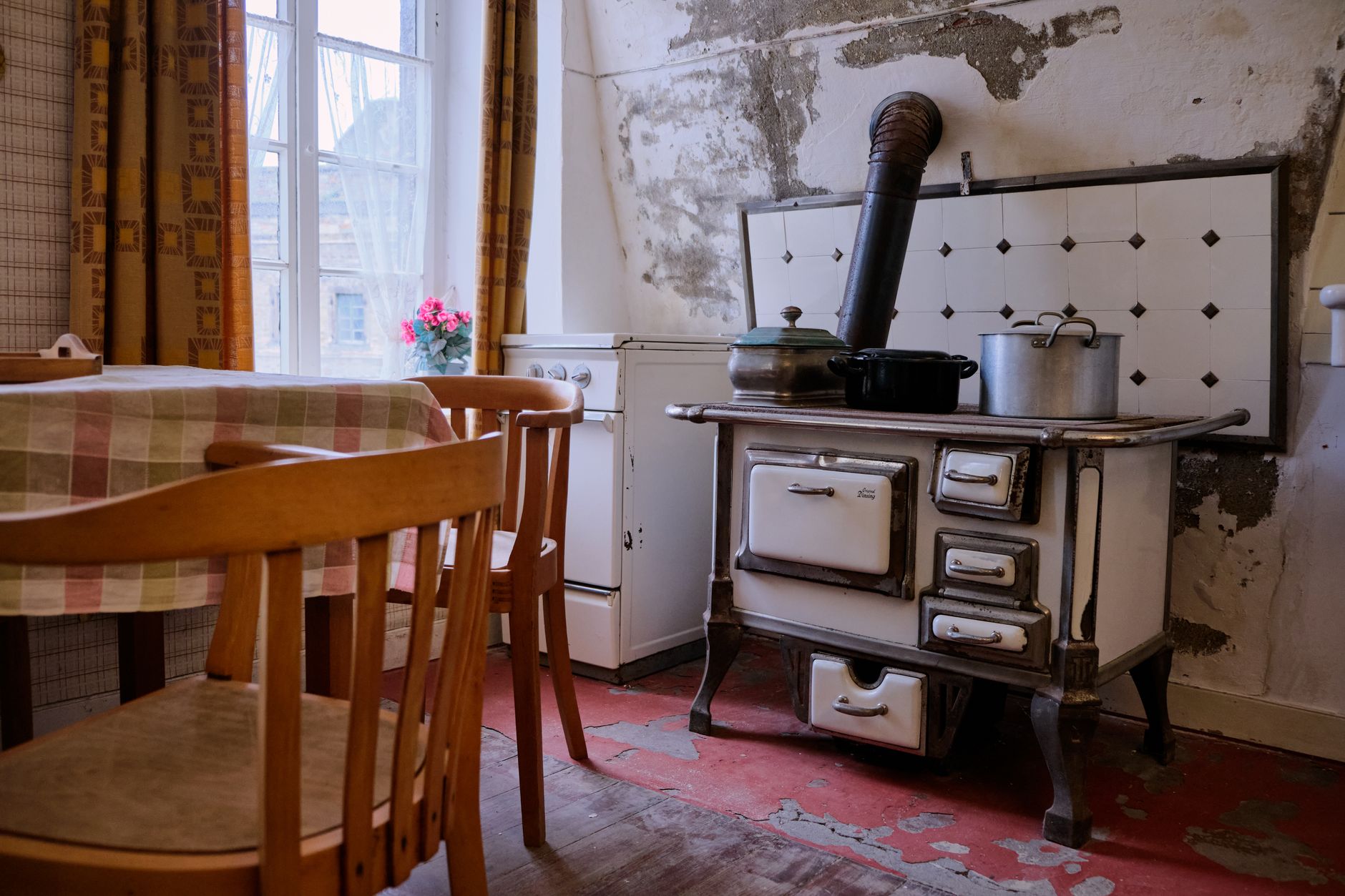
Jeannie Saffin, 61, lived with her father, Jack Saffin, 82, in North London. She had learning disabilities and required daily care. On the afternoon of September 15, she sat in a chair in the kitchen while her father stood nearby. According to his account, he turned and saw his daughter suddenly surrounded by flames. He described the fire as appearing almost instantaneously, with no warning or visible source.
Jack Saffin called for help, and Jeannie’s brother-in-law, Donald Carroll, who lived next door, rushed in. Carroll later told investigators he saw Jeannie sitting upright, her hands on her face, with flames concentrated on her upper body and head. He and Jack Saffin attempted to extinguish the fire using water and towels.
Jeannie Saffin sustained burns to her face, hands, and abdomen. She was transported to a hospital, where she remained in critical condition for eight days before dying from her injuries.
The scene and what investigators found
When investigators arrived, they noted that the chair Jeannie had been sitting in showed minimal damage. The kitchen itself bore no signs of a wider fire. There were no accelerants detected, no electrical faults identified, and no cigarettes or matches found near her. Her clothing had burned, but the fire appeared to have been localized to her body.
Jack Saffin reported that he had not seen Jeannie holding anything that could have ignited. He said she had been sitting quietly moments before the fire began. Donald Carroll’s account supported this timeline. Both men were consistent in describing the speed of the fire and the lack of an obvious ignition point.
Investigators examined the possibility of an external flame source, including whether Jeannie could have been near the stove or another heat source. The stove was not in use at the time, and there was no evidence of a gas leak or other environmental hazard.
The coroner’s inquest and the open verdict
A coroner’s inquest was held to determine the cause of death. Medical examiners confirmed that Jeannie Saffin died from burns, but the origin of the fire remained unexplained. The coroner reviewed witness testimony, the physical evidence from the scene, and the autopsy findings. No accelerant, no ignition device, and no third-party involvement could be established.
The coroner returned an open verdict, meaning the cause of death was confirmed but the circumstances leading to the fire could not be determined. The case was not classified as a homicide, and no criminal charges were filed.
Theories and the limits of the investigation
In the years following Jeannie Saffin’s death, the case attracted attention from researchers interested in unexplained fire deaths. Some pointed to the case as an example of spontaneous human combustion, a phenomenon in which a person is said to ignite without an external flame. However, no scientific consensus supports the existence of spontaneous human combustion, and forensic experts have consistently identified alternative explanations in similar cases.
One theory proposed that Jeannie may have been smoking or holding a lit cigarette that ignited her clothing. However, no evidence of smoking materials was found, and family members stated that she did not smoke. Another theory suggested that her clothing may have come into contact with an open flame from the stove, but this was inconsistent with the physical evidence and witness accounts.
Investigators also considered the possibility of a medical episode, such as a seizure or heart event, that could have caused her to fall or move in a way that brought her into contact with a heat source. No such source was identified, and medical records did not indicate a condition that would have made such an event likely.
The unresolved question
The case remains unresolved because no definitive ignition source was ever established. The speed of the fire, the lack of damage to the surrounding environment, and the absence of accelerants or smoking materials left investigators without a clear explanation. The open verdict reflects the limits of what could be determined from the available evidence.
Jeannie Saffin’s death is not classified as a homicide, and no suspect has ever been named. The case is not under active investigation, and no new evidence has emerged in the decades since her death. The coroner’s findings stand as the final official record.
Where to look next
- Documentary: “The Unexplained” (Investigation Discovery)
- Book: “Ablaze! The Mysterious Fires of Spontaneous Human Combustion” by Larry E. Arnold
- Book: “The Entrancing Flame” by John Heymer