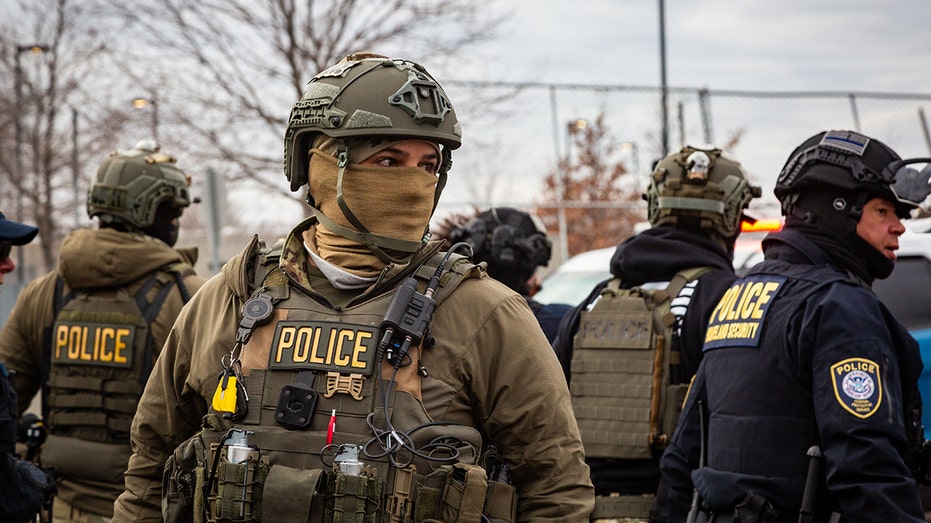
Federal Order Reins In ICE At Minneapolis Protests
According to reporting by Fox News, U.S. District Judge Kate Menendez has issued an order limiting how Immigration and Customs Enforcement officers and other federal agents can respond to protests in the Minneapolis area. The ruling comes during Operation Metro Surge, an ongoing federal immigration enforcement campaign, and follows the fatal shooting of Minnesota resident Renee Good by an ICE agent earlier this month.
The court order bars federal officers, while conducting Operation Metro Surge in Minneapolis, from detaining peaceful protesters who are not obstructing authorities. It also prohibits the use of tear gas, pepper spray, and other so-called less lethal crowd control tools against people who are peacefully protesting or observing officers, Fox News reported.
What Judge Menendez Actually Ordered
Fox News reports that Judge Menendez directed federal officers not to retaliate against anyone for peacefully protesting or recording and observing immigration enforcement activity. The ruling requires agents to have probable cause or at least reasonable suspicion that a crime has been committed, or that someone is interfering with law enforcement operations, before taking enforcement action against protesters.
In one key line quoted by Fox News from the order, Menendez wrote that following federal officers at a safe distance is not, by itself, enough to justify a traffic stop. She stated that safely following officers “at an appropriate distance does not, by itself, create reasonable suspicion to justify a vehicle stop.” That language directly targets a tactic protesters and civil liberties lawyers say has been used to identify and deter people who monitor ICE operations.
Probable cause and reasonable suspicion are longstanding standards in U.S. constitutional law that limit when officers can stop, search, or arrest someone. The Supreme Court has held, for example, that officers must have specific, articulable facts suggesting criminal activity before conducting an investigative stop, as in Terry v. Ohio. Menendez appears to be applying those principles directly to the context of protest and immigration enforcement.
The Lawsuit Behind The Ruling
The ruling grew out of a lawsuit filed in December on behalf of six Minnesota activists, according to Fox News. The plaintiffs, represented by the American Civil Liberties Union of Minnesota, allege that federal officers have been violating the constitutional rights of Twin Cities residents during Operation Metro Surge. They argue that people have been targeted for filming officers, following enforcement vehicles, or standing near operations in order to observe.
Government lawyers countered that officers were acting within their legal authority and responding appropriately to violence while enforcing immigration laws in Minnesota and around the country, Fox News reported. They point to incidents of assaults on officers and vandalism of federal property as justification for aggressive tactics.
Separate from the activists’ case, Menendez is also presiding over a lawsuit filed by the state of Minnesota and the cities of Minneapolis and St. Paul. That case seeks to suspend the broader enforcement crackdown. Details of that second lawsuit, including the specific legal claims and the federal government’s response, were not fully described in the Fox News account, and court filings were not immediately available through public reporting.
Two Shootings, Two Competing Narratives
The legal fight is unfolding against the backdrop of two recent shootings involving ICE agents in Minneapolis, according to Fox News. The first, on January 7, ended with the death of Renee Good, a Minnesota resident.
Fox News, citing federal officials, reports that an ICE agent fired into Good’s vehicle through the driver’s side windshield and open window after she allegedly tried to run him over. A video of the aftermath captured the agent using a profanity toward Good as her car crashed into a parked vehicle. The outlet did not describe what, if anything, that video shows of the moments before shots were fired.
Local residents and Democratic officials have publicly described the killing as murder, according to Fox News, and have called for criminal charges against the agent. The Trump administration and several Republican lawmakers, by contrast, have defended the shooting as justified and in line with the agent’s duty to protect himself.
The second incident, also described by Fox News, occurred during a traffic stop targeting a Venezuelan national. Federal officials told the outlet that three people in the country without legal immigration status allegedly ambushed an ICE officer during the stop, leading to a foot chase and a violent struggle. One suspect was shot and all three were taken into custody. The condition of the wounded person and the precise sequence of events have not been fully detailed in public filings.
Together, the two cases illustrate the core dispute. Federal officials say their officers are under attack while carrying out lawful duties. Protesters and local officials say federal agents are escalating encounters and using deadly and less lethal force in ways that chill constitutionally protected dissent.
DHS Says Violence, Advocates Emphasize Rights
After Menendez issued her order, Department of Homeland Security Assistant Secretary Tricia McLaughlin responded in a statement to Fox News Digital. She argued that the First Amendment does not protect rioting, and said DHS is “taking appropriate and constitutional measures to uphold the rule of law and protect our officers and the public from dangerous rioters.”
McLaughlin described a pattern of violence directed at officers. According to Fox News, she stated that “Rioters and terrorists have assaulted law enforcement, launched fireworks at them, slashed the tires of their vehicles, and vandalized federal property. Others have chosen to ignore commands and have attempted to impede law enforcement operations and used their vehicles as weapons against our officers.” She added that “assaulting and obstructing law enforcement” is a felony, and said officers have used the minimum amount of force necessary to protect themselves, the public, and federal facilities.
Civil liberties organizations, including the national ACLU, have long argued that recording police and federal officers in public is a protected form of speech. In its nationwide guidance, the American Civil Liberties Union states that individuals generally have a right to photograph and video police in public spaces so long as they do not interfere with official duties, and that officers may not confiscate or delete images without a warrant or exigent circumstances. Those principles are outlined in the ACLU’s protest rights guidance, available at aclu.org.
Supreme Court decisions have also protected the right to criticize and verbally challenge police, even in tense settings. In City of Houston v. Hill, for example, the Court held that the First Amendment safeguards a significant amount of verbal challenge and criticism directed at police officers. Menendez’s order appears to be grounded in that line of authority, which treats protest and observation of officials as central First Amendment activity.
What Remains Unsettled
Menendez’s ruling does not end Operation Metro Surge, and it does not resolve whether the shooting of Renee Good was lawful. The order concerns how federal officers may treat peaceful observers and protesters, not whether force in the earlier incidents was justified. Any criminal investigations of the shootings, internal federal reviews, or potential state prosecutions have not yet been fully described in public documents.
Key questions remain. Will federal officers adjust their tactics on the ground to comply with the new limits, or will further court hearings be needed to enforce the order? Will state and local lawsuits succeed in curbing federal immigration sweeps in the Twin Cities? And as public pressure builds over both the death of Renee Good and the injuries to an ICE officer, which version of events will juries, judges, and investigators ultimately find most credible?