TLDR
Detroit resident Desmond Burks pleaded guilty in the 2023 killing of neurosurgeon Dr. Devon Hoover and the 2024 death of motorist Reda Saleh. A Michigan judge sentenced him to 35 to 60 years in prison on the murder case, plus 10 to 15 years for manslaughter, to be served concurrently.
Guilty Pleas in Two Separate Deaths
According to the Wayne County Prosecutor’s Office, Desmond Burks pleaded guilty to multiple felonies arising from two separate incidents in Detroit. In the first case, he admitted to second-degree murder in the 2023 killing of 53-year-old neurosurgeon Dr. Devon Hoover, along with larceny of more than $20,000, using a computer to commit a crime, and being a felon in possession of a firearm. As part of that plea agreement, a first-degree murder count was dismissed.
In the second case, involving 67-year-old motorist Reda Saleh, Burks pleaded guilty to manslaughter. Prosecutors had initially charged him with second-degree murder, but accepted a lesser count as part of the overall resolution. For the Saleh case, Burks received a sentence of 10 to 15 years in prison. The court ordered that the sentences run concurrently, so his controlling term is 35 to 60 years.
The sentencing reflects Michigan’s approach to indeterminate terms. The minimum term, 35 years, determines when Burks will first be eligible for parole. The maximum term, 60 years, provides the outer limit of his incarceration if the parole board never grants release. With concurrent sentences, any time he serves applies to both cases at once.
A Defiant Statement at Sentencing
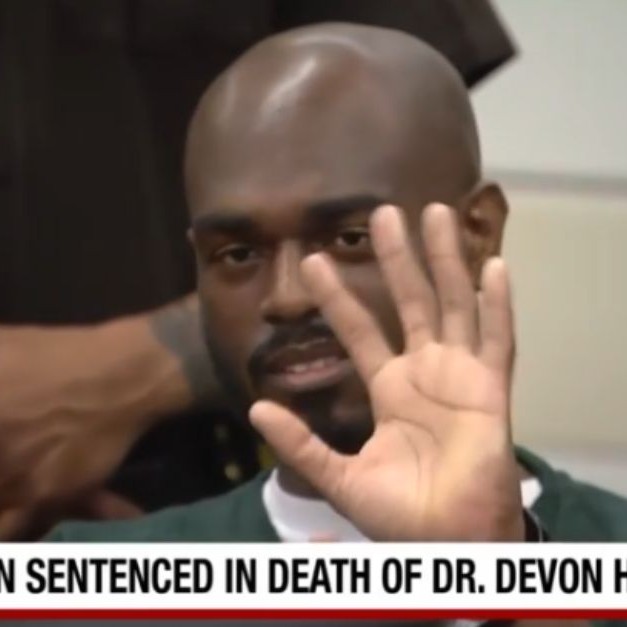
Burks’ conduct and comments at sentencing drew attention because they clashed with the change of plea he had already entered. According to a courtroom report from local NBC affiliate WDIV, Burks introduced himself to the judge and said, “My name is Desmond Burks. I’d like to say I’m not a murderer. I’m not a killer. I’m just a regular person, just like everyone in this room. I’m not a gang member. I love sports. I’m a people person. Just because I took the plea don’t mean I did it.”
Law & Crime reported that during the hearing, Burks smiled and waved at the courtroom cameras. He also rolled his eyes and scoffed while Hoover’s sisters delivered victim impact statements, which are permitted under Michigan law to allow families to describe the harm caused by an offense.
Circuit Court Judge Paul Cusick replied sharply to Burks’ assertions. The Detroit Free Press quoted the judge as saying, “Quite frankly, you are a murderer, sir.” That statement reflected the legal posture of the case. By the time of sentencing, Burks had already admitted under oath that he caused Hoover’s death, which is what allowed the court to impose a sentence for second-degree murder.
Burks’ insistence that his plea did not mean he committed the crimes underscores a recurring tension in the criminal justice system. Defendants sometimes plead guilty for strategic reasons, including to avoid the risk of a mandatory life sentence on a first-degree murder charge. However, in Michigan, a valid plea requires that a defendant acknowledge facts establishing each element of the crime. The judge’s remarks made clear that, regardless of Burks’ statements at sentencing, the court viewed him as legally and factually responsible for Hoover’s killing.
Relationship With Hoover and Earlier Conviction
Before Hoover’s death, the men were not strangers. Wayne County Prosecutor Kym Worthy previously stated that investigators recovered roughly 4,000 text messages exchanged between Burks and Hoover. According to Worthy, those communications showed that the two men were in an intimate relationship and that Burks sometimes charged Hoover for sexual services. She said, “The text messages establish that Desmond Burks and Dr. Hoover were in an intimate relationship with one another, and that, on occasion, Desmond Burks would charge Dr. Hoover for these sexual services.”
Michigan Department of Corrections records, cited by Law & Crime, show that Burks had an earlier felony conviction for arson. He was released from prison in the summer of 2022. Several months later, Hoover was killed inside his large historic home in Detroit’s Boston-Edison neighborhood.
Family members became concerned in April 2023 when Hoover did not travel from Detroit back to Indiana to see his terminally ill mother, Lauretta. A relative called 911 to request a welfare check. Detroit police entered Hoover’s mansion on April 23rd, 2023, and found his body in an attic crawl space. He was face down, according to reporting by Law & Crime, wearing only socks and wrapped in a blood-soaked carpet. The medical examiner determined that he had been shot twice in the head.
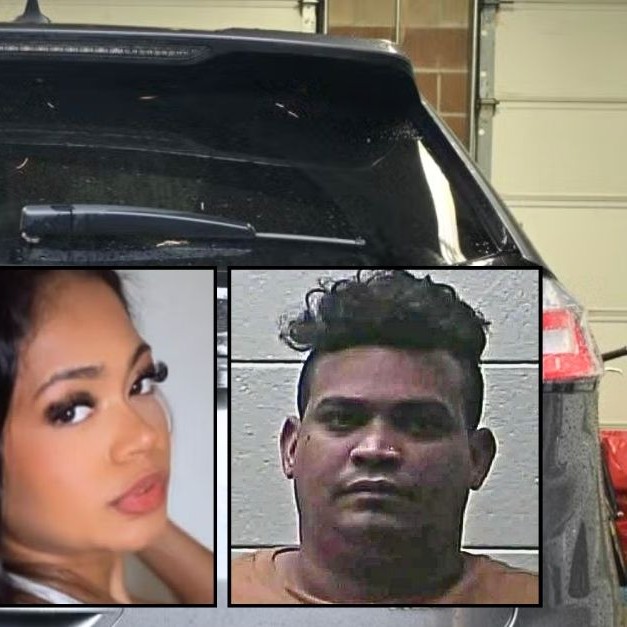
Investigators also found signs that Hoover’s property and financial accounts had been exploited after his death. Law & Crime reported that Hoover’s Range Rover was discovered the day before his body was found, several miles from his home and blocking a driveway, with blood visible inside the vehicle. Authorities later alleged that watches, a phone, and a wallet belonging to Hoover were missing, and that his financial accounts showed fraudulent activity in the days following the killing.
Detroit police detained Burks as a person of interest in May 2023. Then-Detroit Police Chief James White said he was released following prosecutorial review, indicating that, at that time, prosecutors did not yet have a sufficient evidentiary basis to charge him. That decision became more consequential in hindsight once investigators later connected Burks not only to Hoover’s killing but also to Saleh’s death.
From Mansion Killing to Roadside Confrontation
About a year after Hoover’s death, authorities say Burks became involved in a traffic dispute that ended with another man dead. According to reporting from Fox affiliate WJBK, on April 17th, 2024, Saleh bumped the rear of Burks’ vehicle on a Detroit roadway. The two men argued. During that altercation, Burks punched Saleh in the head and then left the scene.
Saleh was taken to a hospital and later died on May 11th, 2024. Prosecutors initially charged Burks with second-degree murder in connection with that confrontation, which in Michigan does not require proof of premeditation but does require proof of malice. The eventual manslaughter plea lowered the maximum penalty but still acknowledged that Burks’ unlawful act contributed to Saleh’s death.
Unlike the Hoover case, which involved a secluded mansion and concealed remains, the Saleh case began as a relatively common traffic incident that escalated quickly. The two cases, handled together at sentencing, illustrated how different factual scenarios can be folded into a single plea and sentencing package when the same defendant is accused.
Accountability Questions After the Sentencing
Hoover’s death drew wide attention not only because he was a noted neurosurgeon, but also because of his role in Detroit’s cultural life. An obituary described how he bought his historic home in 2008, served on the board of the Detroit Opera, and “hosted a picturesque Christmas party” for neighbors. The obituary added, “He was essentially the curator of his own museum, which he loved sharing with friends, family, and visitors.” Those details contrasted with the way his life ended, in a hidden attic space of the home he cherished.
With the sentencing complete, the criminal cases against Burks are largely resolved at the trial court level. He retains the right to challenge aspects of his conviction and sentence through post-conviction motions or appeals, although defendants who plead guilty generally face narrower appellate options. There has been no public indication to date that Burks has moved to withdraw his pleas.
The Burks cases raise several accountability questions that extend beyond a single defendant. One concerns supervision and reentry. Burks was a convicted arsonist who had been released less than a year before Hoover’s killing. Available records do not fully explain what level of supervision, services, or monitoring he received after leaving prison, or whether any red flags emerged before the fatal violence.
Another question involves timing and charging decisions. Police initially detained Burks as a person of interest after Hoover’s body was discovered, then released him following prosecutorial review. Only later did authorities bring formal charges for Hoover’s death and, eventually, for Saleh’s death. Public documents do not spell out precisely what new evidence or investigative developments prompted the shift from releasing a person of interest to securing murder and manslaughter convictions.
Finally, the plea agreement itself reflects a balance of risks typical of serious violent crime cases. Prosecutors secured a lengthy minimum term and avoided the uncertainties of trial, while Burks avoided the possibility of a mandatory life sentence on a first-degree murder charge. Whether that balance adequately reflects the two lives lost, and the circumstances of Burks’ prior record and post-release conduct, is a question that will continue to be discussed outside the courtroom even as his prison term begins.