State officials say armed federal immigration teams have poured into neighborhoods and upended daily life. Federal agencies describe it as enforcement. In court, those two stories now collide.
The Lawsuit That Targets A Federal Surge
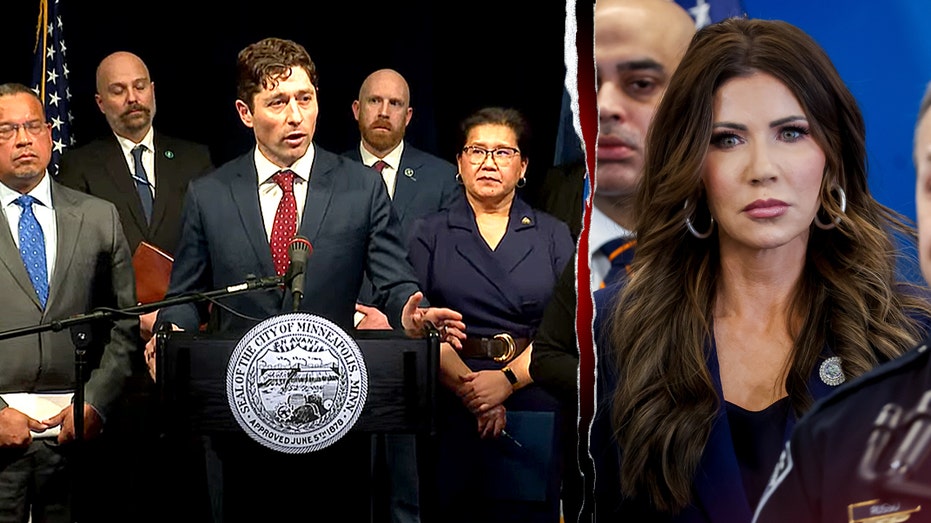
Minnesota and the cities of Minneapolis and St. Paul have filed suit against the Trump administration, seeking to halt what they describe as a sweeping federal immigration enforcement surge in the Twin Cities. According to a Fox News report, the complaint alleges that the operation has increased the number of armed federal agents on the ground, generated fear and unrest in immigrant communities, and interfered with the work of state and local authorities.[1]
The suit names Department of Homeland Security (DHS) Secretary Kristi Noem, senior officials at DHS, U.S. Immigration and Customs Enforcement (ICE) and U.S. Customs and Border Protection (CBP), including Acting ICE Director Todd Lyons and Border Patrol Commander Gregory Bovino, as well as the agencies themselves.[1] The plaintiffs are asking a federal court to block the surge while the case proceeds.
Minnesota plus Minneapolis and St. Paul sued the Trump administration to halt what they call an immigration enforcement surge in the Twin Cities. The suit alleges raids, racial profiling, warrantless arrests, and excessive force.
DHS rejects the claims and says local leaders… pic.twitter.com/UhqleMRZej
— Josh Guillory Show (@jguilloryshow) January 13, 2026
What Minnesota Says Is Happening On The Ground
Fox News, summarizing the complaint, reports that state and city officials describe the federal effort as a “massive federal immigration enforcement surge” that has “flooded the Twin Cities with armed agents, sparked fear and unrest, and interfered with state and local authorities.”[1]
Those phrases matter in litigation. They signal that Minnesota is not only objecting to immigration arrests in general. It is portraying the federal operation as unusually large, highly visible, and disruptive to local governance.
From the limited detail publicly reported so far, several concrete claims stand out:
Item 1: Scale. Plaintiffs describe a surge that has “flooded” the area with agents, suggesting a sudden increase in personnel beyond routine ICE and CBP activity in the region.[1]
Item 2: Community impact. The lawsuit asserts that the operation has “sparked fear and unrest,” which aligns with long-standing concerns from immigrant advocates that raids can deter people from going to work, school, or even court.[1]
Item 3: Interference with local authority. The complaint claims that federal agents are interfering with state and local authorities. That allegation moves the dispute firmly into questions about federalism and the limits of federal power in day-to-day policing.
The Fox reporting does not include the full text of the complaint or the federal government’s response. At this stage, the public record largely reflects the plaintiffs’ framing and the named defendants.
Who Is Being Sued And Why That Matters
By suing top officials, Minnesota and the two cities are trying to reach the policy decisions behind the raids, not only individual arrests.
According to the Fox News account:
Item 1: DHS Secretary Kristi Noem is named as the cabinet official responsible for overseeing the department that houses both ICE and CBP.[2]
Item 2: Acting ICE Director Todd Lyons is named in his role overseeing civil immigration enforcement across the interior of the United States.[3]
Item 3: Border Patrol Commander Gregory Bovino, a senior CBP official, is named along with the agency itself.[4]
Including agencies as defendants, alongside individual leaders, is a familiar tactic. It allows states and cities to ask courts for structural remedies, such as limits on future operations or court-ordered changes in guidance, rather than only contesting specific arrests.
The Legal Ground: Federal Power Versus Local Control
Immigration enforcement sits at the intersection of two legal principles. The federal government’s power over immigration is broad. Local police power and responsibility for community safety are also central features of American law.
In Arizona v. United States in 2012, the Supreme Court struck down key parts of Arizona’s own immigration enforcement law and emphasized how strong federal authority is in this field. Justice Anthony Kennedy wrote for the majority that “The Government of the United States has broad, undoubted power over the subject of immigration and the status of aliens.”[5]
That power is backed by immigration statutes that give federal officers specific enforcement tools. For example, 8 U.S.C. 1357 allows immigration officers to arrest certain noncitizens without a warrant and to conduct searches “within a reasonable distance from any external boundary of the United States,” subject to constitutional limits.[6]
At the same time, the federal government cannot compel states or cities to use their own personnel or resources to enforce federal immigration law. That “anti-commandeering” principle, developed in cases such as Printz v. United States, has underpinned many local decisions to limit cooperation with ICE detainers or access to jails.[7]
Past clashes between the Trump administration and state or local governments have often involved this fault line. California, for example, defended its “sanctuary” laws against federal challenges, and multiple cities sued over attempts to condition federal grants on cooperation with ICE.[8][9]
The Minnesota lawsuit appears to flip that pattern. Instead of the federal government suing to knock down local limits on cooperation, a state and its major cities are suing to constrain a federal enforcement initiative that they argue is overreaching.
How Federal Immigration Raids Typically Work
Even without access to the full complaint, public records on how ICE and CBP carry out interior operations offer some context for what might be happening in the Twin Cities.
ICE describes its “enforcement and removal operations” as focused on people with criminal convictions, recent border crossers, and individuals with outstanding removal orders.[10] In practice, widely reported Trump-era operations often included “collateral” arrests of people encountered during planned actions who were not the original targets but who were suspected of civil immigration violations.[11]
Interior raids can take several forms:
Item 1: At-home arrests. Agents conduct early-morning operations at residences, often to locate specific individuals with removal orders or criminal histories.
Item 2: Workplace operations. ICE has periodically carried out large-scale operations at factories, food processing plants, and other workplaces, sometimes arresting dozens or hundreds of workers in a single day.[12]
Item 3: Community operations. Officers may conduct targeted stops in public spaces or near locations like transit hubs or courthouses, a practice that has drawn criticism from court administrators and advocacy groups.[13]
Advocates and local officials have long argued that highly visible raids can discourage crime reporting, participation in school and healthcare systems, and attendance at court hearings. Those are the kinds of local impacts Minnesota appears to be highlighting when it alleges “fear and unrest” and interference with local authority.
What The Public Record Still Does Not Show
From publicly accessible reporting, several key facts about the Minnesota case remain unclear.
First, the exact scope and start date of the enforcement surge in the Twin Cities have not been detailed in the Fox News account. Without the underlying court filings, it is not possible to know how many agents have been deployed, how many arrests have been made, or how long the operation has been planned.
Second, the specific legal claims in the lawsuit have not been fully described. Based on the language quoted by Fox, interference with state and local authority is a central theme. The complaint may also invoke constitutional protections such as the Fourth Amendment or Due Process Clause, but that is not confirmed in the reporting provided.
Third, the federal government’s formal response is not yet part of the public narrative in the same level of detail. In similar past disputes, federal officials have argued that interior enforcement is essential to the integrity of the immigration system and that states cannot obstruct federal officers carrying out duties authorized by Congress.[14] Whether Trump administration officials will lean on those arguments here, or advance new ones tailored to operations in Minnesota, is not yet documented.
Finally, there is no public timeline for when a court might rule on any request for a temporary restraining order or preliminary injunction. Those early rulings often set the practical ground rules while a case proceeds, even before a full trial or appeal.
A Legal Clash With Unsettled Boundaries
The Minnesota lawsuit places a familiar tension into a new configuration. Courts have repeatedly affirmed the federal government’s control over immigration policy and enforcement. Yet states and cities continue to test how far federal officers can go inside their jurisdictions before community impact and local authority tip the balance.
Until the full complaint and the Trump administration’s response are publicly examined in court, basic questions will remain. How much disruption must a federal operation cause before a judge agrees that it unlawfully interferes with local governance, and how much disruption must local governments tolerate when that operation is carried out under federal immigration law.