Far from shore off California’s central coast, a surfer testified that the person who had just knocked her from her board grabbed her hair and held her underwater long enough that she believed she might not surface again.
The Alleged Assault in Open Water
Prosecutors in San Luis Obispo County say that the encounter at Morro Strand State Beach in Morro Bay was not a misunderstanding in the surf lineup but a felony assault carried out with a paddleboard paddle.
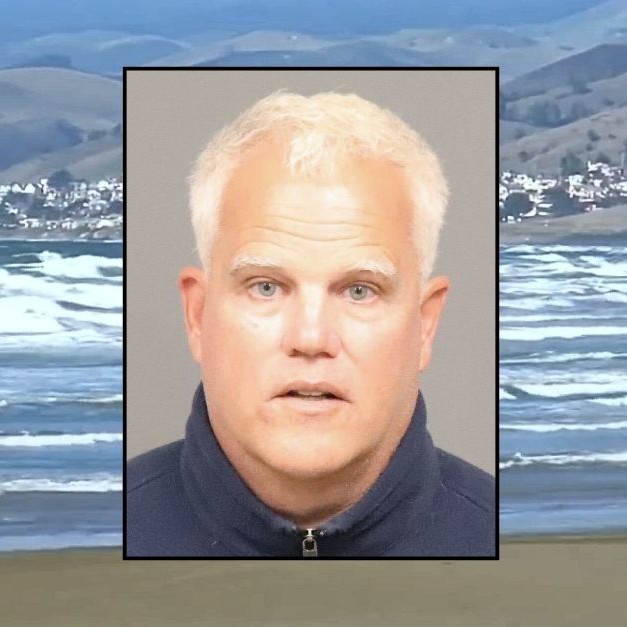
According to reporting by Law & Crime, 60-year-old paddleboarder Andrew Gustafson is charged with two felony counts. One charge is assault with a deadly weapon, identified by prosecutors as his paddle. The second is assault with force likely to produce great bodily injury. Both counts stem from his interaction with surfer Haylee Red-Van Rooyen.
The alleged attack occurred in the ocean off Morro Strand State Beach, an area popular with local surfers and paddlers. The case is now moving toward trial in San Luis Obispo County Superior Court after a judge found enough evidence at a preliminary hearing for the charges to proceed.
What the Surfer Says Happened
At a recent preliminary hearing, Red-Van Rooyen described a sequence that she said began as a breach of surf etiquette and escalated into violence.
She testified that she was surfing with a group when Gustafson began taking waves through their group rather than positioning outside of it, according to the San Luis Obispo Tribune. She told the court she was “way down the line” on a longboard, meaning she was positioned farther along the wave and not near him.
“He took the wave from behind me and came just tearing down the line, and then ran into the back of me and knocked me off the board,” Red-Van Rooyen testified, as quoted by the Tribune. She added, “I was so shocked. … There is absolutely no reason to, you know, fly down the line when you see someone in front of you and hit them. You could damage the board, you could hurt the person. … There was no reason for that.”
Red-Van Rooyen said she reacted by yelling at Gustafson about what had happened and using insults of her own. According to her testimony, she called out to him and used profanities because she did not want similar conduct to harm someone else in the lineup.
“I’m a woman that was raised to stand up for myself, and I didn’t want it to happen to anyone else, so I confronted him,” she told the court, according to the Tribune. “Told him that wasn’t cool, that wasn’t right, not necessary.”
She testified that the situation escalated quickly after that confrontation. “He raises his paddle, and at that point, I know that he’s going to hit me,” she said. “I felt very afraid.”
On the stand, Red-Van Rooyen described what she believed might be a fatal moment. “He grabbed my hair and held me underwater, and I didn’t know if I was going to make it,” she testified. In a separate statement reported by Law & Crime, she recalled thinking, “I thought I was going to die.”
Prosecutors say Gustafson struck her with the paddle and continued shouting vulgar, gendered slurs as he did so. Law & Crime reports that her wetsuit helped prevent cuts or more serious physical injury from the paddle strikes, though prosecutors argue the force used was capable of causing significant harm.
The Defense Framing of a Surf Conflict
Gustafson’s attorney, Ilan Funke-Bilu, has not denied that an incident occurred in the water. Instead, he has attempted to frame it within the long-running cultural tension between different types of wave riders.
According to coverage cited by Law & Crime from the Sacramento Bee, Funke-Bilu characterized the encounter as “the classic story of surfer versus paddleboarder” and asked the court to reduce the charges from felonies to misdemeanors.
That description places the case in the context of disputes that can arise when traditional surfers and stand-up paddleboarders share crowded breaks, where questions of who has priority on a wave and how closely people pass each other can lead to conflict. Defense arguments reported so far suggest Gustafson’s legal team may seek to minimize the level of intent or danger involved, and to portray what happened as a heated but limited clash rather than a deliberate attempt to cause serious harm.
Publicly available court documents and detailed defense filings are not included in the initial media reports, so the full contours of Gustafson’s legal strategy remain to be seen. As of now, the defense position that has reached the public largely comes through that single-quoted phrase and the request to reduce the charges.
From Attempted Murder Allegation to Assault Charges
The case did not begin at the current level of charges. Law & Crime reports that Gustafson was arrested in August 2025 and initially booked on an attempted murder allegation. Prosecutors ultimately declined to pursue attempted murder and instead filed two felony assault counts.
Under California law, assault with a deadly weapon is typically charged under Penal Code section 245. The statute allows ordinary objects to be treated as deadly weapons when they are used in a way that could likely cause significant injury. In this case, the San Luis Obispo County District Attorney’s Office has identified the paddle as the alleged deadly weapon.
The second count, assault with force likely to produce great bodily injury, focuses on the level of force rather than the specific object. Prosecutors appear to be arguing that swinging a paddle at someone in the water and allegedly holding them below the surface meets that threshold, even if the immediate physical injuries were limited.
Officials have not given detailed public explanations for why they chose not to move forward with attempted murder. Charging decisions can depend on many factors, including the evidence of intent, witness testimony, and how a jury might interpret actions in a chaotic setting like the ocean. Without access to internal prosecution memos or complete investigative files, the reasons remain largely inferred from the reduced charges themselves.
What the Judge Has Found So Far
The preliminary hearing centered on whether there was enough evidence for the case to proceed, not on whether Gustafson is guilty beyond a reasonable doubt.
After hearing testimony that included Red-Van Rooyen’s account, a San Luis Obispo County Superior Court judge concluded that the prosecution had met the relatively low standard required at this stage. According to the Tribune, the judge stated there was “sufficient cause to believe Mr. Gustafson is guilty” of the assault offenses described in the complaint.
The judge also summarized that view more broadly. “It does appear to me that the offenses in the complaint have been committed,” the court said, as reported by the Tribune.
Online court records cited by Law & Crime show that Gustafson was released in August on a 25,000 dollar bond. His arraignment on the felony charges is scheduled for March 2, when he is expected to enter a plea, and the case will formally move into the next phase.
Evidence, Gaps, And What Comes Next
At this stage, the public record rests mainly on three pillars. Red-Van Rooyen’s sworn testimony, the charging documents summarized in media coverage, and brief statements from the defense.
No detailed description of Gustafson’s own account of what happened in the water has yet appeared in publicly available reporting. It is not clear whether any independent witnesses from the lineup testified at the preliminary hearing beyond what has been quoted, or how closely their accounts matched Red-Van Rooyen’s description. The Tribune and Law & Crime articles do not indicate the presence of video or photographic evidence, which is often scarce in incidents that unfold hundreds of yards offshore.
Those gaps leave important questions that will likely be explored if the case reaches trial. Among them: how long Red-Van Rooyen was allegedly held underwater, what efforts others in the water made to intervene, and whether any prior friction between the two surfers existed before that day. The answers could shape how a jury interprets the paddle as a potentially deadly weapon and how they view Gustafson’s intent.
For now, the legal record reflects a sharp contrast. On one side is a surfer who told a court, “I thought I was going to die,” and described being held beneath the surface by her hair. On the other is a defense that has suggested this is “the classic story of surfer versus paddleboarder” and asked to treat it as a lesser offense.
The felony charges, the dropped attempted murder allegation, and the limited public evidence all point to a case that will turn on fine distinctions about force, intent, and credibility in a setting where only those in the water saw what happened.