

TLDR
When the Georgia Supreme Court convened to hear Hannah Payne’s challenge to her murder conviction, the focus shifted from the crime itself to the paperwork that helped keep her in prison. The justices confronted a lower court order that relied on cases and quotations that, in several instances, do not exist.
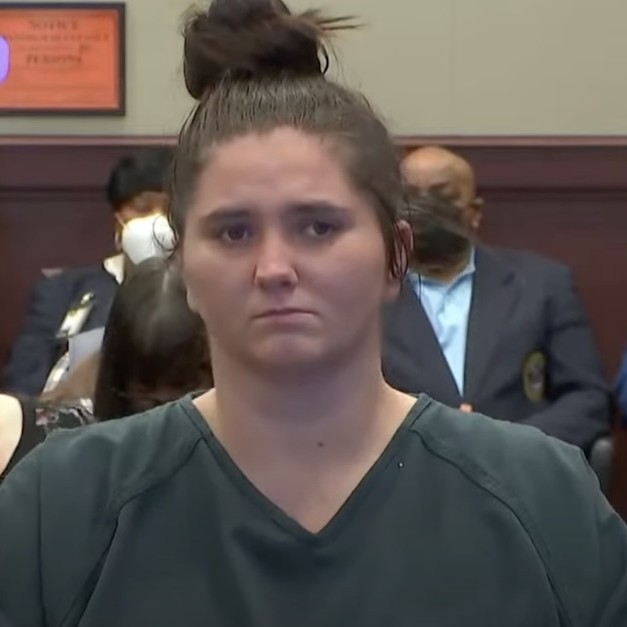
The disputed order came from Clayton County Superior Court, which denied Payne a new trial after a jury in December 2023 found the then 25-year-old woman guilty in the May 2019 shooting death of 62-year-old Kenneth Herring. Payne, sentenced to life with the possibility of parole after at least 43 years, now argues her trial lawyer was constitutionally ineffective.
Nonexistent Cases in a Life Sentence Appeal
During recent oral arguments, Chief Justice Nels S.D. Peterson told lawyers that the trial court’s order denying Payne’s motion for a new trial contained authorities that could not be verified. According to Law & Crime, he said, “In reviewing the trial court’s order denying the motion for new trial, there are at least five citations to cases that do not exist,” and he also referenced additional misused citations and missing quotations.
According to Court TV and Law & Crime, the same suspect citations appeared both in a 37-page proposed order drafted by the state and in the 33-page order ultimately signed by Judge Jewel C. Scott. A prosecutor from the Clayton County District Attorney’s Office told the justices she had prepared an order that was later revised, and she said she was not aware of the nonexistent authorities. The court did not resolve, on the record, how the fabricated citations entered the documents.
How Faulty Citations Collide With Ineffective Counsel Claim
Separate from the citation problems, Payne’s appeal centers on whether her trial attorney failed to pursue viable defenses. According to Law & Crime, appellate counsel Andrew Fleischman argues that trial counsel did not seek jury instructions on defense of others or on a citizen’s arrest, instead framing the case only as self-defense. In Georgia, ineffective assistance claims typically require a showing that counsel’s performance fell below reasonable standards and that the deficiency likely affected the outcome.
The underlying incident followed a multi-vehicle collision in Clayton County, after which Payne confronted Herring. At trial, Payne testified that she had never drawn her handgun before that day and maintained that she did not intend for the weapon to discharge during the struggle. Fleischman told the justices, “The defense that he chose is basically inapplicable,” arguing that different instructions could have changed how jurors viewed Payne’s actions during the confrontation.
Next Steps for the Georgia Supreme Court
Despite their pointed questions about nonexistent cases and quotes, the justices did not indicate from the bench that the flawed order would automatically lead to a new trial or a different outcome for Payne. According to Court TV, they instead noted that they would consider the parties’ arguments and the state of the record before issuing a decision.
In theory, the court could address both issues: the reliability of the trial court’s written order and the merits of Payne’s ineffective assistance claim. That could include options such as ordering a supplemental briefing, directing the lower court to clarify its reasoning using accurate authorities, or resolving the appeal on the existing record if the justices conclude the errors did not change the result.
The court has not announced when it will rule. Until then, Payne remains incarcerated on a life sentence, and the case stands as a reminder of how unverified legal citations can complicate appellate review in matters involving decades of a defendant’s liberty.