

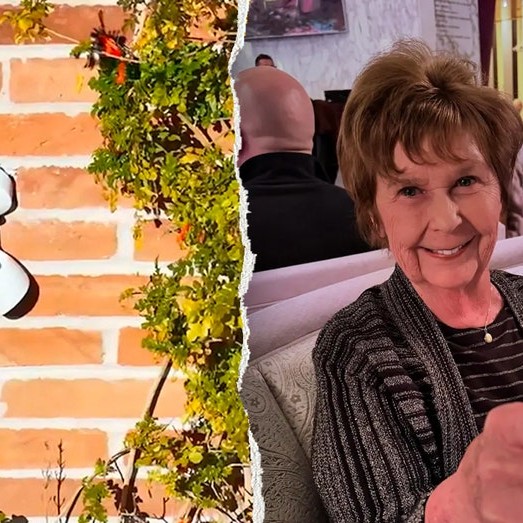
Authorities are now treating the disappearance of 84-year-old Nancy Guthrie from her Tucson, Arizona, home as a crime, and they are examining an alleged ransom note that refers to a floodlight on her property, but investigators have not said whether the writer’s description matches what they have documented at the scene.
TLDR
Pima County deputies and the FBI are treating Nancy Guthrie’s disappearance as a crime and reviewing an alleged ransom note sent to TMZ that mentions a floodlight at her Tucson home and demands bitcoin, though investigators have not confirmed the note’s authenticity or identified any suspects.
Missing Mother of TV Anchor Draws Federal Attention
Nancy Guthrie, the 84-year-old mother of NBC “Today” co-host Savannah Guthrie, was reported missing from her home in Tucson after relatives were unable to locate her. According to the Pima County Sheriff’s Department, she was last seen at the residence around 9:30 p.m. on a Saturday.
Investigators initially released a few details about what might have happened inside the house or on the surrounding property. In a subsequent statement, however, Sheriff Chris Nanos signaled a shift in how authorities were characterizing the case. He said his office had determined that “we do, in fact, have a crime,” and a spokesperson told Fox News Digital that Guthrie is believed to have been kidnapped or abducted.
The FBI has joined the investigation through its Phoenix field office. Federal agents often become involved when investigators suspect a kidnapping, when a possible ransom demand surfaces, or when there is a chance a victim has been taken across state lines. In this case, the reported ransom communication has quickly become a central piece of the public narrative.
Ransom Note Mentions Home Security Detail
According to Fox News, the FBI has acknowledged receiving what it describes as a possible ransom note connected to Guthrie’s disappearance. The message, which was first sent to a media outlet, reportedly referred to a floodlight at her home, a detail that immediately drew attention from investigators and reporters.
During a news conference, Heith Janke, the special agent in charge of the FBI’s Phoenix office, said the communication contained specific references. “Yeah, the ransom itself. One talked about an Apple Watch, and one talked about a floodlight,” Janke said, adding that agents would not discuss the wording in depth. “And we’re not going to go into specifics. It’s very important that we keep this investigation moving forward.”
Reporters who examined the exterior of Guthrie’s property described multiple floodlights on and around the home. Fox News reported seeing two lights mounted toward the front and two more in the backyard, including at least one that appeared broken and another hanging by wiring behind the house. That visible damage lines up with the general type of detail mentioned in the alleged note, but investigators have not publicly confirmed how closely the description in the message matches what they observed.
In many extortion and kidnapping investigations, law enforcement pays close attention to details that a stranger might not plausibly know. References to the condition of a home’s fixtures, for example, can be one way investigators try to gauge whether a writer has been physically near the scene, has inside information, or has simply drawn from public images. Officials in Guthrie’s case have not said how they are evaluating that question.
Media Outlet Becomes Conduit for Alleged Demands
The alleged ransom note in this case surfaced not through a direct call to law enforcement, but through TMZ. Harvey Levin, the outlet’s founder, discussed the communication in an interview on Fox News Channel’s “Hannity,” describing both its tone and its reported demands.
Levin said the letter opened by claiming that Guthrie is “safe, but scared,” and that the writer asserted she was aware of the demand. According to his account, authorities shared the message with the family after TMZ received it, using the outlet as a conduit for communication rather than responding publicly. Levin also said the writer sought payment in bitcoin, a digital currency that can be more difficult to trace than traditional bank transfers.
Beyond the reference to a floodlight and an Apple Watch, few specifics about the ransom demand have been confirmed. Janke repeatedly avoided discussing the substance of the communication, and Pima County officials have not released the note. As a result, nearly everything the public knows about its contents comes through secondhand descriptions, and law enforcement has continued to describe it only as a “possible” ransom note.
Levin told Fox News that he believes the person who contacted TMZ is in the greater Tucson area, citing a phrase in the email that led him to conclude Guthrie might be within a certain radius of the city, perhaps even across the nearby state line. That assessment remains his interpretation, however, and investigators have not endorsed any specific geographic theory in their public statements.
How Investigators Treat Ransom Communications
Experienced investigators generally treat initial ransom communications as unverified, even when they contain specific details. A key early question is whether the writer truly has control of the missing person or is attempting to exploit a public case for money. To answer that, agents compare the language and timing of the message against what they know from physical evidence and witness statements.
Ransom notes that reach police through media organizations can add another layer of complexity. Law enforcement may ask outlets to cooperate quietly, provide metadata, or hold back certain details to protect the integrity of the investigation. The FBI also frequently withholds information, as Janke did, to preserve leverage in any future negotiations and to help distinguish genuine follow-up communications from hoaxes.
Demands for payment in cryptocurrency, such as bitcoin, have become more common in extortion attempts. While some digital wallets can be difficult to attribute to an individual, transactions remain visible on public ledgers, which can give investigators potential leads if they can connect an address to a real-world identity. In Guthrie’s case, agents have not disclosed whether they have traced any such transactions.
Conflicting Signals and Limited Public Record
Public statements in the case reveal a tension between the hopeful claims in the alleged note and the sober assessment from law enforcement. The email described by Levin portrays Guthrie as alive, frightened, and aware of what her captors want. At the same time, the sheriff’s office has told Fox News Digital that they believe she was kidnapped or abducted, and the FBI has stopped short of vouching for the note’s authenticity.
Former FBI Assistant Director Chris Swecker isn’t the only one questioning whether Nancy Guthrie was truly “kidnapped”
Many of us have questioned that description of the crime
The absence of “proof of life” & the delay in sending a “ransom note” have been suspicious all along pic.twitter.com/D45ZfvSZmP
— Phil Holloway ✈️ (@PhilHollowayEsq) February 9, 2026
Officials have not said whether there were signs of forced entry at Guthrie’s home, whether neighbors reported hearing or seeing anything, or whether there are surveillance cameras that captured activity around the time she vanished. Those gaps leave the public without a clear picture of how the disappearance unfolded or how much independent evidence supports the scenario described in the ransom communication.
The timeline also remains only partially visible. Authorities have said Guthrie was last seen at home around 9:30 p.m. on a Saturday, but they have not publicly detailed who saw her at that time, when relatives first became concerned, or how quickly law enforcement was notified. Investigators frequently hold back such specifics to preserve the ability to test future tips or confessions against nonpublic facts.
So far, neither the Pima County Sheriff’s Department nor the FBI has identified any suspects, announced arrests, or released sketches. Officials have also not said whether they believe more than one person may be involved. The absence of those details does not mean investigators lack leads, but it underscores how much of the case remains outside public view.
Unresolved Questions in the Guthrie Investigation
The floodlight reference now sits at the crossroads of several unanswered questions. Did the writer of the alleged ransom note describe damage or placement in a way that only someone at the scene could know, or could the information have been pulled from observation at a distance or from prior visits? Investigators have not addressed that issue directly.
There is also no public indication of whether any ransom has been paid or whether additional communications have followed the first message sent to TMZ. In many kidnapping investigations, the pattern and frequency of contact, and whether demands escalate or change, can be as telling as the initial note.
For Guthrie’s family and for investigators, the stakes are clear. The sheriff has formally labeled the disappearance a crime, the FBI has committed resources, and an alleged ransom note is under scrutiny, yet authorities have released only fragments of what they know. Until officials can say whether the communication is genuine, whether the floodlight detail reflects inside knowledge, and where they believe Guthrie might be, the case will remain an open and tightly controlled criminal investigation.