

The Alleged Plot and the Man Accused
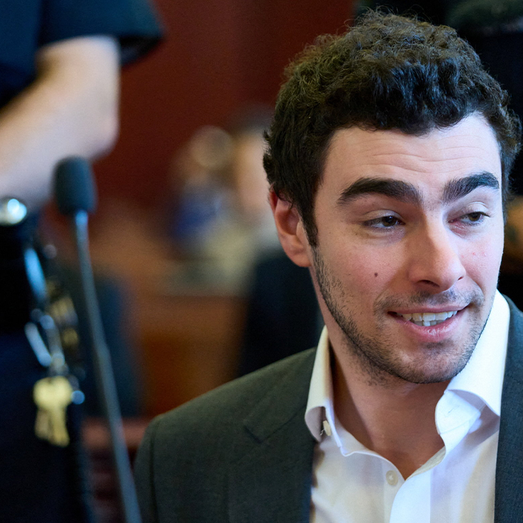
Federal prosecutors have charged 27-year-old Luigi Mangione in connection with the killing of Brian Thompson, the chief executive of UnitedHealthcare. Thompson, 50, was in New York City for investor meetings when he was shot from behind outside a Manhattan hotel during the morning rush, according to reporting from Fox News Digital.
Surveillance footage described in that report shows Thompson walking on the sidewalk when a man approaches from behind and fires several rounds. Thompson collapses and later dies from multiple gunshot wounds. The shooter leaves the area and is later seen riding a bicycle uptown. At least one eyewitness was not physically harmed.
New York police identified Mangione as a suspect, circulated a wanted poster, and coordinated with law enforcement in Pennsylvania. Five days after the shooting, officers arrested him at a McDonald’s in Altoona, Pennsylvania, after employees and customers reported recognizing him from the wanted bulletin, Fox News Digital reported.
In federal court, Mangione is presumed innocent. He has pleaded not guilty to four federal counts, including a charge that exposes him to a possible death sentence if prosecutors are allowed to pursue it.
A Murder Case Built on a Stalking Theory
The most serious federal count is murder through the use of a firearm in relation to a crime of violence. That type of charge is usually brought under 18 U.S.C. section 924, which increases penalties when a firearm is used in connection with a qualifying underlying offense.
To make that statute fit this case, federal prosecutors identified the underlying crime of violence as stalking. Federal anti-stalking law is found at 18 U.S.C. section 2261A, which covers conduct that places a victim in reasonable fear of death or serious bodily injury or causes substantial emotional distress, using travel or electronic communications to carry out the behavior.
According to the Fox News Digital report, prosecutors allege that Mangione stalked Thompson in the days leading up to the shooting and that the killing occurred in the course of that stalking offense. If the court accepts this structure, it gives the federal government both jurisdiction and a potential path to seek the death penalty in a case that would otherwise be a local homicide in Manhattan.
The defense has moved to dismiss the firearm murder count, arguing in court filings that the indictment fails to allege a qualifying crime of violence at its core. If stalking does not legally count as violent for this purpose, they argue, the entire death-eligible charge collapses.
The Legal Question: Is Stalking a ‘Crime Of Violence’
The fight turns on a term of art that has been heavily litigated in recent years. Federal statutes define “crime of violence” in specific ways, and the Supreme Court has struck down or limited some versions of that definition as unconstitutionally vague. In United States v. Davis, for example, the Court invalidated a residual clause in the firearms statute that had allowed prosecutors to treat a wide range of felonies as crimes of violence.
According to Fox News Digital, Mangione’s attorneys have leaned on this evolving line of cases in their written submissions, arguing that prosecutors are stretching the definition too far. Their position is that federal stalking can be committed without any use or attempted use of physical force. If a statute reaches nonviolent conduct, they argue, it cannot categorically be treated as a crime of violence under modern appellate precedent.
Federal prosecutors rejected that interpretation. In an opposition filing quoted by Fox News Digital, they wrote, “Here, by contrast, no court has interpreted the ‘conduct that places [the victim] in reasonable fear of death or serious bodily injury’ element.” In other words, the government is urging Judge Margaret Garnett to treat this particular version of stalking as inherently violent because it focuses on conduct that credibly threatens death or serious harm.
Outside observers see high stakes in how that question is answered. Los Angeles defense attorney Joshua Ritter previously told Fox News Digital that “It’s like a series of dominos.” He said the government needs a violent felony at the base of the case to secure both federal jurisdiction and a viable death penalty theory.
Judge Garnett has not yet ruled on the defense motion to dismiss the firearm murder count. At a scheduled status conference, she is expected to signal whether she agrees with prosecutors that stalking, as charged here, can serve as the necessary crime of violence or whether the indictment must be narrowed.
Backpack Evidence and the Search Fight
The same hearing is also expected to address a separate fight over physical evidence. When police arrested Mangione at the Altoona McDonald’s, officers searched a backpack in his possession. According to Fox News Digital and related coverage cited in that article, investigators reported finding a handgun believed to be the murder weapon, along with handwritten notes sharply critical of the health insurance industry.
Prosecutors have suggested in filings that the writings may indicate planning and a possible motive connected to Thompson’s role as the head of a major health insurer. The defense has moved to suppress the backpack evidence, challenging the legality of the search and asking the court to exclude the items from trial.
Judge Garnett granted an evidentiary hearing on the search in an earlier order, a step that indicates she found at least a plausible basis to explore whether the officers complied with constitutional requirements. Until she rules, both sides are preparing for two very different trial records. If the handgun and notes are excluded, the government must proceed without what it has described as key corroborating evidence tying Mangione to the shooting and to any alleged ideological motive.
If the items remain in, jurors could hear not only about video footage and eyewitness accounts, but also about writings that prosecutors say show premeditation. For Thompson’s family and for Mangione, the outcome of this single search dispute will shape what the jury is allowed to see.
2 Courts, 2 Timelines, and a Death Penalty Overlay
The federal case is not the only prosecution in play. According to Fox News Digital, Manhattan prosecutors have separately charged Mangione in state court and have asked for a July 1 trial start. His lawyers called that schedule “unrealistic,” arguing that the stacked federal and state proceedings would strain their ability to prepare.
Luigi Mangione Update
His Federal trial dates have been set, but it is complicated.
September 8, 2025 Mangione’s trial will begin If the death penalty is taken off the table. The defense is arguing stalking is not a violent offense so therefore does not meet the predicate… pic.twitter.com/iVuxtW1ewH
— Jennifer Coffindaffer (@CoffindafferFBI) January 26, 2026
Assistant District Attorney Joel Seidemann wrote to New York Supreme Court Justice Gregory Carro that the state has an interest, described as protected by federal law, in trying Mangione first, Fox News Digital reported. That position sets up a potential clash over which sovereign gets the first trial and how any verdicts or penalties might interact.
In federal court, jury selection is currently set for early September, with a trial expected to follow in either October or January, depending on how Judge Garnett rules on the top counts. Those dates could shift if her forthcoming decisions require new motions or appeals, especially on the stalking and backpack issues.
Under the long-standing “dual sovereignty” doctrine, both state and federal authorities can prosecute the same underlying conduct without violating the constitutional ban on double jeopardy, so parallel cases are legally possible. In practice, coordination between prosecutors can determine whether one case pauses while the other moves ahead and whether the federal government ultimately seeks a capital sentence.
What Comes Next
For now, three intertwined questions hang over the Mangione litigation. First, will Judge Garnett find that federal stalking, as alleged in this indictment, qualifies as a crime of violence that can support a death-eligible firearm murder charge? Second, was the Altoona backpack search lawful, or will critical physical evidence be suppressed? Third, which court will seat a jury first in a case that sits at the intersection of Wall Street, health care, and violent crime?
Those answers will decide not only whether Mangione faces the possibility of a federal death sentence, but also what jurors will be permitted to consider if and when the case reaches trial. Until the rulings are issued, the most severe charge remains a live question, and so does the path that Brian Thompson’s killing will take through the criminal justice system.