The man the state of Texas executed in 1956 said the electric chair “belongs to someone else.” In a Dallas courtroom nearly 70 years later, two sons, one of the condemned and one of the victim, listened as officials finally agreed he had been right.
The Decision To Declare A Dead Man Innocent
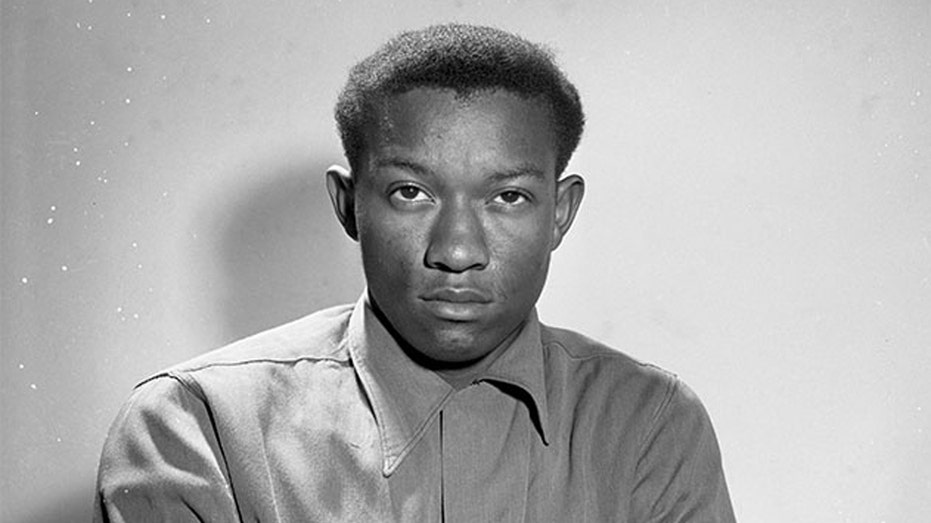
In January 2026, Dallas County commissioners unanimously approved a resolution formally exonerating Tommy Lee Walker, a Black man who was 21 when Texas executed him for the 1953 rape and murder of 31-year-old Venice Lorraine Parker.
The request came from Dallas County District Attorney John Creuzot, who asked the commissioners to acknowledge Walker’s innocence after a review by his office’s Conviction Integrity Unit. According to Creuzot, the review concluded that Walker’s confession had been coerced, that he was tried before an all-White jury, and that there was no reliable evidence tying him to the crime (Fox News).
In a written statement, Creuzot said, “In observance of the constitutional rights afforded to all citizens and in consideration of newly available scientific evidence, the Dallas County District Attorney’s Office could not and would not have prosecuted Tommy Lee Walker for the rape and murder of Venice Lorraine Parker.” That phrasing matters. It is not a claim that the office would have sought a different verdict, but that it would never have filed the case at all, given what is now known.
The 1953 Murder And A Swift Execution
Parker was attacked in Dallas in 1953 while she was returning home from work. She died after suffering a deep gash to her neck. According to accounts summarized by the Death Penalty Information Center, multiple witnesses at the time said Parker could not speak after the assault because of the wound to her throat (Death Penalty Information Center).
Despite that, a police officer reported that Parker identified her attacker as a Black man. Police soon began questioning large numbers of Black men in Dallas. Walker, then 19, came under suspicion even though, according to witness statements later cited by investigators, he was visiting his girlfriend, Mary Louise Smith, who was nine months pregnant, on the night of the killing. Smith and others said he had been with her at the time of the attack, which took place several miles away.
Walker was nevertheless arrested and charged. Less than three years later, on May 12, 1956, the state put him to death in the electric chair at the age of 21. At his sentencing hearing, Walker told the court, “I feel that I have been tricked out of my life.”
A Case Built On Race And A Coerced Confession
The Conviction Integrity Unit’s modern review did not uncover forgotten physical evidence tying Walker to the crime. Instead, it documented how the case had been built.
According to the Death Penalty Information Center, Dallas police questioned hundreds of Black men during the original investigation, selecting potential suspects based on race rather than individualized evidence. The organization reports that Walker was interrogated for hours without a lawyer present and that officers told him he would face the death penalty if he did not confess.
Walker did sign a confession. He then quickly recanted it. The Center and local coverage from Dallas television station KDFW Fox 4 both report that there was no other evidence connecting him to Parker’s assault beyond that disputed statement and the officer’s contested account of Parker’s supposed last words (Fox 4 Dallas).
Trial records reviewed by the district attorney’s office also showed that the prosecutor who tried the case later took the witness stand himself and told the jury that Walker was guilty, according to Fox 4. That meant jurors heard not only from sworn witnesses and lawyers arguing the case, but also from a prosecutor testifying to his own belief about the defendant’s guilt.
The jury that heard that testimony was all White, in a case involving a Black defendant and a White victim in mid century Dallas. Creuzot’s office concluded that the combination of a coerced confession, racialized suspect selection, and improper trial conduct rendered the conviction unreliable and that Walker should be considered factually innocent.
The Death Penalty Policy Project has issued this statement concerning the posthumous exoneration of Tommy Lee Walker in Texas. https://t.co/AxIlmYjnPs @innocence @WTIUSA @uscedp @TexDefender @TCADPdotORG pic.twitter.com/UQghYlqCnD
— Robert Dunham (@RDunhamDP) January 22, 2026
Reopening A File Seven Decades Later
Walker died in 1956, but his case did not disappear. It became the oldest file assigned to Dallas County’s Conviction Integrity Unit, which investigates potential wrongful convictions. The reinvestigation began after Walker’s son, Ted Smith, contacted the district attorney. Smith is his father’s only living descendant.
Creuzot has said his office worked with the Innocence Project, a nonprofit that focuses on DNA testing and wrongful convictions, to reassess the evidence (Innocence Project). In the statement quoted by Fox News, Creuzot referred to “newly available scientific evidence.” Public officials have not released detailed descriptions of that evidence or specified what tests were done, on which items, or what the results showed.
Available public accounts do not indicate that anyone else has been identified as the assailant. The Dallas County resolution does not name an alternate suspect and does not suggest that the case has been solved. Instead, it focuses on the errors in Walker’s prosecution.
That limited scope is consistent with other historical reviews of capital cases from the 1940s and 1950s. In many of those cases, court transcripts and some police files survive, but physical evidence that might be suitable for modern forensic testing has been lost or was never preserved.
Inside The Exoneration Hearing
At the public hearing where commissioners approved Walker’s exoneration, Ted Smith, now in his seventies, described the effect of the execution on his mother, Mary Louise Smith. According to Fox News reporting on the hearing, he said she never recovered from losing Walker.
Smith also repeated what he says she had told him about Walker’s final words before his execution. “He told my mother and she told me. He said, ‘You give me the chair that belongs to someone else. I am innocent.’ That is the last thing my mother told me,” Smith told Fox 4. He added, “This exoneration means the world to me.”
The resolution adopted by Dallas County calls Walker’s case an injustice and frames the exoneration as part of a broader responsibility. The county, it states, “deems it a moral obligation to acknowledge the injustice surrounding the conviction of Tommy Lee Walker, confront history, and affirm Dallas County’s commitment to justice for all persons, whether living or deceased. [J]ustice has no statute of limitations.”
Parker’s son, Joseph Parker, who is in his seventies, also attended the hearing. According to Fox News, he hugged Smith and apologized for the loss of his father. The meeting of the two men underscored that any reassessment of the case concerns not only a wrongfully executed man, but also a woman who was killed and a family that never received a reliable account of who attacked her.
What Is Known And What Is Still Missing
Several elements of Walker’s case are now documented in multiple independent sources.
Confirmed through the district attorney’s review and public reporting are the following points:
Item 1: Walker was convicted by an all-White jury and executed in 1956 for Parker’s rape and murder in Dallas County.
Item 2: According to the Death Penalty Information Center and Fox 4, multiple witnesses said Parker could not speak after the attack, while a police officer claimed she identified her assailant as a Black man.
Item 3: Police questioned large numbers of Black men based solely on race, and Walker was interrogated without a lawyer and threatened with the death penalty if he did not confess, according to case summaries cited by the Conviction Integrity Unit.
Item 4: Walker signed a confession, then quickly recanted. There was no additional physical or eyewitness evidence directly linking him to the crime, according to the Death Penalty Information Center and Fox 4.
Item 5: The original prosecutor took the stand as a witness during trial and told the jury Walker was guilty, a practice the district attorney’s modern review described as improper.
At the same time, key facts remain unclear in the public record.
Officials have not described the “newly available scientific evidence” in detail. It is not clear whether that evidence affirmatively excludes Walker as the assailant, simply fails to link him to the crime, or falls somewhere in between. Nor have authorities announced any new suspect or theory of the case to explain who killed Parker.
Those gaps mean that the legal status of Walker’s conviction is now resolved. Dallas County and the district attorney have formally declared him innocent. The underlying crime, however, remains without a publicly identified perpetrator.
A Closed Conviction, An Open Case
Walker told the court in 1956 that he had been “tricked out” of his life. Seven decades later, the government that executed him has formally agreed that he should not have been convicted.
The record now shows a confession extracted under the threat of death, a trial shaped by race and procedural shortcuts, and a conviction that current prosecutors say they would never bring. It does not show who attacked and killed Venice Lorraine Parker on her way home from work in 1953.
For Walker’s family, the exoneration answers one question that has lingered since his execution. For Parker’s family, and for the public, another remains: if it was not Tommy Lee Walker, who was it, and will the evidence to prove that ever surface after so much time has passed?