Case overview
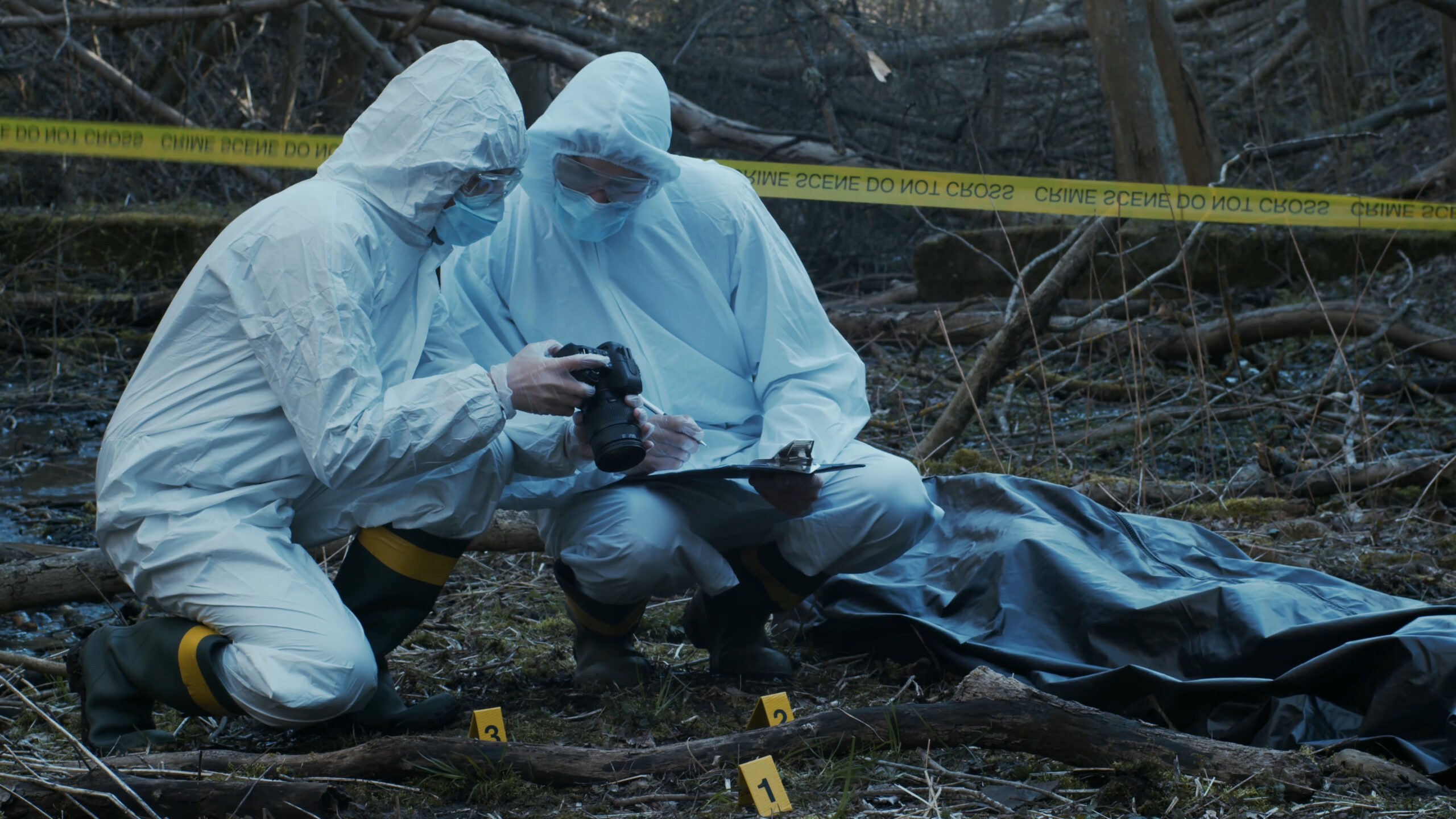
On December 1, 1946, 18-year-old Bennington College sophomore Paula Jean Welden left campus for a walk on Vermont’s Long Trail and never returned. Multiple witnesses saw her walking north along the trail that afternoon, but no trace of her was found despite an extensive search. Her disappearance remains unresolved and became the first in a series of vanishings near Bennington that would later be called the Bennington Triangle.
The last confirmed sighting
Paula Welden left her dormitory at Bennington College around 2:45 p.m. on a Sunday afternoon. She wore a red parka with a fur-lined hood, blue jeans, and sneakers. She told her roommate she was going for a walk but did not specify where or for how long.
Witnesses placed her walking east through the town of Bennington toward Route 9, then turning onto the Long Trail, a hiking path that runs along the ridgeline of the Green Mountains. An older couple saw her near the trailhead. Louis Knapp, walking the trail with his dogs, encountered her about halfway up. He told investigators she appeared calm and walked with purpose.
The final known sighting came from Ernest Whitman, a contractor working near the trail. He saw Welden walking north on the Long Trail approximately 100 yards ahead of him. He turned briefly to clear brush, and when he looked up, she was gone. Whitman estimated the interval at less than a minute.
The search begins
When Welden did not return to campus by evening, her roommate alerted dormitory staff. Campus security contacted her father, W. Archibald Welden, a textile engineer from Stamford, Connecticut. He arrived in Bennington the following day and organized a search.
Local police, college staff, and volunteers scoured the area surrounding the Long Trail. The effort expanded over several days to include state police, FBI agents, and more than 1,000 volunteers. Search parties deployed tracking dogs, but the dogs lost the scent near the point where Whitman last saw her.
Investigators found no physical evidence. No clothing, no footprints beyond the area already canvassed, no signs of a struggle. The red parka she wore should have stood out against the late autumn landscape, but searchers found nothing.
Timeline compression and witness accounts
The investigation centered on the minutes between Whitman’s sighting and his realization that Welden had vanished. Whitman estimated he lost sight of her for 30 to 60 seconds. The trail in that section was relatively open, with limited places to veer off unnoticed. Investigators examined whether she could have stepped into dense brush, fallen into a concealed ravine, or been picked up by a vehicle on a nearby access road.
State police interviewed everyone who had been in the area that afternoon. Several drivers reported traveling Route 9, which runs near the trail, but none recalled seeing a young woman in a red jacket. A bus driver on a route that passed through Bennington said he saw no one matching her description. The absence of additional sightings indicated that Welden either left the trail quickly or something happened in that narrow window.
Investigators explored whether Welden might have left voluntarily. Friends and faculty described her as a capable student, though she had expressed some dissatisfaction with college life. Her father dismissed the possibility that she would leave without telling anyone, and no evidence surfaced to suggest she had planned to disappear.
Theories and leads
In the weeks following her disappearance, police pursued several leads. An anonymous caller claimed to have seen a woman resembling Welden in a car heading toward Massachusetts, but the tip could not be verified. A prison inmate later claimed he had information about her fate, but his statements were inconsistent and investigators found no supporting evidence.
Some officials considered foul play. The Long Trail was accessible by logging roads, and it was possible someone could have been near the trail or encountered Welden by chance. No suspects were identified, and no witness came forward with information suggesting abduction.
Others speculated that Welden became lost or injured and succumbed to the elements. Temperatures dropped below freezing that night, and snow fell later in the week. Searchers combed the area repeatedly, including after the snow melted the following spring, but recovered nothing.
The broader pattern
The disappearance of Paula Jean Welden was the first in a series of unexplained vanishings in the Bennington area between 1945 and 1950. Four other people disappeared under unclear circumstances within a few years, leading to speculation about a connection. The cases varied widely in victim profile, location, and circumstances, and law enforcement never established a link between them.
The cluster of disappearances drew national attention and gave rise to the label “Bennington Triangle,” a term used to describe the area where the incidents occurred. Some have suggested a serial offender or environmental hazards unique to the region, but no evidence has substantiated those theories.
Legal and procedural aftermath
The Welden case had a direct impact on missing persons procedures in Vermont. At the time of her disappearance, there was no standardized protocol for handling such cases, and the delayed response hindered early search efforts. In 1947, Vermont established new guidelines requiring faster coordination between local and state law enforcement in missing persons investigations.
W. Archibald Welden continued searching for answers for years. He hired private investigators and followed up on reported sightings across the country, none of which proved credible. In 1954, he petitioned a court to have Paula declared legally dead, a necessary step for settling her estate.
Unresolved questions
The disappearance of Paula Jean Welden remains unsolved. The lack of physical evidence, the compressed timeline, and the absence of credible sightings after that afternoon on the Long Trail have left investigators with no clear explanation. Theories range from abduction to accidental death to voluntary disappearance, but none have been substantiated.
The case file remains open with the Vermont State Police. Over the decades, investigators have revisited the case periodically, reviewing old evidence and following up on new tips. Advances in forensic technology have had little to apply given the absence of physical evidence.
What remains is a record of confirmed movements up to a specific point on a hiking trail, and then nothing. The minutes that followed remain the central question of the case.
Where to look next
- Documentary: “Disappeared: Paula Welden” (Investigation Discovery)
- Book: “Green Mountain Ghosts, Ghouls & Unsolved Mysteries” by Joseph A. Citro
- Book: “The Bennington Triangle” by Joseph A. Citro