The same administration that put a federal judge on the bench is now accusing him of a “gross abuse of power” for asking a basic question. Why is a lawyer still signing filings as “U.S. Attorney” after another court ruled she never legally held the job?
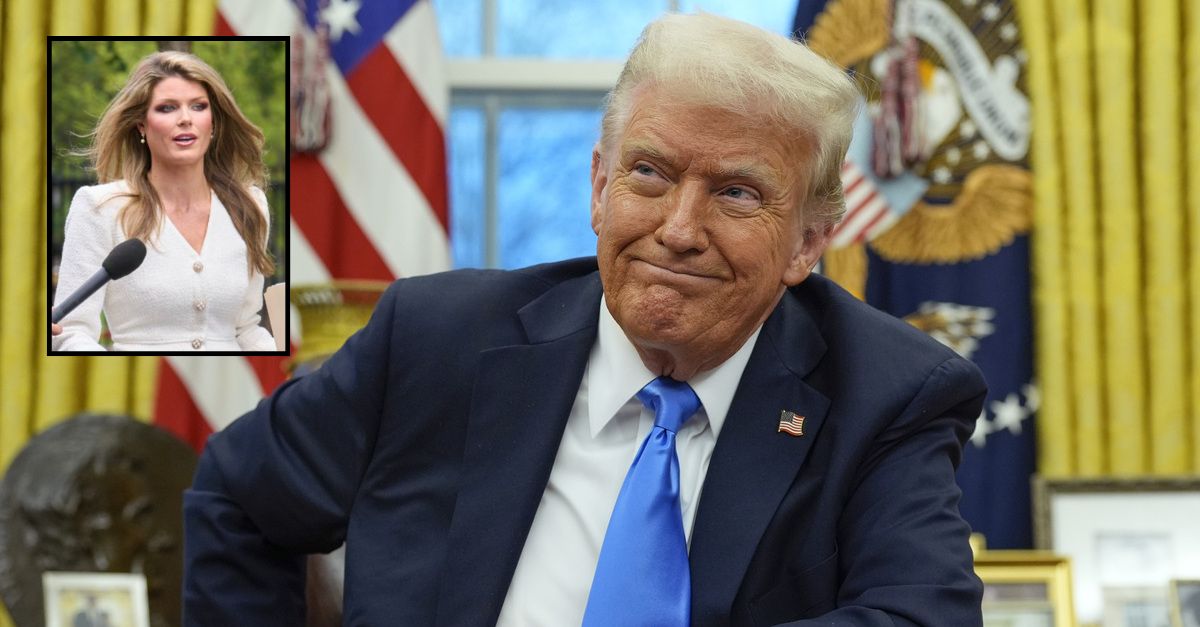
According to reporting from Law & Crime, that conflict centers on Lindsey Halligan, described as the Trump administration’s pick to lead prosecutions in the Eastern District of Virginia, and U.S. District Judge David J. Novak, a Trump appointee in that same district. At issue is whether Halligan can continue to call herself “United States Attorney” in ongoing cases after a separate federal judge found her appointment violated both federal law and the U.S. Constitution.
A Question About a Title
In early January 2026, Judge Novak issued an order in a pending criminal case directing the government to explain why Halligan’s name still appeared on the signature block as “U.S. Attorney,” Law & Crime reported, citing the order and subsequent filings.[1] He also ordered Halligan herself to respond.
Novak pointed to an earlier ruling from November 2025 by U.S. District Judge Cameron McGowan Currie, a Clinton appointee. Currie’s order, as described in the Law & Crime report, concluded that Halligan’s appointment as interim U.S. Attorney for the Eastern District of Virginia was invalid and that she was, in legal terms, a “private citizen” when she took on that role.
For Novak, the practical problem was immediate. If another district judge had already ruled that Halligan was never lawfully appointed, could she still sign federal charging documents using the title “United States Attorney” in his courtroom?
An Earlier Ruling That Undercut Halligan’s Authority
Judge Currie’s November 2025 decision reportedly focused on how Halligan was installed as interim U.S. Attorney. According to Law & Crime, Currie held that the appointment process violated both federal statute and the U.S. Constitution’s Appointments Clause, which governs how principal officers such as U.S. Attorneys are chosen.[2]
Under federal law, United States Attorneys are ordinarily nominated by the president and confirmed by the Senate. When there is a vacancy, an interim U.S. Attorney can be appointed under 28 U.S.C. 546, first by the Attorney General for a limited period and, if necessary, later by the district court.[3] Currie concluded that whatever process placed Halligan in office did not comply with those rules or the Constitution.
Law & Crime reported that the immediate effect was dramatic. Currie dismissed two high-profile prosecutions that Halligan had overseen, one targeting New York Attorney General Letitia James and another targeting former FBI Director James Comey. The reasoning was straightforward. If Halligan had never validly held the office, her participation tainted those indictments.
What Currie’s order meant for the rest of Halligan’s work was less clear. The report noted that Halligan’s name appeared on nearly three dozen criminal and civil cases as “U.S. Attorney,” involving allegations that ranged from fraud and conspiracy to theft and traffic-related offenses. Defendants in those matters suddenly had a potential argument that the government’s top lawyer in their district lacked legal authority.
The Administration Pushes Back
When Judge Novak asked why Halligan was still using the title, the Trump administration responded forcefully. According to the Law & Crime account of the government’s filing, Department of Justice lawyers accused Novak of a “gross abuse of power” and argued that he had misunderstood the scope of Currie’s ruling.
The government took the position that Currie’s decision dismissing the James and Comey cases did “not prohibit, or render factually false” its continuing assertion that Halligan is the United States Attorney. In the administration’s view, Currie relied on federal appointment law and the Appointments Clause only as a basis to toss those two prosecutions, not as an “independent declaratory judgment” that Halligan could never hold the title in any context.
Halligan’s own response, as quoted by Law & Crime, was even more pointed. In the first line of her filing, she reportedly labeled Novak’s inquiry “a sua sponte inquisition” and argued that “[t]he order launching this quest reflects a fundamental misunderstanding” of the law. Her motion said the judge’s approach “flouts no fewer than three separate lines of Supreme Court precedent on elementary principles like the role of federal courts, the effect of district court rulings, and the nature of our adversarial system.”
Lindsey Halligan, along with Todd Blanche and Pam Bondi, go on the attack against Trump appointed federal Judge Novak in an extraordinary, pugilistic brief.
They accuse Novak of a “gross abuse of power” for asking why Halligan keeps falsely describing herself as a US Attorney. pic.twitter.com/a9Lv0YJnSS
— Adam Klasfeld (@KlasfeldReports) January 13, 2026
Those statements frame the dispute as not only about one prosecutor’s job title but also about how far a trial judge can go in raising constitutional issues on his own, especially when another judge has already spoken.
What Happens To Halligan’s Other Cases
Beyond the institutional rhetoric, there is a concrete problem. If Halligan was not lawfully appointed, what should happen to the nearly three dozen other cases in which she appeared as “U.S. Attorney”?
The Law & Crime report notes that those cases span a wide range of alleged conduct, including white collar offenses such as fraud and conspiracy and more routine matters such as theft and traffic-related charges. Some involve people accused of significant financial crime. Others involve individuals facing comparatively minor counts.
The answer is not automatic. Federal courts have sometimes treated actions taken by improperly appointed officials as voidable rather than automatically void, depending on factors such as the timing of the challenge and the nature of the defect. At the same time, the Supreme Court has held that serious Appointments Clause violations can require new proceedings, particularly when an officer exercises significant authority without proper appointment.
In Halligan’s situation, the path forward would likely depend on how judges interpret Currie’s order, how they weigh Novak’s concerns, and whether defendants in her other cases choose to raise the appointment issue. None of that is resolved in the filings described so far.
The Law Behind Interim U.S. Attorneys
The legal backdrop to this dispute is complicated but important. Article II of the Constitution gives the president the power to appoint officers of the United States with the advice and consent of the Senate. It also allows Congress to vest the appointment of “inferior Officers” in the president alone, in the courts, or in department heads.[2]
Congress has used that power to create a system for U.S. Attorneys. Permanent U.S. Attorneys must be Senate-confirmed. Interim U.S. Attorneys can be named in limited circumstances, but only by the specific actors and in the sequence set out in 28 U.S.C. 546.[3] That statute is designed to keep prosecutorial power tied to politically accountable officials and to prevent indefinite workarounds of the confirmation process.
According to the Law & Crime report, Judge Currie concluded that the method used to install Halligan did not fit within that framework and therefore violated both the statute and the Constitution. The details of that reasoning are not fully recounted in the article, but the bottom line is clear. In Currie’s view, Halligan never lawfully became interim U.S. Attorney for the Eastern District of Virginia.
That conclusion set the stage for the current clash. If one federal judge has already treated Halligan as a “private citizen” for purposes of two high-profile prosecutions, other judges in the same district must decide whether they are bound by that assessment, free to disagree, or required to await guidance from a higher court.
Judges On A Collision Course
The dispute also has an unusual political overlay. Novak is a Trump appointee. Currie is a Clinton appointee. The administration attacking Novak for a “gross abuse of power” is the same administration that supported his nomination.
From a legal standpoint, the core disagreement is about judicial authority. Novak viewed Currie’s ruling and Halligan’s continued use of the U.S. Attorney title as a problem serious enough to address on his own initiative. The administration and Halligan, according to their filings, see that as an improper intrusion into the adversarial process and a misreading of what Currie’s order actually decided.
For now, there is no indication in the public reporting that an appeals court has weighed in on Halligan’s appointment or on Novak’s authority to question her title. The unresolved issues are substantial. Whether Halligan remains listed as U.S. Attorney, whether her other cases stand or fall, and how the judiciary reconciles conflicting views of her status will depend on rulings that have not yet been made public.
Until a higher court clarifies the reach of Currie’s decision, the Eastern District of Virginia sits in an unusual position. A purported U.S. Attorney whose appointment has been declared invalid in one case remains on the signature line in others. A judge backed by the administration that appointed him is being accused by that same administration of overstepping his role. The legal system has not yet answered which view will prevail.