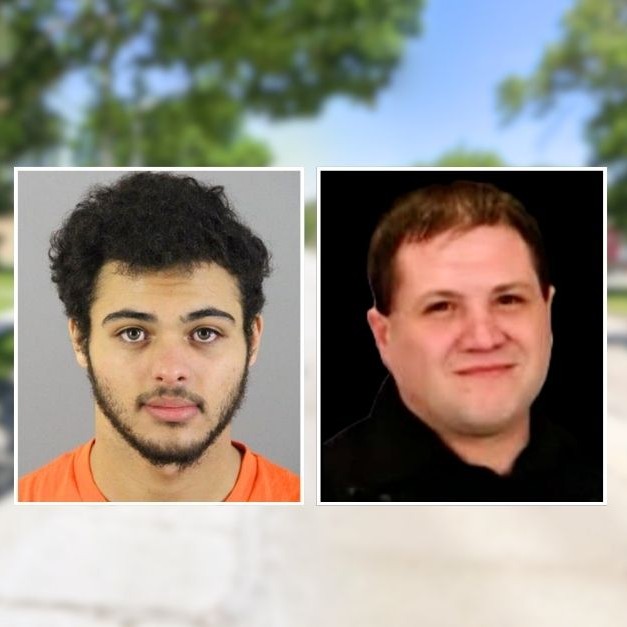
Waukesha County jurors have found 17-year-old Ronnie Fuentez guilty of felony murder caused by battery in the death of his uncle and roommate, 46-year-old Adam Thompson, after an argument over whether a friend could stay the night. With sentencing set for April 27th, the case now turns from how the fatal brain bleed happened to how the court will weigh intent, delay in seeking help, and a prior open case while setting punishment.
TLDR
Seventeen-year-old Ronnie Fuentez was convicted in Waukesha County of felony murder caused by battery and bail jumping in the brain-bleed death of his uncle, Adam Thompson, after a dispute over a friend’s sleepover, and now awaits an April 27th sentencing hearing.
Argument in Shared Apartment Turns Violent
According to a criminal complaint summarized by Law & Crime, the events that led to Thompson’s death began on February 1st, 2025, inside a small apartment on Delafield Street in Waukesha, a city just west of Milwaukee. Thompson and his nephew had shared the apartment for about four years. That night, prosecutors said, the two argued because Fuentez wanted a friend to spend the night and Thompson refused.
In the complaint, Thompson later told authorities that he had informed his nephew he would not allow the sleepover. That decision, he said, upset Fuentez and escalated the argument. Thompson recounted that he told his nephew that the friend needed to go home, at which point, he said, Fuentez punched him in the head with a closed fist.
Thompson told police he struck back in what he described as self-defense, then raised his arms to shield his head as Fuentez continued punching. According to the complaint, Thompson said his nephew kept hitting him in the head while yelling insults, including that he had wanted to hurt his uncle since moving in. The criminal filing portrays a brief but intense encounter inside the apartment, with no indication of weapons or outside intervention.
After the confrontation, investigators said, Fuentez left the apartment and did not return until the following morning. The complaint does not clarify what happened to the visiting friend during or after the altercation, or whether anyone else inside the building heard or reported the dispute.
Medical Decline and Delayed Emergency Response
At first, Thompson did not treat the altercation as an emergency. Court records, as described by Law & Crime, indicate that he did not immediately call police or seek medical care, and he told authorities he did not feel serious or immediate injuries after the punches. This initial decision not to seek help would later prove critical in reconstructing the medical timeline.
Two days after the fight, Thompson developed a migraine in the afternoon. He reportedly took over-the-counter medication that provided some relief, but the pain continued. On February 5th, 2025, he called his mother. While they were on the phone, the complaint states that Thompson began to struggle to speak in full sentences, prompting his mother to suspect he was having a stroke.
Thompson’s mother went to his apartment to check on him, then drove him to Waukesha Memorial Hospital. There, according to the complaint, medical staff informed him that “he had an internal brain bleed.” Thompson was moved to the intensive care unit. Doctors noted that he could speak but could not consistently form complete sentences or find the right words, difficulties they linked to internal bleeding in his brain.
Despite those challenges, investigators said Thompson was still able to describe the altercation to hospital personnel and a responding Waukesha police officer. He told them that his nephew had punched him multiple times in the head. Those statements, made while he was hospitalized, became a key piece of evidence tying the assault to the later medical crisis.
From Battery Charge to Felony Murder Conviction
Initially, authorities charged Fuentez with battery in connection with the February 1st altercation. At that point, Thompson was still alive but hospitalized with a brain bleed. Law & Crime has reported that the charge was upgraded after Thompson died on February 17th, 2025, roughly two weeks after he first sought emergency care.
Once Thompson died, prosecutors moved to charge Fuentez with felony murder caused by battery, alleging that his repeated punches to his uncle’s head set in motion the chain of events that ended in Thompson’s death. Under Wisconsin law, felony murder applies when someone dies during the commission of certain felonies, exposing the offender to significant additional prison time beyond the sentence for the underlying felony itself.
Court records reviewed by Law & Crime also show that jurors convicted Fuentez of misdemeanor bail jumping. Prosecutors alleged that at the time of the assault on Thompson, he was out on bond in an unrelated criminal case opened the previous September. A bail jumping conviction generally reflects that a defendant violated one or more conditions imposed when they were released from custody, such as remaining law-abiding.
The jury’s verdict means they accepted the prosecution’s theory that the February 1st assault materially caused the brain bleed that ultimately killed Thompson. The record does not detail all of the defense arguments raised at trial, including any challenge to causation, Thompson’s decision to delay treatment, or other potential medical factors. Those details are likely contained in court transcripts that are not described in available public reporting.
Age, Adult Court, and Community Portrait
Although Fuentez was 17 years old at the time of the assault, his case proceeded in adult criminal court. Wisconsin is among the states where 17-year-olds are automatically treated as adults for most criminal charges, which means Fuentez faced the same felony murder exposure as an older defendant rather than juvenile-specific sanctions.
The felony murder conviction, paired with the bail jumping count, places substantial prison time on the table at sentencing. Sentencing in Wisconsin felony cases typically takes into account the severity of the offense, the defendant’s criminal history, the need to protect the public, and the defendant’s character and prospects for rehabilitation. Judges also hear impact statements from victims’ families when they choose to speak.
Thompson’s family has already begun to define his memory publicly. An obituary published by Randle-Dable-Brisk Funeral Home describes him as “an avid gamer, a reptile enthusiast, having many reptiles in his home, loved his dog Boy, and most of all loved his family, enjoying every family gathering.” That description sits in tension with the account in the criminal complaint, in which Thompson is portrayed as navigating an argument that quickly turned into lethal violence inside the home he shared with his nephew.
Sentencing Ahead and Unanswered Questions
Fuentez is scheduled to be sentenced on April 27th. At that hearing, a Waukesha County judge will decide how much prison time to impose for felony murder caused by battery and for bail jumping, and whether any terms will run consecutively or concurrently. The court will also formally record the jury’s findings of guilt.
Public filings and local reporting leave several aspects of the case unresolved in the record. It remains unclear what happened to the friend whose overnight stay sparked the argument, whether that person witnessed any part of the assault, or whether they were ever called to testify. Existing accounts also do not describe in detail the unrelated case for which Fuentez was out on bond when the assault occurred, beyond noting that he had been released the previous September.
The timeline between the assault and Thompson’s decision to go to the hospital is another area largely described in summary. The complaint notes his lack of immediate symptoms, the development of a persistent migraine two days later, and his eventual transport to the hospital, but it does not fully explain what prompted him to wait before seeking care. How the court weighs that delay, if at all, could surface during sentencing arguments.
Once the judge imposes a sentence, Fuentez will have the option to appeal his conviction and sentence through Wisconsin’s appellate courts. For Thompson’s family, the April sentencing will mark a procedural milestone, but questions about the argument that began over a simple sleepover request, the medical path from bruising to fatal brain bleed, and the role of earlier decisions by everyone involved are likely to remain part of how this case is understood in Waukesha and beyond.