

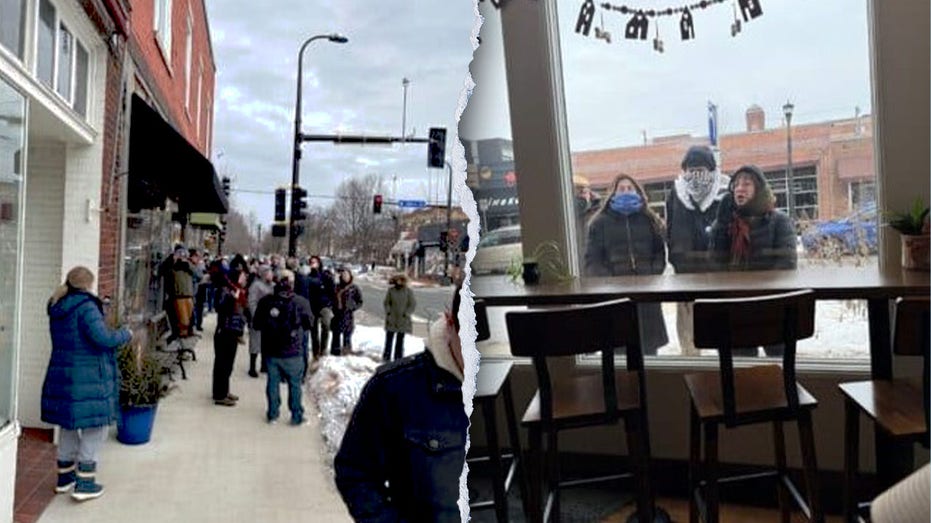
The three men said they were on a lunch break. Outside the deli window, faces pressed to the glass, phones came up, and strangers began calling them federal agents and pedophiles.
A Lunch Break That Turned Into A Protest Target
According to reporting by Fox News, a small group of white, casually dressed men were eating at Clancey’s Deli in Minneapolis when one of them received a message in a neighborhood group chat that supports anti-ICE activism. The alert claimed that plainclothes U.S. Immigration and Customs Enforcement agents were inside the restaurant.[1]
The man who saw the message, identified only as Lee in coverage by Alpha News and Fox News, told reporters he personally shares the group’s opposition to ICE and lives nearby. In the chat, described as the SW Minneapolis Rapid Response group, participants had been encouraged to spot and respond quickly to perceived immigration enforcement activity.
That day, Lee and his friends say they were simply software engineers meeting for a meal. Within a short time of the alert, a crowd gathered outside the deli and began looking in through the windows, as seen in video later posted online, according to Fox News.[2]
When the men finished eating and stepped outside, they encountered a group of protesters who shouted at them, told them to leave the neighborhood, and accused them of being both immigration agents and pedophiles. One of the men tried to explain on camera that they were technology workers who build custom applications for clients in Minnesota and other states. The crowd, as described by Fox News and Alpha News, did not appear persuaded.
Neither outlet reported any physical assault or arrests connected to this encounter. The conflict took the form of verbal harassment, close filming, and an angry crowd following the men as they walked away.
From Group Chat Alert To Street Confrontation
The trigger for the confrontation was not a law enforcement operation. It was a message in a political organizing chat.
Fox News, citing Alpha News, reported that the SW Minneapolis Rapid Response group is used by local anti-ICE activists to share real-time tips about possible immigration enforcement activity so that protesters can show up quickly. The alert that day described the men inside Clancey’s as plainclothes federal agents. That claim has not been supported by any official record.
ICE has not publicly commented on the Clancey’s Deli incident, and there is no indication in Fox News or Alpha News coverage that any federal operation was taking place at the time. ICE describes itself on its own website as the agency responsible for immigration enforcement, customs investigations, and related duties, typically carried out by officers who may work either in uniform or plain clothes, depending on the operation.[3]
What is documented is the presence of protesters and the misidentification of the tech workers as federal agents. Videos cited by Fox News and Alpha News show protesters surrounding the men outside, calling them names and demanding that they leave the area. At one point, according to Fox News, a person can be heard telling them to get out of the neighborhood while whistles and chants rise in the background.
Lee told Alpha News that at least one of the men in his group generally agrees with anti-ICE positions. In his account, that friend had eaten at Clancey’s before and suddenly found himself featured in messages as a supposed immigration agent. The gap between his political alignment and the crowd’s treatment of him underscores a key fact of the incident. The harassment followed appearance and rumor, not verification.
Where Protest Ends And Harassment Begins
The confrontation outside Clancey’s sits in a legally complicated space that every protest movement eventually confronts. The U.S. Constitution protects speech and assembly, including in public spaces outside businesses. Yet sustained, targeted behavior can cross into harassment or even stalking under state law, even when it is politically motivated.
Minnesota law defines harassment broadly in its civil harassment statute. State law allows a person to seek a court order if another person engages in repeated acts, words, or gestures that have a substantial adverse effect on their safety, security, or privacy.[4] The statute also covers actions that cause or are intended to cause fear of physical harm.
Criminal harassment and stalking charges in Minnesota focus on repeated, unwanted conduct, threats, or following that would cause a reasonable person to feel frightened, threatened, or intimidated. The key details in any case are the exact words used, whether there were threats, how many people were involved, and whether the conduct continued after a clear attempt to leave.
In the Clancey incident, the public record is thin. The video clips that have been described capture shouting, name-calling, and demands that the men leave the area. The men are reported to have tried to talk with the crowd and explain who they were. Ultimately, they walked away while still being verbally confronted.
Without a police report, a court case, or full length, publicly available video, it is not possible to draw legal conclusions about whether the behavior in this specific encounter would meet the threshold for harassment or disorderly conduct under Minnesota law. What is clear from the reporting is that the men experienced a sudden and intense verbal confrontation in a public space because strangers believed they were part of federal immigration enforcement.
The Risks Of Real Time Targeting
Rapid response organizing is not new. For years, activists have used text chains, encrypted messaging apps, and social media groups to mobilize people quickly in response to police or federal activity. That tactic, however, depends heavily on the accuracy of the first person who hits send.
In this Minneapolis case, that initial claim appears to have been wrong. There is no public evidence that anyone in the crowd verified the men’s identities before confronting them. There is also no public indication, in the reporting so far, that the group issued any correction or apology after learning the men were not ICE employees.
From an accountability perspective, two issues stand out.
Item 1: The information pipeline. A single unverified message in a politically charged group chat quickly escalated to an in-person confrontation. Once the label “plainclothes ICE agents” was attached to the men, it seems to have shaped everything that followed.
Item 2: The choice of language. Calling private citizens pedophiles in public is not a minor insult. It is an allegation of serious criminal conduct, directed at people who, in this case, were not accused of any crime by law enforcement.
Fox News and Alpha News focused on the political context of the incident, in part because it came after other tense interactions between anti-ICE protesters and federal officers in Minneapolis. They reported that earlier confrontations had already put activists on high alert about the presence of ICE or other federal personnel in the area.
What those reports do not show is any mechanism for correcting misidentifications or for shielding bystanders who are swept up in the urgency of rapid response tactics.
What Remains Unresolved
The Clancey’s Deli confrontation did not end in criminal charges, at least based on the public reporting available so far. There are no known civil lawsuits alleging defamation or harassment related to the events that day.
The identities of the people who sent the original chat alert, and of those who shouted accusations on the sidewalk, have not been reported. There is no public record of any formal complaint to Minneapolis police about the crowd’s behavior.
What remains are a set of videos, two media accounts from outlets with clear political perspectives, and the word of several men who say they were software engineers surprised to find themselves treated as federal agents.
In a city where federal immigration enforcement and local resistance have already collided, the unanswered question is a practical one. How often are rapid response networks misidentifying targets, and who is responsible when that mistake turns a lunch break into a public accusation of criminality with no official record to check against?