

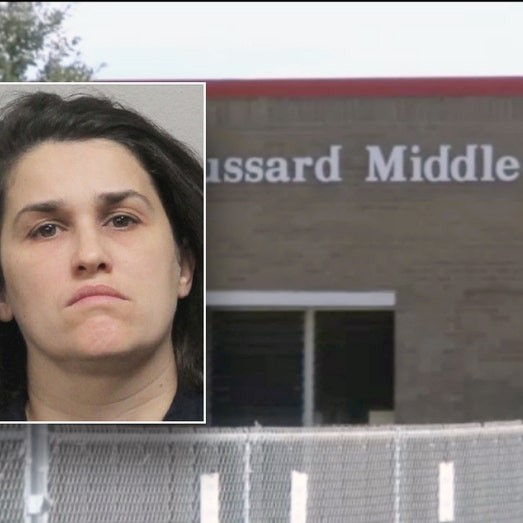
In Lafayette Parish, a celebrated middle school educator now faces a second criminal charge alleging indecent behavior with a juvenile, while authorities have yet to publicly explain the full scope or timeline of the alleged conduct involving a former student.
According to a report dated February 5th, 2026, 38-year-old Christie Oster, a Broussard Middle School teacher honored as the campus Teacher of the Year for the 2025-2026 school year, has been arrested twice in recent days on related allegations. Police and school officials have confirmed the existence of charges and administrative leave, but key details, including when and where the alleged behavior occurred and whether more than one student is involved, remain undisclosed.
Two Arrests in Separate Jurisdictions
In the first case, the Lafayette Police Department arrested Oster on charges of carnal knowledge of a juvenile and indecent behavior with juveniles, according to Fox News. Her bond on those counts was set at $50,000. Those charges, filed under Louisiana law, indicate that investigators believe sexual conduct occurred between an adult and a person legally classified as a juvenile, though the specific nature of that conduct has not been publicly described.
Shortly after that initial arrest, a second law enforcement agency entered the case. Broussard, where Oster teaches, has its own police department. According to Fox News, Capt. Zac Gerard of the Broussard Police Department said his agency coordinated with Lafayette authorities as additional information emerged.
“We actually work in conjunction with the Lafayette Police Department,” Gerard told Fox News in a phone interview. He said an additional count of indecent behavior with juveniles was added based on conduct that investigators believe occurred within Broussard’s jurisdiction.
On that new charge, Oster was arrested again and booked on one count of indecent behavior with juveniles, with a bond set at $10,000, according to Fox News, citing local station KADN. Authorities indicated that she turned herself in to the Lafayette Parish Sheriff’s Office on the warrant. Turning herself in suggests that Oster, or her attorney, was made aware of the warrant and arranged for her surrender rather than being taken into custody during a traffic stop or at her home, though officials have not commented on those logistical details.
The Teacher of the Year at a Louisiana school was arrested on child sex charges.Christie Elizabeth Dunbar Oster, 38, of Lafayette, was arrested Wednesday on counts of carnal knowledge of a juvenile and indecent behavior with juveniles, according to Lafayette Parish jail records pic.twitter.com/w9sGetpg26
— Prime Time (@primetime_ge) February 3, 2026
Allegations Involving a Former Student
Publicly available information about the alleged victim is limited, in line with standard practices meant to protect minors’ identities. According to the Lafayette Police Department, cited in the Fox News report, the alleged victim is one of Oster’s former students. Officials have not publicly released the student’s age at the time of the alleged conduct, the specific setting of the alleged incidents, or whether the student was still enrolled at Broussard Middle School when the behavior is said to have occurred.
Under Louisiana law, the offense of indecent behavior with juveniles generally involves an adult engaging in lewd or sexually charged conduct with or in the presence of someone under the age of 17, when there is an intent to arouse or gratify sexual desires. The statute can also apply to certain electronic communications of a sexual nature directed at a juvenile. Carnal knowledge of a juvenile covers sexual intercourse or certain sexual acts between an adult and a juvenile within a specified age range and age difference. Both offenses can carry significant prison time, mandatory registration requirements, and long-term restrictions if a conviction is obtained.
What is not clear from public statements is whether the new count of indecent behavior with juveniles filed in Broussard relates to the same former student referenced in the Lafayette Police Department’s earlier description or to a different alleged victim. The available reporting does not indicate that authorities have identified multiple victims, and police have not publicly said they are seeking additional student witnesses. Without charging documents or affidavits, which are not quoted in the available reporting, the underlying factual allegations remain largely out of view.
Oster has not made any public statement responding to the allegations, and no attorney has been quoted in news coverage to date. As of now, she is formally an accused defendant, not a convicted offender, and is entitled to the legal presumption of innocence while the cases proceed.
From Classroom Honor to Administrative Leave
Before the criminal allegations surfaced, Oster’s professional profile in the Lafayette Parish School System was one of recognition. According to Fox News, she had been named Broussard Middle School’s Teacher of the Year for the 2025-2026 school year, an accolade that typically reflects peer nominations, administrative approval, and perceived excellence in the classroom.
The timing of that honor relative to the alleged misconduct is not publicly documented. It is not known when the school first became aware of the accusations, whether any internal complaints preceded the police investigations, or whether any students or parents had previously raised concerns about Oster’s behavior. The available report does not mention prior disciplinary action, written warnings, or investigations by the school system’s human resources or professional standards offices.
Once the criminal investigation became known, the Lafayette Parish School System placed Oster on leave, according to Fox News. Officials have not publicly specified whether that leave is paid or unpaid, or whether it is framed as an administrative leave pending investigation, which is common in cases where professional conduct and criminal allegations overlap. Louisiana districts typically remove employees from direct student contact when serious criminal allegations involving minors arise, both to protect students and to preserve the integrity of internal and external investigations.
School systems in Louisiana are also legally required to report suspected abuse or exploitation of students to law enforcement or child protection authorities. In many cases, administrators must navigate parallel processes: an internal employment and licensing review and an external criminal case. Whether such parallel reviews are underway in Oster’s case has not been publicly detailed.
Coordinated Policing and Legal Next Steps
The brief statements by Capt. Gerard highlight another feature of this case: overlapping jurisdictions. Because Oster teaches in Broussard but was first arrested by Lafayette police, the alleged conduct appears to span at least one municipal boundary. In such scenarios, one agency may open an investigation, then, as specific locations of alleged incidents are identified, other departments take on portions of the case that fall within their geographic authority.
Gerard’s statement that his department works in conjunction with Lafayette police underscores that the various counts against Oster are being assembled from more than one investigative file. It remains unclear whether the Lafayette Parish District Attorney will combine the charges into a single prosecution, pursue separate cases tied to each jurisdiction, or take another approach entirely. Prosecutors’ charging decisions, which may involve grand jury presentations, are typically recorded in public court dockets, but those documents have not been described in the available reporting.
If prosecutors move forward, the next procedural steps would usually include formal filing of bills of information or indictments, an arraignment at which Oster would enter pleas, and pretrial motions over evidence and disclosures. In cases involving alleged crimes against juveniles, courts sometimes issue protective orders limiting the release of certain records or identifying information, which can further constrain what is available to the public.
Potential penalties, if convictions were obtained, would depend on the precise statutory sections charged, the ages involved, any prior criminal record, and other aggravating or mitigating factors. Louisiana law allows for significant prison terms and mandatory sex offender registration for both indecent behavior with juveniles and carnal knowledge of a juvenile. At this stage, however, no plea has been reported, and no trial dates have been publicly identified.
Unanswered Questions for Families and the Public
For parents in Broussard and Lafayette, the available facts raise difficult but straightforward questions that officials have not yet addressed in public statements. Among them:
- When did the alleged behavior begin and end, and how does that timeline relate to Oster’s tenure and honors at Broussard Middle School?
- Did any students, parents, or staff members raise concerns about Oster before law enforcement became involved, and if so, how were those concerns handled?
- Are authorities investigating the possibility of additional victims, or do they believe the allegations are limited to a single former student?
- What safeguards or reporting protocols has the Lafayette Parish School System reviewed or revised in light of the allegations?
None of these questions implies guilt, and none can be answered definitively without more detailed documentation from police, prosecutors, or the school district. They do, however, frame the accountability issues that often arise when a trusted educator who has been publicly honored is later accused of abusing that trust.
As of the latest available reporting, Oster remains out on bond, formally charged but not convicted. The investigation appears to be active in at least two jurisdictions, and the school system’s internal response continues under the umbrella of administrative leave. The next meaningful public developments are likely to occur in the courtroom, through formal charges and hearings, which may begin to clarify what investigators believe happened, how institutions responded, and whether the current accusations represent isolated conduct or something larger.