


Case overview
Medgar Evers, a 37-year-old NAACP field secretary in Mississippi, was shot in the back outside his home in Jackson shortly after midnight on June 12, 1963. The gunman fired once from across the street, then disappeared. Byron De La Beckwith, a fertilizer salesman and white supremacist, was charged with the murder within two weeks, but it would take three trials and 31 years before a jury convicted him.
The final night
Evers spent the evening of June 11, 1963, at a mass meeting at the New Jerusalem Baptist Church in Jackson. He returned home around 12:20 a.m. on June 12 and pulled into the driveway of his single-story house at 2332 Guynes Street. His wife Myrlie and their three children were awake inside, waiting for him.
As Evers stepped out of his car carrying NAACP T-shirts that read “Jim Crow Must Go,” a single rifle shot struck him in the back. The bullet passed through his body, shattered a front window, penetrated an interior wall, ricocheted off a refrigerator, and stopped near the kitchen sink. Evers collapsed in the carport. His wife found him face-down in a pool of blood.
Neighbors called the police and an ambulance. Evers was transported to the University of Mississippi Medical Center, where he was pronounced dead at 1:14 a.m. The cause of death was a single gunshot wound that severed major blood vessels near his heart.
What investigators found
Jackson police and FBI agents arrived at the scene within the hour. They recovered the bullet from inside the home and began canvassing the neighborhood. Across the street, approximately 150 feet from where Evers fell, investigators found a rifle hidden in a honeysuckle thicket. It was a .30-06 Enfield rifle with a telescopic sight.
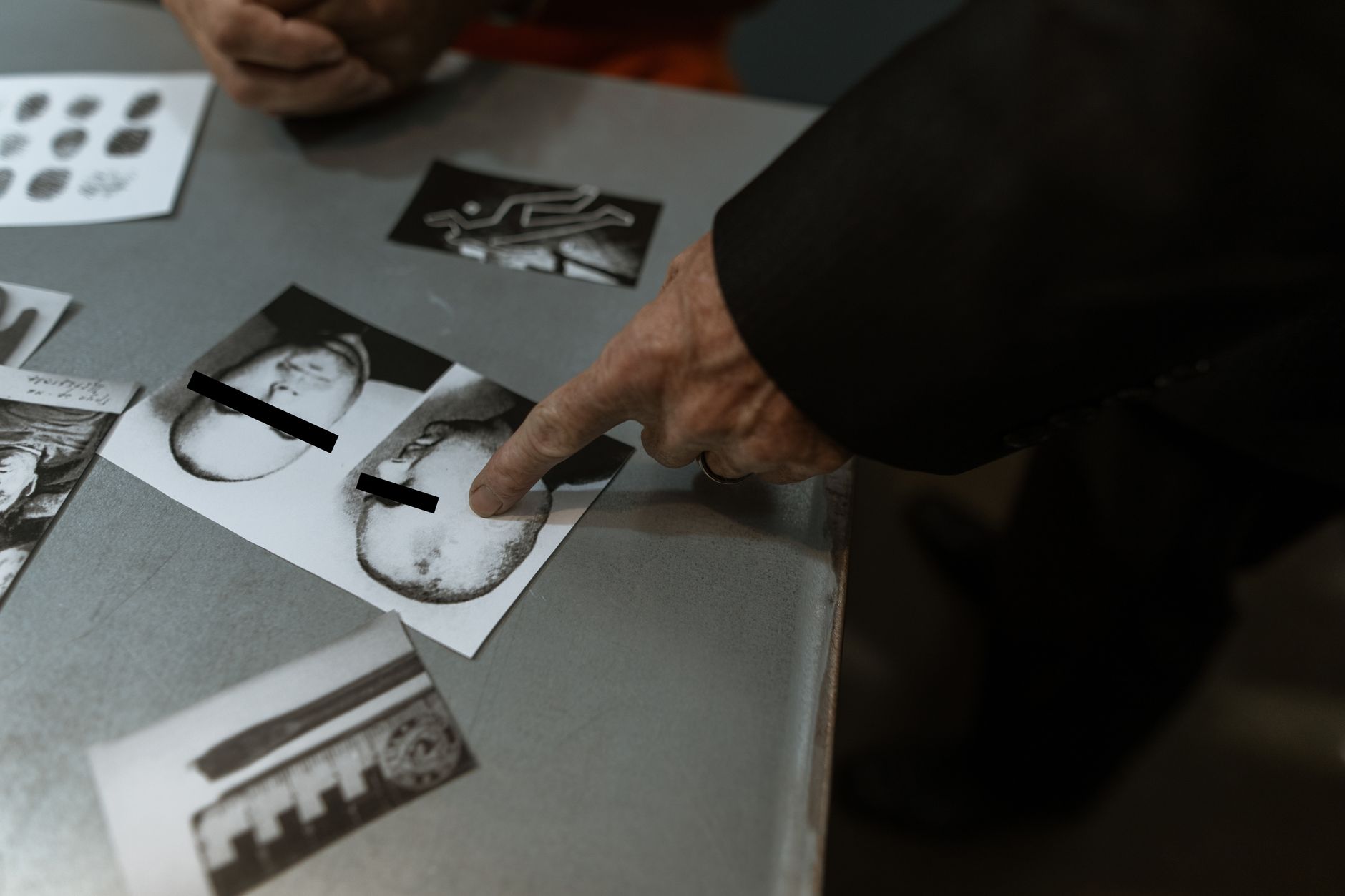
The weapon bore a partial fingerprint. Attached to the scope was a piece of adhesive tape, and on that tape was a clearer print. Within days, the FBI matched the fingerprint to Byron De La Beckwith, a 42-year-old member of the White Citizens’ Council and a known segregationist from Greenwood, Mississippi.
De La Beckwith had purchased the rifle from a Greenwood sporting goods store earlier that year. Records confirmed the sale. The gun dealer identified him as the buyer. Two cab drivers later told investigators they had driven a man matching De La Beckwith’s description to the vicinity of Evers’ home the night of the murder.
The first arrest and two mistrials
De La Beckwith was arrested on June 23, 1963, and charged with first-degree murder. He denied involvement and claimed he had been in Greenwood, roughly 90 miles away, at the time of the shooting. His defense centered on alibi witnesses who testified they had seen him in Greenwood that night.
The first trial began in January 1964 in Hinds County Circuit Court. The all-white, all-male jury deliberated for more than 10 hours but could not reach a verdict. The judge declared a mistrial. A second trial was held two months later. Again, the jury deadlocked, and the case ended in another mistrial.
Prosecutors faced a recurring problem: witnesses for the defense testified that De La Beckwith had been elsewhere at the time of the murder. The state’s case relied on the physical evidence—the rifle, the fingerprint, and circumstantial testimony. But in Mississippi in 1964, convicting a white man for the murder of Medgar Evers proved impossible.
The case was never formally dismissed, but no further action was taken for more than two decades.
New evidence and a third trial
In the late 1980s, a renewed push for justice began. Myrlie Evers, who had since remarried and become Myrlie Evers-Williams, contacted the Hinds County District Attorney’s office and urged officials to reopen the case. Assistant District Attorney Bobby DeLaughter took up the investigation in 1989.
DeLaughter reviewed the original case files and found new information. Several witnesses came forward who had not testified in the earlier trials. Some said De La Beckwith had bragged about the killing in the years afterward. Others described his open hostility toward Evers and the civil rights movement.
One key development involved the recovery of trial transcripts from the 1960s. The original court reporter had died, and the transcripts were believed lost. DeLaughter located them in a storage facility, which allowed the state to reconstruct the case and identify weaknesses in De La Beckwith’s alibi.
In December 1990, a Hinds County grand jury indicted De La Beckwith for murder. He was 70 years old and living in Tennessee. He was extradited to Mississippi and held without bond.
The 1994 conviction
The third trial began on January 26, 1994, in Jackson. This time, the jury was racially mixed, a significant change from the all-white panels of the 1960s. Prosecutors presented the same physical evidence: the rifle, the fingerprint, and the ballistics report. But they also introduced testimony from witnesses who said De La Beckwith had admitted to the murder or expressed pride in it.
The defense argued that the delay violated De La Beckwith’s right to a speedy trial and that memories had faded over three decades. His attorneys also challenged the reliability of witnesses who had waited years to come forward.
On February 5, 1994, after deliberating for more than six hours, the jury returned a guilty verdict. De La Beckwith was sentenced to life in prison. He appealed the conviction multiple times, arguing that the trial had been tainted by pretrial publicity and that the evidence was insufficient. All appeals were denied.
De La Beckwith’s death and unresolved questions
Byron De La Beckwith died in prison on January 21, 2001, at the age of 80. He never admitted guilt and maintained until his death that he had been in Greenwood the night of the murder.
The murder of Medgar Evers was resolved in a legal sense with the 1994 conviction, but questions about the broader context remain. Investigators and historians have long suspected that De La Beckwith did not act entirely alone. The White Citizens’ Council and other segregationist groups were active in Mississippi at the time, and some believe the assassination was part of a coordinated effort to suppress the civil rights movement.
No evidence sufficient to charge others has emerged. The FBI conducted investigations in the 1960s and again in the 1990s, but no additional suspects were identified. De La Beckwith’s silence, whether protective or defiant, ensured that any knowledge of accomplices or support networks died with him.
Where to look next
- Documentary: “Eyes on the Prize” (PBS, Episode: Mississippi – Is This America?)
- Book: “For Us, the Living” by Myrlie Evers-Williams and William Peters
- Podcast: “Medgar and Myrlie” (“Throughline”, NPR)