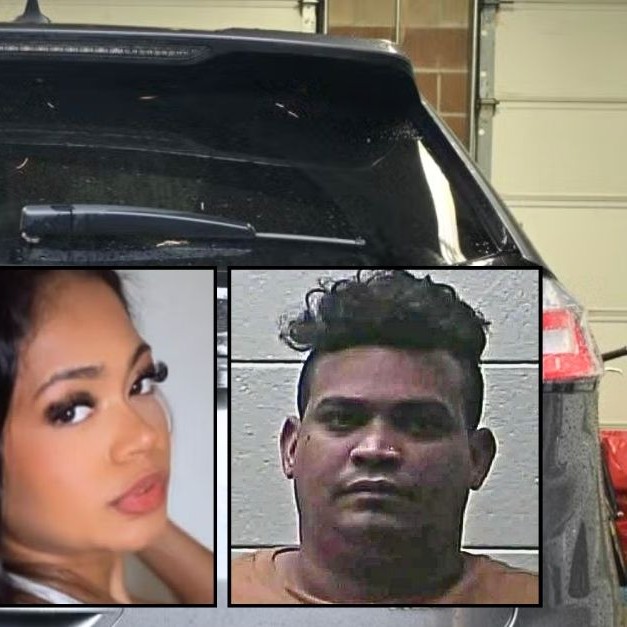


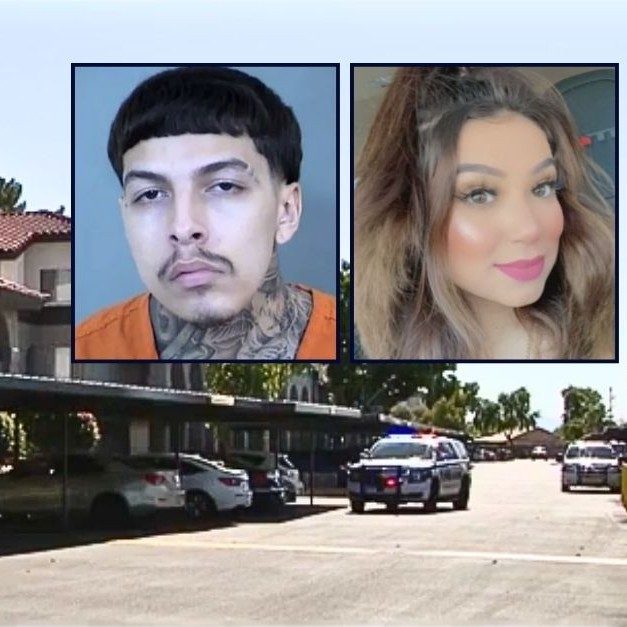
When an Arizona jury found Rueben Rocha guilty of first-degree murder for killing his ex-girlfriend, 20-year-old Jordin Miranda Castillo, the verdict aligned with what investigators say a 911 recording had already captured. What remains less clear is how a young mother who shouted that she had an order of protection still ended up confronting an armed ex-partner on a third-floor balcony while their 2-year-old child and several friends were inside the apartment.
The shooting took place in June 2023 at an apartment complex in Glendale, Arizona. According to court testimony and police statements, Rocha climbed onto Castillo’s balcony, kicked in a glass door, and opened fire, killing Castillo and wounding two of her friends. Prosecutors charged him with first-degree murder, aggravated assault, burglary, and disorderly conduct. A jury convicted him on all counts, and Rocha is scheduled to be sentenced on March 20th.
Balcony Attack Captured in 911 Call
According to reporting from Law And Crime, Castillo called 911 as Rocha forced his way toward the apartment. Local Fox affiliate KSAZ obtained the audio of that call, which recorded Castillo attempting to keep him out.
“I have an order of protection!” Castillo can be heard yelling, according to KSAZ and Law And Crime. In the background, prosecutors say, Rocha can be heard continuing his attempt to enter the home.
Moments later, Castillo screamed, “You’re gonna get arrested!” The confrontation escalated almost immediately. A Glendale police official later told reporters, “Within a few seconds, Rueben pulled out a gun and started shooting into the apartment.” Police say shots were fired from the balcony into the living area where Castillo and her friends were gathered.
Inside the apartment, Castillo’s 2-year-old child was present. According to investigators, one woman took the child into a bathroom and sheltered there as the gunfire continued. Two of Castillo’s friends were shot but survived. Castillo was fatally wounded and died at the scene.
Protective Order Claims and a Quiet Official Record
The 911 audio, in which Castillo references an “order of protection,” has raised questions about what protections, if any, were in place and how effectively they were being enforced. An order of protection in Arizona is a court-issued directive that can require a defendant to stay away from and avoid contact with a protected person. Violating such an order can lead to arrest and additional criminal charges.
After the shooting, a Glendale police spokesperson told reporters that agency records did not show prior documented domestic violence connected to the case. “We do not show any previous reports of domestic violence,” the spokesperson said, according to the Arizona Republic, which covered the aftermath of the killing.
Those two pieces of information coexist but are not fully explained in public records. The 911 call reflects Castillo’s belief that an order of protection existed. Police, meanwhile, say they found no earlier domestic violence reports in their files. Arizona law does not require a prior police report for a court to issue an order of protection, and orders can sometimes be issued in courts whose records are not immediately visible to responding officers.
Still, the contrast between Castillo’s plea and the lack of a documented history in police files leaves an unresolved procedural question. It is not yet publicly clear when or where any protective order may have been issued, what it required of Rocha, or whether law enforcement had been notified of previous concerns between the two.
Investigators Cite Social Media Dispute
Investigators have described the confrontation as stemming from an online dispute. According to the Arizona Republic, police reported that “social media drama” between Castillo and Rocha preceded the attack, and that the two had been engaged in some form of argument or conflict on those platforms.
Police said Rocha arrived at the apartment complex dressed in all black, wearing a face mask and a hoodie pulled over his head. That description, as recounted in media reports based on police statements, portrays an approach that officers and prosecutors argued was deliberate and planned rather than spontaneous.
From the balcony, Rocha fired multiple rounds into the apartment, striking Castillo and two of her friends. He then fled the scene. Although police quickly began investigating, the case did not end with a standoff or manhunt. According to Law And Crime, Rocha later turned himself in and was booked into jail on multiple charges.
Prosecutors presented the sequence of events, along with the 911 audio and accounts from surviving witnesses, to argue that Rocha’s actions met Arizona’s definition of first-degree murder. Under state law, that offense typically requires intent to kill, often with some degree of premeditation or as part of another serious felony such as burglary.
Charges, Conviction, and Upcoming Sentencing
The case moved through Maricopa County’s courts over the months that followed. Rocha was charged with first-degree murder in Castillo’s death, aggravated assault in the shootings of her two friends, burglary related to the forced entry onto the balcony and into the apartment, and disorderly conduct arising from the gunfire in a residential complex.
At trial, jurors heard the 911 call, reviewed physical evidence from the scene, and considered testimony about Rocha’s arrival at the complex and his departure after the shooting. According to Law And Crime, the jury returned a guilty verdict on all counts, including first-degree murder.
In Arizona, a first-degree murder conviction carries some of the harshest penalties available under state law. Sentencing can include life in prison, with the possibility or impossibility of parole depending on the specific findings and any prior criminal history. The court has not yet publicly detailed what sentence prosecutors will seek for Rocha.
Rocha is scheduled to be sentenced on March 20th. That hearing will determine not only the length of any prison term, but also how the court weighs the presence of a child during the attack, the injuries to surviving witnesses, and Rocha’s decision to turn himself in after fleeing.
Family Grieves and Demands Remembered Accountability
After Castillo’s death, her family spoke publicly about their loss. At a June 2023 press conference, her brother, Elijah Castillo, described her as a determined young mother. “She was so strong, she was so independent,” he said, according to Law And Crime’s account of local coverage.
“We love you, we’re going to miss you, and we promise that your baby girl will never forget how incredible you are,” Castillo’s cousin, Brianna Soto, said.
Those statements did not address the legal specifics of the case, but they underscored the long-term impact on Castillo’s child and extended family. For them, the upcoming sentencing hearing is not only a procedural step, but also a formal recognition of the harm described in those early press conferences.
The case also highlights broader systemic questions that remain open. How well do protective orders, when they exist, function in practice for young parents in volatile relationships? When police say there were no prior domestic violence reports, does that reflect an absence of earlier incidents or an absence of earlier reporting and documentation? And as courts weigh Rocha’s sentence, how will they account for the combination of a reported online dispute, a forced entry, and lethal gunfire in an apartment where a 2-year-old child was present?
Those questions are unlikely to be fully answered when Rocha stands before a judge on March 20th. However, the official record that began with a 911 call and now includes a first-degree murder conviction will continue to shape how this killing, and the systems around it, are understood.