


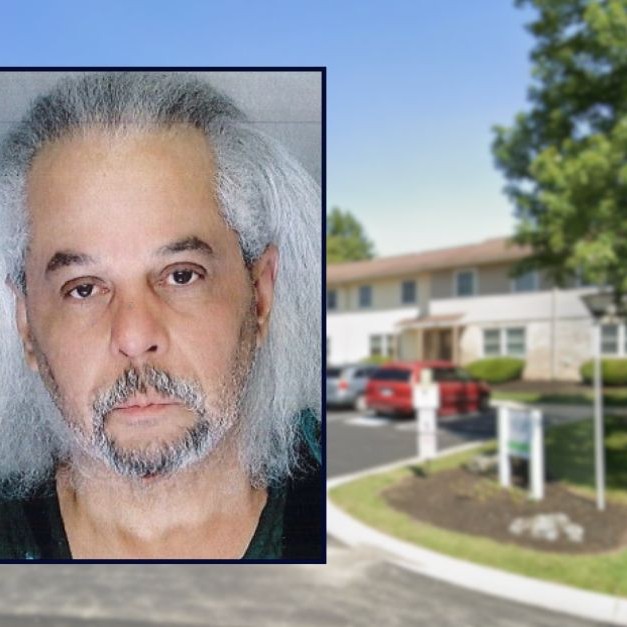
The argument started over something as ordinary as who would cook dinner. By the time police arrived at the home in Lancaster County, Pennsylvania, two women were dead, and the man at the center of the dispute was on his way toward a life term in prison.
A Deadly Argument in a Family Home
According to charging details described in a report by Law & Crime, 64-year-old Santiago Payano-Sanchez pleaded guilty to killing his estranged wife, 59-year-old Ana Gutierrez-Cedano, and her aunt, 74-year-old Dominga Cedano-Cedano, inside a residence on Oak Hollow Drive in West Hempfield Township, Lancaster County, Pennsylvania. The same report states that the couple’s 33-year-old son was also shot in the stomach but survived, and that two younger children in the home were not physically harmed.
Prosecutors said the violence began on a night in early October 2025 at the family’s home, a small residential complex roughly 90 miles west of Philadelphia. During the sentencing hearing, Assistant District Attorney Jessica Collo told the court that what started as a “senseless” argument over who would make dinner escalated into what she described as a “heinous crime,” according to the same Law & Crime account.
As Collo summarized it, at some point during the dispute, Payano-Sanchez retrieved a gun and shot Gutierrez-Cedano, who used a wheelchair. When their adult son tried to intervene and wrestle the firearm away, he was shot in the stomach. Prosecutors said Payano-Sanchez then went upstairs and shot Cedano-Cedano, his wife’s aunt, killing her in a separate part of the home.
When officers from West Hempfield Township Police responded to a 911 call, they prepared for what they believed could be a barricade situation. Law & Crime reports that instead of a prolonged standoff, Payano-Sanchez ultimately surrendered to police at the scene. First responders found both women already dead when they entered the residence.
A Swift Guilty Plea and Life-Plus Sentence
The Lancaster County District Attorney’s Office, as summarized in the Law & Crime report, said Payano-Sanchez entered an open guilty plea to multiple charges. Those charges included two counts of criminal homicide, as well as attempted criminal homicide, aggravated assault, endangering the welfare of children, and possessing an instrument of crime.
Lancaster County Court of Common Pleas Judge Jeffrey Conrad then sentenced Payano-Sanchez to two consecutive life terms in state prison without the possibility of parole, one for each homicide conviction. The court added an additional 20 to 40 years of incarceration for the remaining counts, again according to Law & Crime.
Pennsylvania law treats first-degree murder as an offense that carries a mandatory sentence of life imprisonment, with no parole, in cases where prosecutors do not seek or obtain the death penalty. That structure is reflected in the state’s criminal code on criminal homicide, which outlines life imprisonment as the punishment for first-degree murder convictions under Title 18 of the Pennsylvania Consolidated Statutes. Judges can also impose consecutive sentences for multiple counts.
In addition to the prison term, the court ordered Payano-Sanchez to pay more than 11,000 dollars in restitution to the victims and barred him from any contact with surviving family members, according to the case summary reported by Law & Crime. Restitution in Pennsylvania is intended to reimburse crime victims or their families for specific financial losses tied to the offense, such as funeral costs or property damage, and is authorized under state law alongside criminal penalties.
Inside the Sentencing Hearing
At the sentencing hearing, Payano-Sanchez addressed the court directly. The Law & Crime report notes that he told the judge he could not explain why the argument escalated into lethal violence and that he asked his family for forgiveness. “I need to face what the law is imposing on me,” he said, according to the outlet’s account of his allocution.
Prosecutors also described the lasting physical harm to the surviving son. Collo told the court that he still has bullet fragments in his body from the stomach wound, a detail included in the Law & Crime reporting. That same account indicates that two children, ages 2 and 7, were inside the home during the shooting but were not physically injured.
Family members of both women provided written statements that were read into the record. According to Law & Crime, the daughter of Cedano-Cedano wrote that her mother’s death “has left a void that can never be filled” and that the family “will carry this trauma for the rest of our lives.”
The daughter of Gutierrez-Cedano also submitted a letter. As quoted in the Law & Crime article, she described “permanent loss, pain, and grief” and said she deals with post-traumatic stress and difficulty sleeping in the wake of the killings.
What the Record Shows and What It Does Not
Publicly available information about the case largely comes from the summary provided by the Lancaster County District Attorney’s Office and reported by Law & Crime, along with basic legal context from Pennsylvania’s criminal code. The prosecutor’s account highlights that the catalyst was an argument about household work. It does not, in the record described so far, detail the couple’s broader history, how long they had been estranged, or whether there had been prior calls to police or to social services from the home.
The reporting also does not specify the type of firearm used, how it was stored, or how quickly events unfolded from the start of the dispute to the fatal shots. Those details may be contained in police reports or investigative files that are not fully summarized in the press release described by Law & Crime or on the general website of the Lancaster County District Attorney’s Office.
One of the few insights into motive comes from Payano-Sanchez himself. Law & Crime reports that he told the court he could not explain why the argument escalated in the way it did. That statement leaves his reasoning, state of mind, and any underlying stressors or warning signs largely unaddressed in the public record.
What is documented is the outcome. Two women, one of them described as wheelchair-bound, were killed in their home. A son survived a gunshot wound but continues to live with physical and psychological effects. Two young children were present during the violence. A 64-year-old man will spend the rest of his life in prison, with additional decades formally added to his sentence.
As more court records and investigative materials become accessible, they may clarify what, if any, prior interventions were attempted in this family and whether there were earlier chances to prevent the conflict from reaching the point of gunfire. For now, the clearest account available to the public remains the one presented in a short sentencing hearing and summarized in a few pages of press material and local reporting.