

Case overview
On December 21, 1988, Pan Am Flight 103 exploded over Lockerbie, Scotland, killing all 259 people on board and 11 residents on the ground. A bomb concealed in a radio cassette player inside checked luggage detonated 38 minutes after takeoff, scattering wreckage across 845 square miles and triggering one of the most complex criminal investigations in aviation history. Abdelbaset al-Megrahi, a Libyan intelligence officer, was convicted in 2001, but questions about evidence, motive, and responsibility remain contested decades later.
The flight and the explosion
Pan Am Flight 103 departed London Heathrow at 6:25 p.m. bound for New York’s JFK Airport. The Boeing 747, named Clipper Maid of the Seas, carried 243 passengers and 16 crew members. Among them were 189 Americans, including 35 students from Syracuse University returning home for Christmas break.
At 7:03 p.m., while cruising at 31,000 feet over the Scottish border town of Lockerbie, the aircraft disintegrated. Air traffic control lost radar and radio contact. The nose section broke away and fell separately. The fuselage, wings, and engines crashed into residential streets. Eleven people on the ground were killed instantly when the plane’s wing section struck homes on Sherwood Crescent, igniting a fireball that destroyed several houses.
Wreckage spread across rural Scotland and northern England. Investigators later determined that approximately 12 to 16 ounces of Semtex plastic explosive had detonated in the forward cargo hold.
The victims
All 270 victims were killed on impact or in the immediate aftermath. The 35 Syracuse University students had been studying abroad in London and Florence. Families of the victims formed groups including Victims of Pan Am Flight 103, which later advocated for aviation security reforms and accountability in the investigation.
In Lockerbie, entire families were killed when the wing section struck their homes. The town’s population was fewer than 3,000. Residents described the explosion as a sound like thunder, followed by fire raining from the sky. Bodies and debris were found in fields, gardens, and streets for weeks.
President Ronald Reagan called the bombing an act of terrorism. The British government deployed military personnel to secure the crash site. The scale of the debris field required a recovery operation unlike any previously attempted in the United Kingdom.
The investigation and forensic breakthrough
Scottish police, the FBI, and international agencies began collecting wreckage within hours. Investigators gathered more than four million pieces of debris. Each item was cataloged and examined. The break in the case came from a fragment of circuit board embedded in a piece of scorched shirt, recovered from a field east of Lockerbie.
Forensic examiners traced the circuit board to a timer manufactured by a Swiss company, MEBO AG. That timer had been supplied to Libya. The shirt fragment was traced to a boutique in Malta called Mary’s House. The owner, Tony Gauci, later testified that he sold clothing to a man matching the description of Abdelbaset al-Megrahi in December 1988.
Investigators determined that a suitcase containing the bomb originated in Malta, was transferred to a flight bound for Frankfurt, then loaded onto a feeder flight to Heathrow, and finally placed in the hold of Pan Am 103. The routing required the unaccompanied bag to pass through three separate airports without being screened.
The charges and the trial
In November 1991, the United States and United Kingdom issued indictments against two Libyan intelligence officers: Abdelbaset al-Megrahi and Lamen Khalifah Fhimah. Libya refused to extradite them. Sanctions were imposed. After years of negotiation, Libya agreed in 1999 to hand over the men for trial under Scottish law in a neutral venue.
The trial took place at Camp Zeist in the Netherlands beginning in May 2000. It was conducted without a jury, before a panel of three Scottish judges. Prosecutors presented evidence linking al-Megrahi to the purchase of the clothing, the timer, and travel records showing he was in Malta on the day the bomb was allegedly checked.
In January 2001, the court convicted al-Megrahi and acquitted Fhimah. Al-Megrahi was sentenced to life imprisonment with a minimum of 27 years. He maintained his innocence and filed an appeal.
The contested evidence
The conviction has been challenged on multiple grounds. Tony Gauci, the shopkeeper, provided inconsistent descriptions of the man who purchased the clothing. He could not definitively identify al-Megrahi in court. Records showed that Gauci was offered and later received payments from U.S. authorities, raising questions about witness reliability.
The timer fragment was central to the case, but defense experts argued it could have been planted or misidentified. Some investigators suggested the bomb may have been loaded at Heathrow, not Malta, citing evidence of a break-in at the airport the night before the flight.
In 2007, the Scottish Criminal Cases Review Commission found six grounds for believing al-Megrahi may have suffered a miscarriage of justice. A second appeal was granted but abandoned in 2009 after al-Megrahi, diagnosed with terminal cancer, was released on compassionate grounds. He returned to Libya and died in 2012.
Libya’s role and ongoing questions
In 2003, Libya formally accepted responsibility for the bombing and agreed to pay $2.7 billion to victims’ families. Libyan leader Muammar Gaddafi did not admit personal involvement but characterized the payment as the price of rejoining the international community. Sanctions were lifted.
Some investigators and family members believe Libya was not solely responsible. Theories have pointed to Iran, Palestinian militant groups, or a combination of state actors. Documents declassified in later years suggested that intelligence agencies had warnings of a possible attack but failed to act.
In December 2020, the U.S. Justice Department announced charges against Abu Agila Masud, alleged to be the Libyan bomb maker. Masud was taken into U.S. custody in 2022 and awaits trial. Prosecutors say he confessed to building the device in a 2012 interview with Libyan authorities.
Reforms and legacy
The Lockerbie bombing led to sweeping changes in aviation security. Bags were required to be matched to passengers. Explosive detection systems were deployed at major airports. International agreements on checked luggage screening were strengthened.
Families of the victims continue to push for transparency. Some have called for the release of classified documents. Others want a full public inquiry into intelligence failures and the handling of evidence.
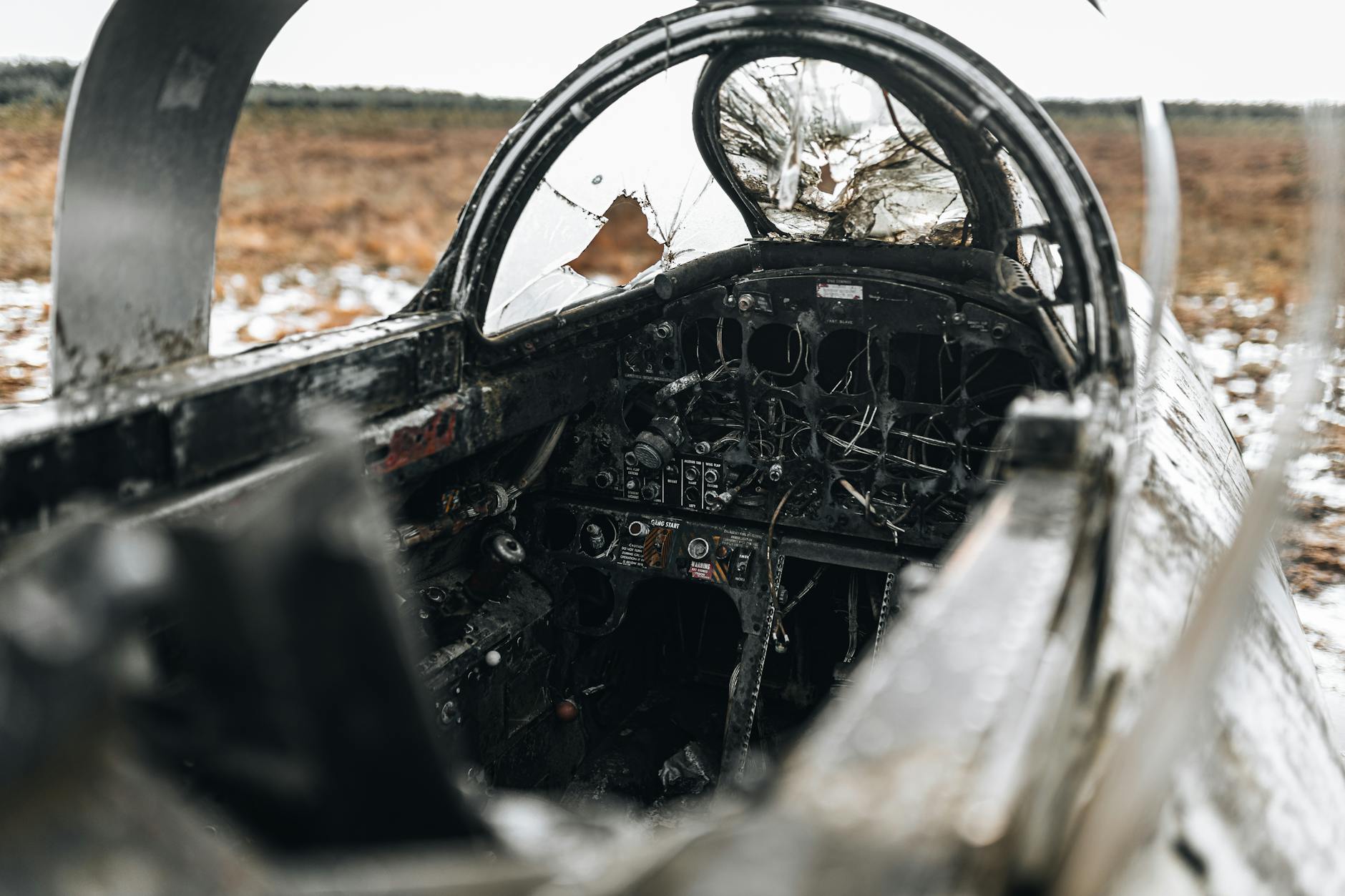
The wreckage of Pan Am Flight 103 was stored in a secured location in England for years. Portions of the fuselage were later moved to a facility where they are preserved for investigative and educational purposes. Memorials were erected in Lockerbie, at Arlington National Cemetery, and on the campus of Syracuse University.
Where to look next
- Documentary: “Lockerbie: A Search for Truth” (Investigation Discovery)
- Documentary: “The Lockerbie Bombing” (BBC)
- Book: “The Fall of Pan Am 103: Inside the Lockerbie Investigation” by Steven Emerson and Brian Duffy
- Book: “Lockerbie: The Tragedy of Flight 103” by Peter Biddulph