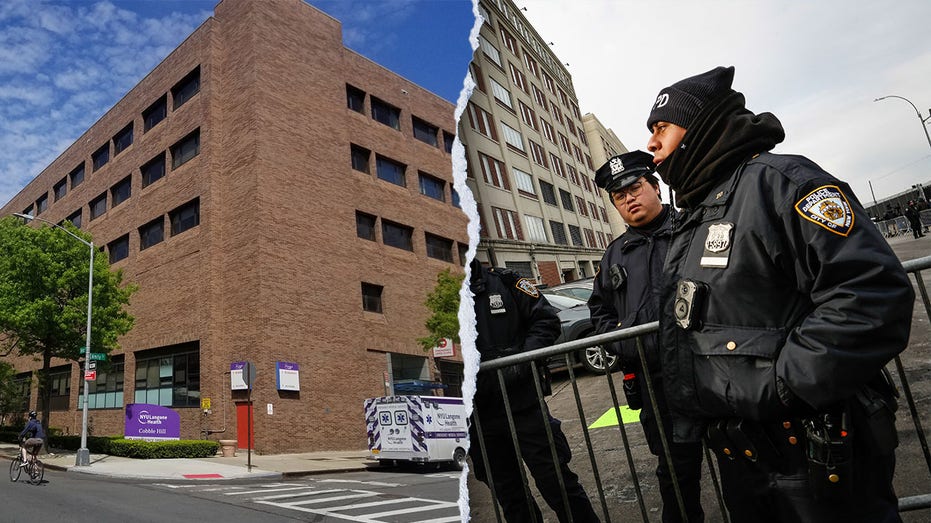
When three New York City detectives walked into a Brooklyn emergency room after a fight with a drug suspect, they expected triage. Instead, according to accounts now at the center of a formal apology, they were allegedly told to leave and accused of being federal immigration agents.
In recent days, the New York Police Department and NYU Langone Health have offered sharply different levels of detail about what happened inside the Cobble Hill hospital, but they agree on one key point. There was enough of a breakdown that the hospital leadership has apologized, and the police commissioner has ordered retraining for staff.
What the NYPD Says Happened
According to reporting by Fox News Digital, which in turn cites the New York Post, three NYPD detectives went to NYU Langone Cobble Hill in Brooklyn after an arrest that involved a fight with a person suspected of drug offenses.
Inside the emergency department waiting area, at least one hospital staff member allegedly confronted the officers. One unnamed source familiar with the incident told the Post that staff “were nasty to the officers in the waiting room, accused them of being ICE and suggested they go elsewhere.”
Another source told the outlet that the detectives identified themselves as NYPD and were still urged to leave. “They properly identified themselves,” the source said. “It’s despicable to attempt to deny care or suggest they go elsewhere.”
Neither Fox News nor the Post has published the names or job titles of the staff involved. As of now, their accounts of the interaction are based on anonymous law enforcement sources and a brief public response from the hospital and the NYPD.
An NYPD spokesperson told Fox News Digital that NYU Langone leaders called Police Commissioner Jessica S. Tisch after the incident. According to that spokesperson, “Representatives from the hospital apologized to Commissioner Tisch and the NYPD and said hospital staff had a misunderstanding of their policy. Commissioner Tisch asked that all hospital staff be retrained to ensure that this type of incident never happens again.”
The NYPD Detectives’ Endowment Association, which represents detectives citywide, used much sharper language. In a statement quoted by Fox News, the union said, “It is an outrage that any NYPD detective injured in the line of duty should have to worry about being treated at any hospital in the city they protect.”
How The Hospital Explains It
NYU Langone has not publicly disputed that there was a problem, but its version of events is narrower than the detectives’ account.
In a statement to Fox News Digital, the hospital said it told Commissioner Tisch of “our regret for how the situation was handled and reaffirmed our commitment to continue providing the highest quality care to the New York Police Department and all law enforcement agencies.”
The hospital also emphasized that care was, in fact, provided. A representative told Fox News, “We provided care to the injured officer who was asked to temporarily secure his weapon, as per our policy. The other two officers were allowed to keep their weapons. NYU Langone always values the opportunity to provide care to members of law enforcement.”
NYU Langone pointed to its broader record, noting that in 2025 it treated nearly 1,000 NYPD officers. At the same time, the institution declined to comment on the specific allegation that staff accused the detectives of being Immigration and Customs Enforcement agents or that they told the officers to seek treatment elsewhere.
So far there is no detailed public explanation of what “misunderstanding of their policy” meant in practice, whether any staff have been formally disciplined, or how long the alleged confrontation lasted before the injured detective was seen.
Legal And Policy Context For ER Care
Federal law requires hospital emergency departments that participate in Medicare to provide a medical screening exam and stabilizing treatment to anyone who comes to the emergency room, regardless of insurance status, immigration status, or ability to pay. That obligation is laid out in the Emergency Medical Treatment and Labor Act, commonly known as EMTALA, and enforced by the Centers for Medicare & Medicaid Services (CMS).
EMTALA does not prevent hospitals from setting security rules, including for firearms. Many facilities require visitors, including on-duty officers who are not actively guarding a patient, to secure their weapons in a lockbox before entering certain clinical areas. NYU Langone’s statement that one detective was asked to “temporarily secure his weapon, as per our policy,” and that others were allowed to remain armed, fits within that common framework.
Based on what has been reported so far, there is no indication that the injured detective was ultimately denied emergency care. The hospital says he was treated. The allegation from NYPD sources focuses instead on what was said to the officers when they first arrived, and whether they were told to leave after they had already identified themselves as city police.
If those allegations are accurate, the interaction would sit in a gray area. A brief verbal confrontation may not rise to the level of an EMTALA violation, but it can still influence how welcome patients and first responders feel when they seek treatment.
ICE, New York Politics And Hospital Tensions
The reference to ICE in the detectives’ account did not happen in a vacuum. Immigration enforcement has been a flashpoint in New York politics for years, including in hospitals and other public-facing institutions.
New York Governor Kathy Hochul has publicly criticized aggressive immigration enforcement tactics. In one widely covered example described by Fox News, she said she confronted an ICE agent and accused him of “terrorizing people” because he was wearing a mask while on duty (Fox News Media).
More recently, Hochul endorsed state legislation that would allow New Yorkers to bring civil lawsuits against ICE agents over alleged abuses of power, saying, “Power does not justify abuse” (Fox News Politics).
Within that climate, the presence of armed officers in a hospital can be read very differently by different people. For many staff members, NYPD officers are familiar partners in handling overdoses, assaults, and psychiatric crises. For some patients and workers, the sight of armed law enforcement in a clinical space may also trigger concerns about immigration raids or other forms of enforcement.
The Fox News report notes another layer of tension. The incident at NYU Langone happened while thousands of nurses in New York City were on strike over issues that included pay and workplace safety (Fox News U.S.). The Detectives’ Endowment Association tied its criticism of the hospital to that labor dispute, arguing that “as nurses across the city strike over issues like workplace safety, treating detectives poorly is not how to make hospitals safer.”
What Remains Unclear
Several basic facts about the Cobble Hill encounter remain out of public view. The NYPD has not released incident reports, body-worn camera footage, or radio recordings that might clarify whether anyone told the detectives to seek care elsewhere or used the word “ICE.” NYU Langone has not said whether it is conducting a formal internal investigation or whether any findings will be shared beyond its conversation with Commissioner Tisch.
There is also no independent account yet from patients or non-police witnesses in the waiting room. For now, members of the public are left with sharply worded statements, a brief apology, and a promise of retraining, but not a full narrative of how a routine hospital visit by injured detectives turned into a political flashpoint.
Whether NYU Langone or the NYPD will release more detailed documentation could determine if this incident is remembered as an isolated misunderstanding over policy or as an example of how immigration politics and labor tensions can spill into the most basic public service, a trip to the emergency room after an arrest.