


The teenager has now said the word “guilty” in open court, yet the judge who will decide if he spends his life in prison still does not have a clear answer to why the killings happened at all.
A Deadly 2022 Attack, Finally, Before a Judge
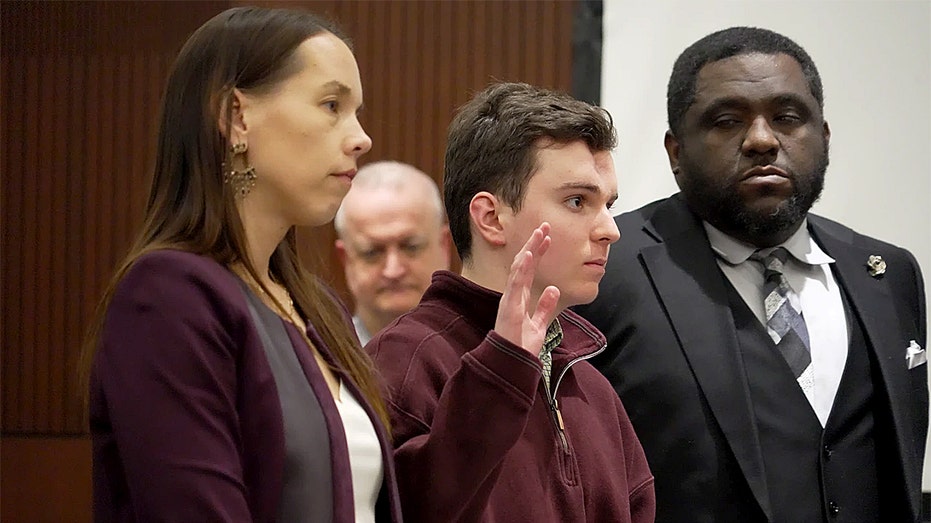
In recent days, 18-year-old Austin David Thompson admitted in a Wake County courtroom that he carried out a 2022 mass shooting in Raleigh, North Carolina, that left five people dead, including his own brother and an off-duty city police officer.
According to reporting by the Associated Press, published by Fox News, Thompson pleaded guilty to five counts of first-degree murder, two counts each of attempted first-degree murder and assault with a deadly weapon, and one count of assaulting an officer with a firearm, just days before a planned trial was set to begin.
Austin Thompson, the teenager accused of shooting & killing 5 people in Raleigh’s Hedingham neighborhood is in court to plead guilty to all charges. He’s wearing foot shackles and hasn’t said anything yet. The state immediately asked for a talk with the defense counsel. @WNCN pic.twitter.com/KQTIYRlfD0
— Deana Harley (@Deanaharleynews) January 21, 2026
Thompson was 15 years old at the time of the shooting in October 2022, a detail that now shapes nearly every aspect of the punishment he faces. Prosecutors have treated him as an adult in criminal court. State law still recognizes him as a juvenile when it comes to the harshest possible sentence.
The attack unfolded in the Hedingham neighborhood and along a nearby section of greenway in northeast Raleigh. Five people were killed: Thompson’s 16-year-old brother James Thompson, 52-year-old Nicole Connors, 29-year-old Raleigh police officer Gabriel Torres, 34-year-old Mary Marshall, and 49-year-old Susan Karnatz. Several others were injured.
The Rampage Through Hedingham
In court, Assistant District Attorney Patrick Latour summarized what investigators say happened that day. His account generally matches earlier investigative findings released by Raleigh officials after the shooting.
Latour told the court that Thompson first attacked inside his family home in Hedingham. According to prosecutors, he shot his brother James, then stabbed him multiple times.
From there, Latour said, Thompson moved through the neighborhood armed with a shotgun and a handgun. On the street outside, he is accused of killing neighbor Nicole Connors. He then encountered Officer Gabriel Torres, who lived in the neighborhood and was heading to work with the Raleigh Police Department. Prosecutors say Torres was shot and killed before he could respond.
Another neighbor was shot and survived. Authorities have not publicly identified all wounded survivors by name.
Investigators say Thompson then headed to a nearby section of the Neuse River Greenway. There, according to Latour, he shot and killed Mary Marshall and Susan Karnatz as they used the trail.
Police officers searching the area later found Thompson near McConnell Oliver Drive. According to previous releases from the Raleigh Police Department that were cited in court, Thompson opened fire, wounding Raleigh Police Officer Casey Clark. Officers responded with about 23 rounds before taking Thompson into custody.
In a contemporaneous report on the incident, Raleigh Police Chief Estella Patterson wrote that when officers reached Thompson, “he was wearing camouflage clothing and a backpack, and a handgun was in his waistband. The backpack contained various items, including several types of shotgun/rifle ammunition. A sheath for a large knife was found clipped to his belt, and a large hunting knife was found at the front of the outbuilding. A shotgun and shotgun shells were lying on the ground near him.”
A Teen Defendant, an Adult Sentence
Thompson’s case has proceeded in adult criminal court. He was scheduled to face a jury on multiple counts of murder and attempted murder. That changed when his defense team informed the court he would plead guilty to every charge.
In written filings, his lawyers said bypassing a contested trial would, in their words, “save the community and the victims from as much additional infliction of trauma as possible,” as quoted by the Associated Press report on the hearing.
Wake County Superior Court Judge Paul Ridgeway questioned Thompson briefly in court, then accepted the guilty pleas. There is no plea agreement. Prosecutors and defense attorneys will now present evidence to the judge in a multi-day sentencing hearing.
Because Thompson was under 18 at the time of the crimes, he cannot be sentenced to death under North Carolina law. Judge Ridgeway has two general paths under current statutes and appellate decisions:
Option 1: Life in prison without the possibility of parole.
Option 2: Life with parole eligibility after a lengthy minimum term. State law provides that juveniles convicted of first-degree murder may become eligible for parole after at least 25 years. A recent ruling by the North Carolina Court of Appeals has effectively capped the required time before parole consideration for juvenile offenders at 40 years, even in cases involving multiple homicide convictions.
The judge’s choice will likely turn on how he weighs aggravating factors such as the number of victims and the killing of a police officer, against mitigating evidence the defense plans to present about Thompson’s age, mental health, and medical condition.
The Brain Injury Question
One central issue that has already surfaced is Thompson’s health after the shooting. The case was on hold for a period while he recovered from a gunshot wound that Wake County District Attorney Lorrin Freeman has publicly said was self-inflicted before his arrest. Thompson’s lawyers argue that the wound caused significant and lasting brain damage.
In filings quoted by the Associated Press, the defense has asserted that this brain injury has left Thompson unable to explain his own actions to his lawyers or to the court.
Prosecutors have not publicly embraced that characterization. The full extent of expert medical testimony on either side has not yet been presented in a public sentencing hearing. As a result, how much the injury has affected Thompson’s cognition, behavior, or memory remains a live factual dispute that the judge will have to evaluate.
Evidence Seized and a Sealed Note
Beyond the events of the day itself, investigators have gathered a significant amount of physical and digital evidence related to the case.
Search warrants previously made public show that officers seized 11 firearms and about 160 boxes of ammunition from the Thompson home, some of them empty. Prosecutors have said in court that the family were active hunters.
In 2024, according to the same court reporting, Thompson’s father pleaded guilty to improperly storing a handgun that authorities say was recovered with his son at the time of the attack. He received a suspended sentence and probation.
Latour also told the court that investigators found online search records indicating Thompson had looked up information related to mass shootings before the attack. Those digital records are expected to be a point of contention at sentencing, with the defense signaling it may challenge how they are interpreted or whether they should be considered as evidence of premeditation.
Perhaps the most sensitive piece of evidence described in court is a written note that prosecutors say Thompson left, which reportedly addresses his reasons for killing his brother. Latour said the document exists, but its contents were not read aloud. The judge ordered the note sealed from public view. As a result, the only direct statement from Thompson about his motives that authorities have identified remains outside the public record.
Families Seek Finality as Motive Stays Murky
For families of those killed, the guilty plea removes the uncertainty of a trial verdict. It does not end the emotional or legal fight over how long Thompson should remain in prison.
Speaking after the plea hearing, Robert Steele, the fiancé of victim Mary Marshall, said he believed the only appropriate outcome is permanent imprisonment. “That’s justice,” Steele said. “He took five people’s lives; he tried to take two others.” His comments were reported by the Associated Press and carried by multiple outlets.
As of now, the public record shows that Thompson admits the core facts of the attack and accepts legal responsibility. Prosecutors point to planning, weaponry, and the number of victims to argue for the harshest sentence allowed for a juvenile. His lawyers highlight his age, his medical condition, and the possibility that his own brain injury has erased any coherent explanation for what he did.
With the note about his brother sealed, much of the search data still subject to argument, and the medical evidence not yet fully aired in court, the central question of why a 15-year-old in a quiet Raleigh neighborhood turned his weapons on family, neighbors, and strangers remains only partially answered. The sentencing hearing will determine how the law responds to what he did. It may not fully resolve what led him to do it.