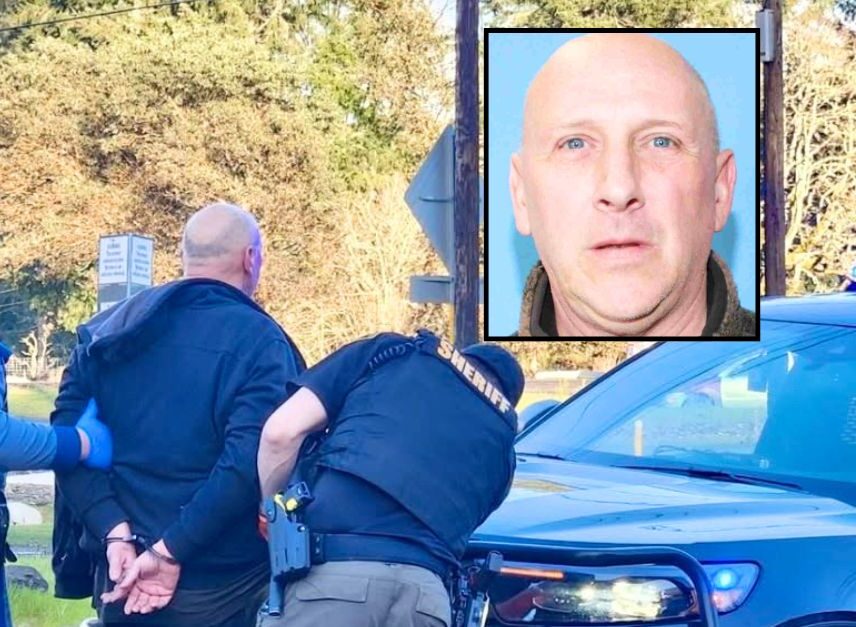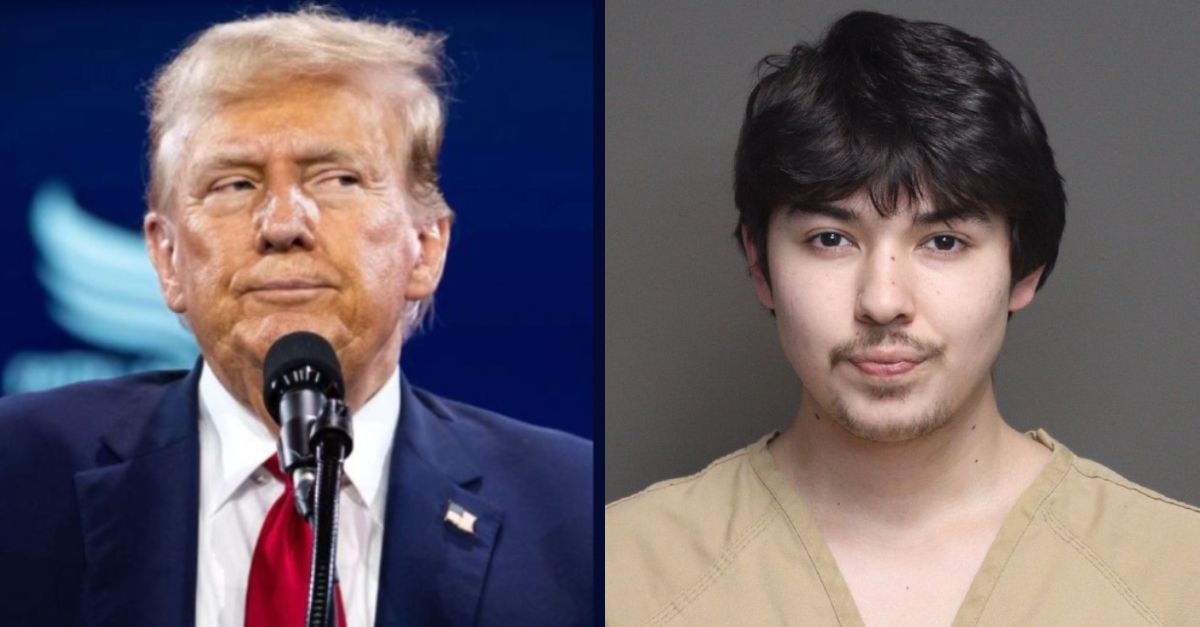
Federal agents say a string of violent posts on X eventually led them to a 21-year-old in Columbus who, according to court records, had more than rhetoric inside his home.
That user, identified in a federal complaint as Justin Novoa of Columbus, Ohio, is now facing federal charges that accuse him of threatening supporters of former President Donald Trump, as well as federal immigration officers. The case sits at the intersection of online speech, violent rhetoric, and the legal limits of what the First Amendment protects.
What Prosecutors Say Happened
The outline of the case comes from a criminal complaint and a Justice Department press release, both described in an article by Law&Crime. According to that reporting, federal authorities allege that throughout 2025, Novoa used an account on X to post a series of explicit threats.
The posts allegedly targeted several groups. The complaint says he directed threats at Immigration and Customs Enforcement (ICE) agents, Trump supporters, white people, and Jewish people. Screenshots of the messages are included in the complaint, according to the Law&Crime report.
In one post quoted in the complaint, Novoa allegedly wrote that he “can’t wait to shoot these p— ICE agents and r—ed MAGA maggots.” In another, he is alleged to have posted, “Blast every ICE agent.” A separate message described in the filing reportedly stated that people confronted by “masked, unmarked vehicles, no badge or id” had “every legal right to shoot these p—es.”
Prosecutors say Novoa also made a specific reference to having a firearm ready. According to the complaint, he allegedly wrote in May 2025, “I have a m4 carbine ready to use on these r—ed filthy subhuman rats.” In January 2025, he allegedly posted, “May the resistance stand tall.”
At this stage, these statements are allegations, not proven facts. The complaint describes what agents and prosecutors say they observed, based on social media records and other investigative steps, but the case has not gone to trial.
From Online Posts to a Search Warrant
The Department of Homeland Security (DHS) received information about Novoa’s alleged threats in December 2025, according to the complaint summarized by Law&Crime. DHS opened an investigation and coordinated with other federal authorities.
Homeland Security Investigations arrested a Columbus man for alleged social media threats against Immigration and Customs Enforcement posted last year. https://t.co/6E2pG5JSHp pic.twitter.com/HH3IBfGRSW
— FOX 28 Columbus (@fox28columbus) January 22, 2026
Later that month, federal agents executed a search warrant at Novoa’s residence in Columbus. During that search, investigators reported finding a cache of weapons and related gear. According to the complaint, agents seized:
Item 1: Two rifles.
Item 2: Two shotguns.
Item 3: One handgun.
Item 4: Ammunition, including loaded magazines.
Item 5: Helmets and body armor.
The presence of firearms and tactical equipment, alongside the social media posts, forms a key part of the government’s narrative that the online threats were serious. The complaint does not, in the publicly described portions, allege that Novoa actually attempted an attack or took steps to locate specific individuals, but prosecutors argue that the combination of rhetoric and weapons is enough to support the charges.
Law&Crime reports that Novoa is being held without bond in Franklin County. The article does not state whether he has entered a plea or whether an attorney has spoken publicly on his behalf.
The Federal Charges and Potential Penalties
According to the Law&Crime story, Novoa has been charged with making threatening interstate communications, including threats to assault or murder a federal law enforcement officer. Those are separate but related offenses under federal law, often used in cases that involve threats delivered via phone, email, or social media.
In the press release cited by Law&Crime, Justice Department officials stated, “Threatening to kill a federal officer is a crime punishable by up to 10 years in prison. Making threatening interstate communications carries a potential penalty of up to five years in prison.” While sentencing in any individual case depends on guideline calculations and judicial discretion, those maximums indicate how seriously federal law treats threats aimed at government personnel.
The case appears to align with a broader pattern of federal prosecutions involving online threats against public officials and law enforcement, documented on the Justice Department’s official site at justice.gov. In similar prosecutions, investigators often rely on IP records, platform data, and sometimes cooperating witnesses to connect online accounts to real people.
Where the First Amendment Stops Protecting Speech
Cases like this sit in an area of law that has drawn recent attention from the Supreme Court. The First Amendment protects a wide range of political speech, including harsh criticism of public officials. It does not, however, protect what courts call “true threats” of violence.
In 2015, the Supreme Court decided Elonis v. United States, a case involving violent posts on Facebook. The Court threw out the conviction because the jury had been instructed to consider only how a reasonable person would view the messages, not the speaker’s mental state. The ruling made clear that negligence is not enough, although it left open exactly what level of intent or awareness is required in every context.
In 2023, the Court revisited the issue in Counterman v. Colorado. There, the justices held that the First Amendment allows criminal punishment of threatening speech only if the government proves that the defendant acted with at least recklessness. Writing for the majority, Justice Elena Kagan said the state must show that the defendant “consciously disregarded a substantial risk that his communications would be viewed as threatening violence.”
Those decisions shape how lower courts evaluate federal threat cases. Prosecutors in Novoa’s case will likely need to prove not only that the words he allegedly posted would reasonably be perceived as threats, but also that he was at least reckless about the likelihood they would be taken that way. The presence of firearms and body armor in his home, which the complaint highlights, may be used by the government to argue that the posts reflected more than abstract or hyperbolic political commentary.
Open Questions Around the Investigation
The publicly described documents leave several important details unanswered.
It is not clear from the Law&Crime report how authorities first connected the X account to Novoa. In similar cases, investigators have relied on IP logs provided by social media companies, subscriber information from internet service providers, and, at times, tips from acquaintances. Without the full complaint or warrant affidavit, the specific investigative steps in this case remain unknown.
The reporting also does not indicate whether any specific ICE agents, Trump supporters, or other individuals were notified that they had been named in the alleged threats. Federal agencies sometimes alert potential targets in threat cases, particularly when posts are detailed or repeated. Whether such notifications occurred here is not addressed in the available summary.
It is also unclear whether prosecutors believe any of the alleged threats were tied to specific events, such as political rallies or immigration enforcement operations, or whether they were more general in nature. The complaint excerpts described by Law&Crime quote broad language like “Blast every ICE agent” and refer to “MAGA maggots” without naming individuals or dates.
Finally, key procedural facts have not yet been reported. The Law&Crime article does not say when Novoa first appeared in federal court, what arguments prosecutors made to justify holding him without bond, or whether his defense attorney has challenged the characterization of his posts as criminal threats rather than protected political speech.
What Comes Next
For now, Novoa remains in custody in Franklin County as his case moves through the federal system. If an indictment follows the complaint, it will likely rest on the same core allegations: violent online rhetoric aimed at federal officers and political opponents, combined with a stockpile of weapons found in his home.
Whether a jury ultimately views those combined facts as criminal threats or protected speech influenced by the broader culture of online extremity will depend on evidence that has not yet been made public. Until more filings are released, the record that can be examined outside the courtroom consists mostly of a brief complaint summary, a short Justice Department statement, and the initial reporting from outlets like Law&Crime.
As additional documents become available, they may clarify how investigators identified the account, what Novoa told agents during or after the search, and how both sides interpret his words in light of recent Supreme Court rulings on threats and intent. For now, a young Ohio resident sits in jail, and the line between speech and crime in his case remains to be drawn in court.