Case overview
Christopher Wallace, known as The Notorious B.I.G., was shot and killed in a drive-by shooting in Los Angeles on March 9, 1997, six months after the murder of Tupac Shakur. Despite multiple witnesses, recovered ballistic evidence, and years of investigation, no arrests have been made. The case remains one of the most scrutinized unsolved homicides in modern American crime.
The final hours
On the night of March 8, 1997, Wallace attended the Soul Train Music Awards at the Shrine Auditorium in Los Angeles. He was in the city to promote his upcoming album, “Life After Death,” scheduled for release two weeks later. After the ceremony, Wallace and his entourage went to an afterparty hosted by Vibe magazine and Qwest Records at the Petersen Automotive Museum on Wilshire Boulevard.
The party drew a large crowd, and fire code violations forced the event to shut down early, just after midnight. Wallace left the museum in a GMC Suburban driven by his security detail. He sat in the front passenger seat. The vehicle was part of a convoy that included Sean “Puff Daddy” Combs in a separate car.
At approximately 12:45 a.m. on March 9, the convoy stopped at a red light at the intersection of Wilshire Boulevard and South Fairfax Avenue. A dark Chevrolet Impala SS pulled up alongside Wallace’s vehicle on the driver’s side. The driver of the Impala, described by witnesses as a Black male wearing a blue suit and bow tie, drew a handgun and fired multiple rounds into the Suburban.
Four bullets struck Wallace in the chest, shoulder, leg, and scrotum. The shooter’s vehicle fled north on Fairfax Avenue. Wallace’s driver attempted to reach Cedars-Sinai Medical Center, less than a mile away, but Wallace was pronounced dead at 1:15 a.m.
The weapon and ballistic evidence
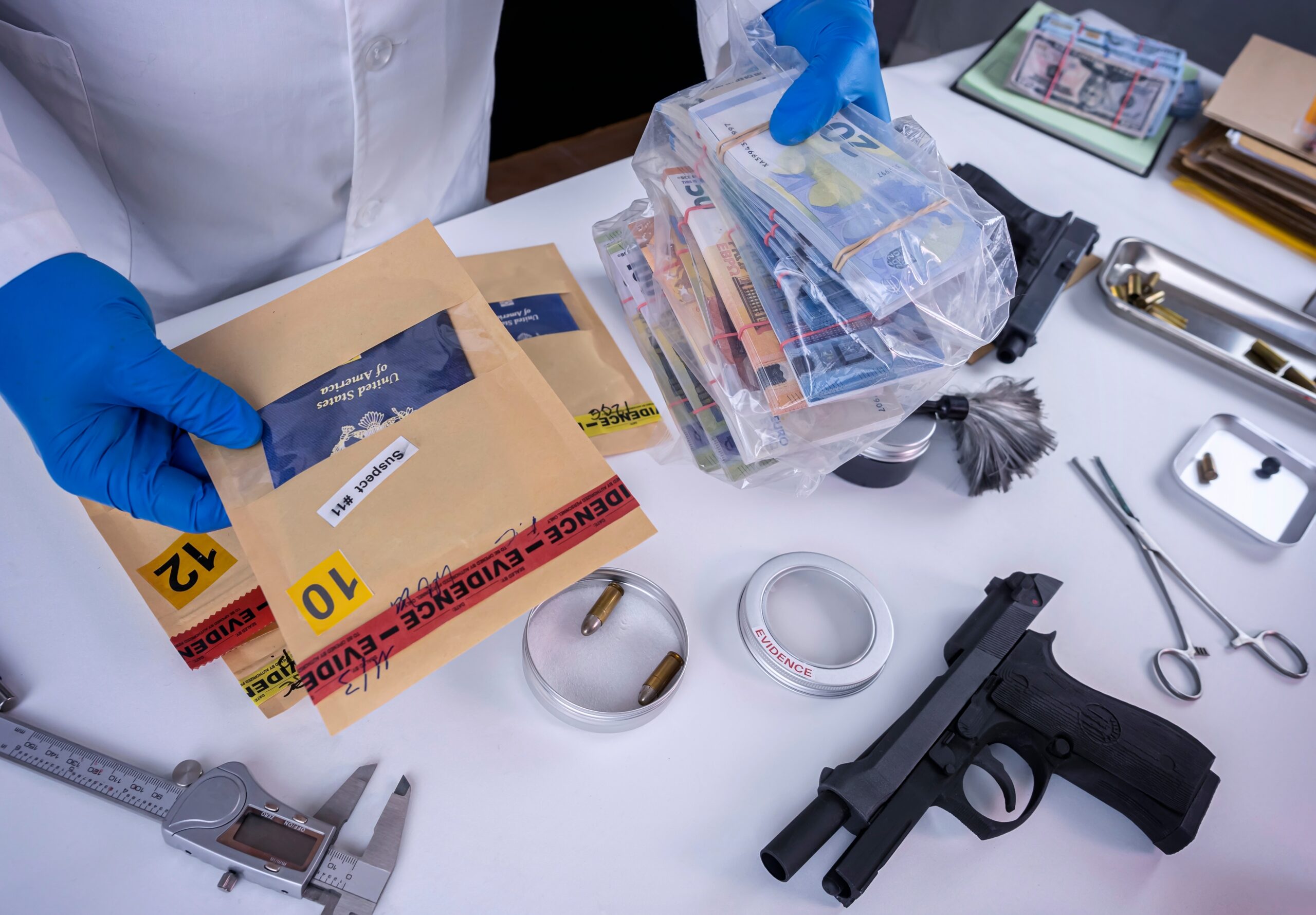
Investigators recovered four .9mm bullet casings from the scene. Ballistic analysis determined the rounds were fired from a Gecko 9mm pistol, a rare and specialized firearm. The same ammunition type had been used in a previous shooting, though no direct connection between the incidents was confirmed.
The weapon was never recovered. Detectives noted that the precision and speed of the shooting suggested familiarity with firearms. Witnesses reported hearing between six and ten shots, though only four struck Wallace’s vehicle.
Witness accounts and suspect descriptions
Multiple witnesses at the intersection provided statements to police. Descriptions of the shooter varied in detail, but most agreed on general features: a Black male, mid-twenties to early thirties, wearing a dark suit and bow tie. Some witnesses described the shooter as clean-shaven, while others recalled facial hair.
The Impala was identified by several witnesses as a 1994 or 1995 Chevrolet Impala SS, dark green or black, with no visible license plate. Despite this information, the vehicle was never located. The Los Angeles Police Department issued bulletins and conducted sweeps of neighborhoods where similar vehicles had been reported, but no leads developed.
One witness reported seeing the Impala follow Wallace’s convoy from the museum, suggesting premeditation. Other accounts indicated the shooter may have been waiting at the intersection, though this timeline was disputed during subsequent investigations.
Investigative focus and theories
The murder of Biggie Smalls occurred during the East Coast–West Coast hip-hop rivalry, a widely publicized conflict that had already claimed the life of Tupac Shakur six months earlier in Las Vegas. Investigators initially explored whether Wallace’s death was retaliation for Shakur’s murder, though no evidence directly supported this theory.
LAPD detectives identified several persons of interest, including individuals with ties to Death Row Records, the label founded by Suge Knight. Knight and Wallace had been publicly at odds, and some investigators believed Knight may have had a motive related to business disputes or the rivalry between their respective labels, Bad Boy Records and Death Row.
One theory centered on allegations of LAPD involvement. Former LAPD officer Russell Poole, who worked the case, claimed that corrupt officers with ties to Death Row Records may have been involved in the shooting. Poole’s theory implicated Officer David Mack, who was later convicted of bank robbery, and suggested that off-duty officers were hired to carry out the murder. The LAPD and FBI investigated these claims but found insufficient evidence to support criminal charges.
Another line of inquiry focused on Orlando Anderson, a member of the Southside Compton Crips who had been involved in a physical altercation with Tupac Shakur hours before Shakur’s murder. Some investigators believed Anderson or his associates may have targeted Wallace as part of an ongoing gang conflict. Anderson denied involvement in either murder and was killed in an unrelated shooting in 1998.
The civil lawsuit and sealed findings
In 2002, Wallace’s mother, Voletta Wallace, filed a wrongful death lawsuit against the City of Los Angeles, alleging that LAPD officers were involved in her son’s murder and that the department engaged in a cover-up. The lawsuit cited testimony and evidence gathered by Russell Poole and other investigators who believed the department had obstructed the case.
The trial, which began in 2005, was declared a mistrial after the judge ruled that the LAPD had withheld documents relevant to the case. A second trial was scheduled, but the lawsuit was settled in 2010. The terms of the settlement were not disclosed, and no admissions of guilt or liability were made by the city.
During the proceedings, several documents and witness statements were sealed by court order. The extent of what remains sealed is unclear, though investigators and journalists have continued to seek access to case files through public records requests.
Renewed investigative efforts
In 2006, the FBI opened a federal investigation into the murder, prompted in part by the civil lawsuit and ongoing allegations of LAPD misconduct. The investigation involved a task force that reviewed witness statements, ballistic evidence, and interviews with persons of interest. The task force’s findings were never made public, and the investigation was closed without charges.
In 2011, the LAPD announced that the case remained open and active. Detective Greg Kading, who led a special task force investigating both the Wallace and Shakur murders, published a book titled “Murder Rap,” in which he presented a theory based on interviews conducted during the investigation. Kading’s account implicated individuals tied to Death Row Records and the Southside Compton Crips, though no arrests resulted from the task force’s work.
Kading’s findings were disputed by Voletta Wallace and other parties who questioned the reliability of witness statements used in the investigation. Some witnesses later recanted or claimed their statements were coerced.
Unresolved questions
The murder of Biggie Smalls remains unsolved. The case is marked by conflicting witness accounts, sealed evidence, and theories that have not been substantiated by criminal charges. Key questions remain unanswered: the identity of the shooter, the motive behind the murder, and whether any law enforcement misconduct contributed to the lack of resolution.
The LAPD has not ruled out any theory, and the case is technically still active. However, the passage of time, the deaths of key witnesses, and the failure to recover critical evidence have made further progress unlikely without new information.
Wallace’s murder continues to be the subject of documentaries, books, and investigative journalism. His death, like Shakur’s, remains a defining moment in hip-hop history and a case study in the challenges of solving high-profile homicides.
Where to look next
- Documentary: “Biggie: I Got a Story to Tell” (Netflix)
- Documentary: “Murder Rap: Inside the Biggie and Tupac Murders” (Netflix)
- Book: “LAbyrinth: A Detective Investigates the Murders of Tupac Shakur and Notorious B.I.G.” by Randall Sullivan
- Book: “Murder Rap: The Untold Story of the Biggie Smalls and Tupac Shakur Murder Investigations” by Greg Kading