


By the time federal agents reached the driveway outside the vice president’s Cincinnati home, a 26-year-old carrying a hammer had already crossed the fence line and, according to charging documents, started swinging at glass.
Prosecutors describe a deliberate attack on a protected residence. The defense describes a mental health emergency that had nothing to do with Vice President JD Vance or politics. The public record so far leaves both motive and the defendant’s mental state an open set of questions.
What Prosecutors Say Happened Outside Vance’s Home
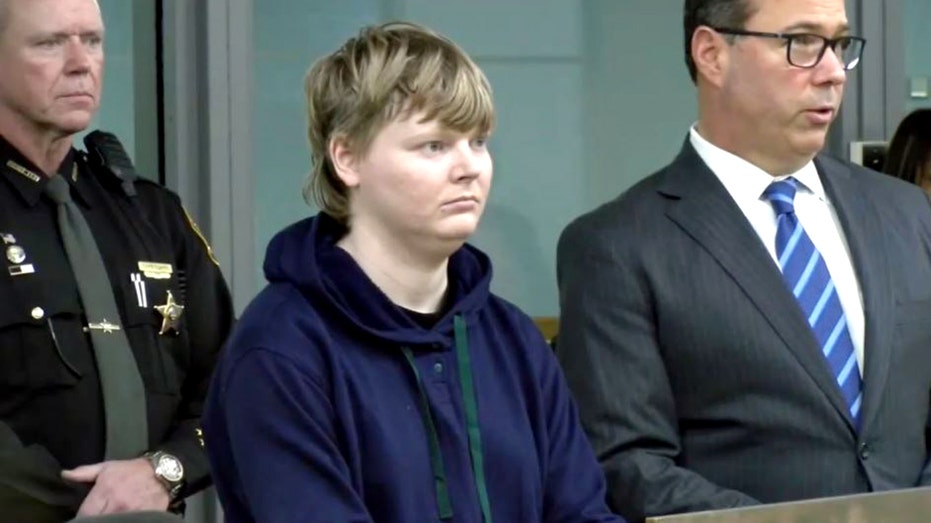
According to a federal affidavit filed in recent days and summarized by Fox News Digital, William DeFoor is accused of running along the front fence of Vance’s Secret Service-protected Cincinnati residence before entering the property at the driveway.[1] The affidavit states that an unmarked federal law enforcement vehicle was positioned to block the driveway entrance.
Prosecutors say DeFoor was armed with a hammer and tried to break the driver’s side window of that vehicle. When agents ordered him to stop and drop the weapon, he allegedly ignored all commands and moved toward the front of the home.
Charging documents cited by Fox News Digital state that DeFoor used the hammer to strike and break glass across the front of the residence. The windows were fitted with government-owned enhanced security materials. Prosecutors value the damaged security assets at more than $28,000.[1]
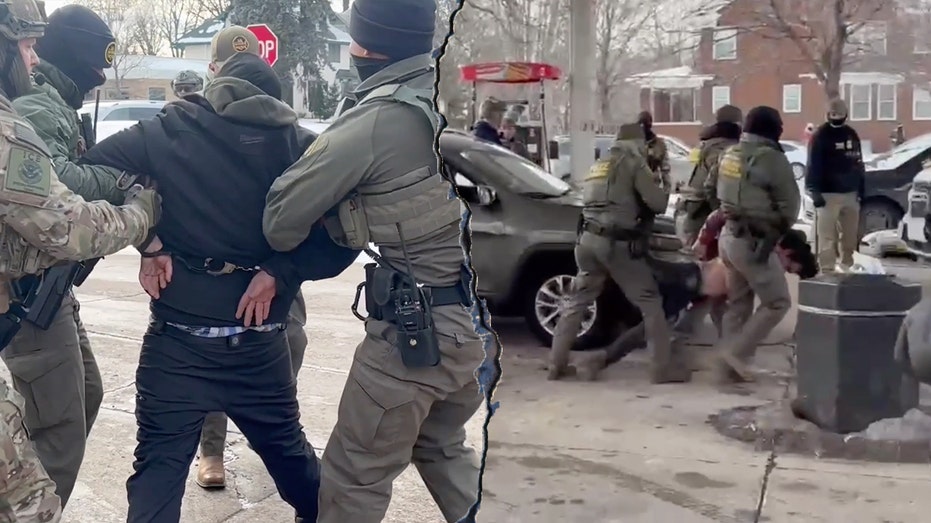
After the glass strikes, DeFoor allegedly tried to flee on foot. Secret Service agents and Cincinnati police officers then detained him on the property, according to those same documents.
Man arrested in vandalism targeting Vice President J.D. Vance’s home in Ohiohttps://t.co/me24qv24KZ pic.twitter.com/Ul3olwUtoz
— The Washington Times (@WashTimes) January 6, 2026
When he was taken into custody, DeFoor demanded to be called Julia, Fox News Digital reported, citing unnamed FBI sources.[1] Public records reviewed so far do not clarify how that request was handled in subsequent court proceedings or in the charging documents.
The Charges: Local And Federal
Authorities have pursued two parallel tracks of charges. In Hamilton County court, a judge set bond at $11,000 in connection with four nonfederal counts. According to Fox News Digital, the local case includes charges of:
Item 1: Vandalism.
Item 2: Criminal trespass.
Item 3: Criminal damaging or endangering.
Item 4: Obstructing official business.[1]
Separately, DeFoor was scheduled to appear in federal court on charges that reflect the protected status of the vice president’s residence and security detail. According to the Fox News account, those federal counts include:
Item 1: Damaging government property.
Item 2: Engaging in physical violence against any person or property in a restricted building or grounds.
Item 3: Assaulting, resisting, or impeding federal officers.[1]
The property damage charge appears to track 18 U.S.C. 1361, which makes it a federal crime to willfully injure or commit depredation against property of the United States. When the damage exceeds $1,000, the statute allows for a potential sentence of up to 10 years in prison.[2]
The allegation that the incident occurred at a protected residence connects to 18 U.S.C. 1752. That law covers entering or remaining in restricted buildings and grounds, including locations where the president or vice president lives or is visiting, when the person engages in physical violence or interferes with Secret Service operations.[3]
At the time of this writing, publicly available reporting has not detailed what plea, if any, DeFoor has entered in either the state or federal case.
Defense Focuses On Mental Health, Not Motive
In the first court appearance reported by Fox News Digital, defense attorney Paul Laufman directly addressed speculation that the vandalism might have been politically motivated. He told the court, according to that outlet, that the incident did not target Vance because of his office or ideology.
“I think there is nothing political going on. This is purely a mental health issue,” Laufman said.[1] The same report notes that Laufman described his client as someone who writes peaceful poetry.
Laufman did not elaborate in that coverage on any specific diagnosis, treatment history, or recent crisis. Under professional ethics rules, defense attorneys often highlight mental health factors early when they anticipate seeking competency evaluations, treatment-oriented outcomes, or mitigation at sentencing.
Fox News Digital also reported that Hamilton County court records show DeFoor has faced multiple criminal cases in recent years, each intersecting with findings related to his mental competency.[1] Those underlying case files are not quoted in the available reporting, so the precise nature of past competency concerns is not yet clear.
In Ohio, questions about a defendant’s competence to stand trial can trigger formal evaluations and hearings. Under state law, a person is considered incompetent if, because of mental illness or other impairment, they lack the capacity to understand the proceedings or assist in their own defense.[4] That legal standard addresses trial readiness, not criminal responsibility at the time of the alleged act.
No public filings in the Vance case have yet been widely reported that would show whether DeFoor’s attorney plans to pursue an incompetency finding or an insanity defense. For now, the mental health framing comes from oral comments in open court as described by a single news outlet.
Security, Identity, And Unanswered Questions
The incident highlights the convergence of several sensitive issues that prosecutors, defense counsel, and courts will need to sort out in public view.
First, the location. As vice president, JD Vance receives Secret Service protection under federal law.[5] His Cincinnati residence, like other homes of top federal officials, is treated as restricted space when protectees are present or expected. Crossing physical barriers and attacking vehicles or windows is very different, in legal terms, from the same conduct at a private address without a federal security footprint.
Second, the question of motive. The charging documents that have been summarized so far focus on conduct, not ideology. They describe entry into restricted grounds, use of a hammer against government property, and resistance to federal officers. They do not, in the available public reporting, allege a political statement, a grievance against Vance, or any spoken threats tied to policy or party.
The defense position cuts even more sharply against a political reading. By asserting that “there is nothing political going on” and characterizing the case as a mental health matter, Laufman is signaling that he will likely ask the court to examine DeFoor’s psychological history and current condition. Whether that framing will be supported by medical records or expert testimony remains to be seen.
Third, identity and how it will be handled in court. The detail that DeFoor allegedly asked officers to call him Julia at the time of arrest raises basic questions about how he will be identified in future filings, in custody records, and in media reports. The Fox News account continues to use male pronouns, and no formal name change petition has been reported, leaving a gap between what the defendant reportedly requested in custody and how institutions are labeling him now.
Finally, there is the pattern that Hamilton County records suggest. If earlier criminal cases already involved findings about mental competency, judges in both state and federal court may revisit those materials. Public access to such records can be limited when they involve mental health treatment, so the extent to which the public will see that history is uncertain.
What is documented at this stage is straightforward: a fence line breach at the vice president’s home, multiple hammer strikes on windows fortified with federal security materials, and a rapid arrest by Secret Service agents and local police. Whether the courts ultimately view that sequence as the product of political intent, untreated illness, or something that does not fit neatly into either category is a question that only the next rounds of filings, hearings, and rulings can answer.