



He told detectives he had a plan, retrieved a kitchen knife, and waited for her to walk out of another room. What happened next is laid out in a criminal complaint, but why it happened remains missing from the public record.
The Allegations Against James Martin
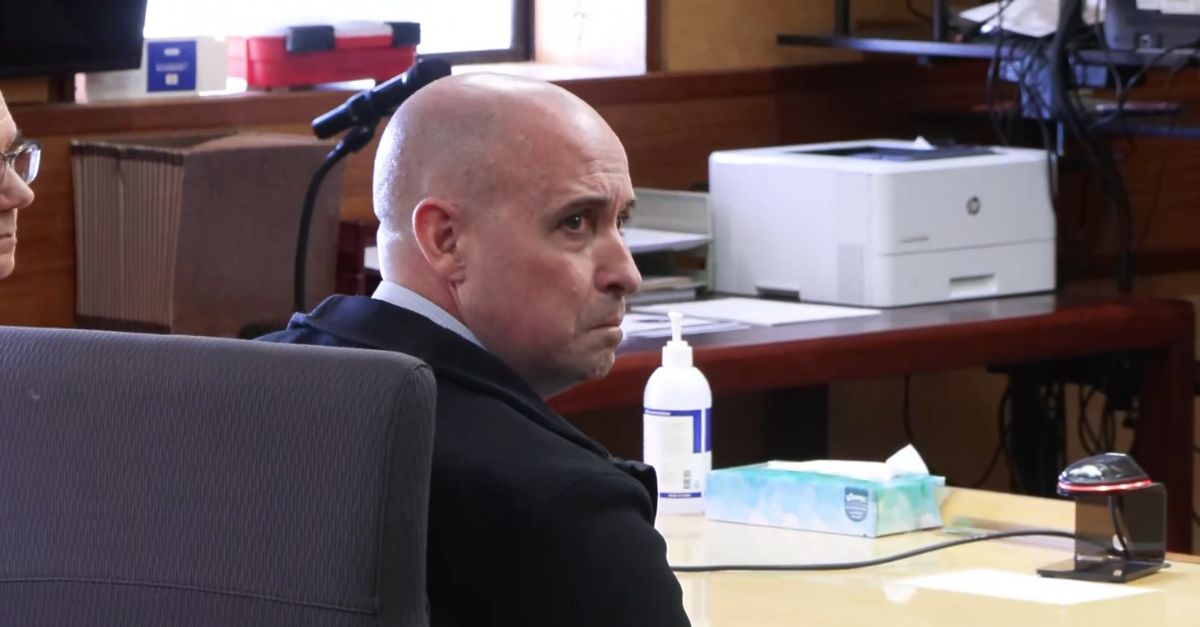
According to a criminal complaint obtained by Law & Crime, 47-year-old James Martin is charged with first-degree murder in the killing of his wife, 41-year-old Amber Martin, in Coralville, Iowa. Coralville is a city in Johnson County, just outside Iowa City, with a population of roughly 22,000 people, according to city data compiled by Wikipedia.
Police said officers were dispatched around 6:40 a.m. to an apartment on Spring Rose Circle for a reported stabbing. When they entered the home, officers found Amber Martin suffering from multiple stab wounds. Paramedics pronounced her dead at the scene.
In the complaint, investigators say James Martin admitted to killing his wife. At this stage, those statements remain allegations in a pending criminal case, and he has not entered a plea in court in the available records. He is being held at the Johnson County Jail on a 1 million dollar bond.
What Police Say Happened Inside the Apartment
The most detailed public description of the killing so far comes from the criminal complaint summarized by Law & Crime. Detectives wrote that in the hours before the stabbing, James Martin armed himself and waited.
According to that document, detectives stated: “In the hours leading up to the defendant killing the victim. The defendant retrieved a kitchen knife and surprised the victim as she exited another room and stabbed the victim repeatedly.” The complaint does not, in the publicly reported portions, describe any argument, struggle, or specific trigger immediately before the attack.
Investigators said the evidence they found at the apartment matched James Martin’s reported account and that a witness corroborated parts of what they observed. The publicly available reporting does not identify that witness or explain what exactly the witness saw or heard.
Detectives have not released any information about prior calls for service to the home, any documented history of domestic incidents, or whether law enforcement or social services had previous contact with the couple. Police also have not publicly described any defensive wounds or signs that Amber tried to escape, details that often appear later in court testimony or autopsy findings.
A Scientist, a Husband, and No Public Motive
While the complaint lays out a sequence of actions, it does not include a motive. Investigators cited by Law & Crime have explicitly declined to share any possible reason for the killing.
In public comments, the people who knew Amber Martin describe a colleague and friend whose life was centered on science and patient care. She worked as a medical laboratory scientist supervisor for the University of Iowa Health Care system. That role typically involves overseeing diagnostic testing, managing lab staff, and ensuring that results guiding patient treatment are accurate and timely.
Her supervisor, Connie Floerchinger, told Muddy River News that the staff was devastated. “My entire staff and I are shocked and horrified by Amber’s death,” she said. “She was sweet, smart, and had an amazing personality. She had only been with us since September, but we all felt like we had known her forever! Our community and the field of clinical microbiology will not be the same without her.”
Before moving to Iowa, both Amber and James Martin reportedly worked as medical researchers at Quincy Medical Group in Illinois. A former colleague, Ann Ostermiller, told Muddy River News that she trained Amber in her position and described a workplace where Amber was widely liked and respected.
“Amber was such a wonderful woman,” Ostermiller said. “She was vivacious, kind, and loved by all her coworkers. Jim was quieter and more reserved. This murder is beyond the comprehension of those who knew them when she worked at QMG. They seemed to be such a close and loving couple. I cannot imagine what transpired to change their relationship so much.”
Those accounts underscore a central gap in the public record. The picture painted by friends and coworkers of a close, supportive marriage sits beside a criminal complaint that describes a deliberate killing. Law enforcement has not, so far, provided any bridge between those two realities.
Inside the Criminal Charge
James Martin faces a charge of first-degree murder. In Iowa, first-degree murder generally applies when prosecutors believe a killing was deliberate and premeditated, or when it occurred during certain other felonies. The language in the complaint that he “formulated a plan” and retrieved a knife before waiting for Amber to enter the room signals that investigators view the act as intentional, not impulsive.
The complaint, as described by Law & Crime, relies on three main pillars.
First, James Martin’s alleged admission that he killed his wife.
Second, physical evidence inside the home that investigators say is consistent with that admission.
Third, observations by an unnamed witness that authorities say support their account.
Public reporting so far does not describe whether the alleged admission came after Miranda warnings, how it was recorded, or whether he had an attorney present. Those details sometimes become central in suppression hearings, where defense lawyers argue that statements should be excluded from trial.
There is also no public information yet about any forensic examinations, such as DNA testing on the knife, bloodstain pattern analysis in the apartment, or autopsy findings that could further confirm or challenge the narrative in the complaint. Those technical details often surface later in court filings or testimony.
Context and Unanswered Questions
Domestic homicides frequently raise questions about warning signs and interventions. In this case, police have not released any record of prior domestic violence calls involving the Martins. Public reports also do not mention protective orders, criminal histories, or counseling services, leaving it unclear whether any outside agency had insight into their relationship before Amber’s death.
It is also not yet publicly known who called 911, how quickly first responders arrived after the attack, or whether anyone attempted life-saving measures before paramedics pronounced Amber dead. These timeline details can matter for both legal arguments and for families trying to understand whether anything could have changed the outcome.
For now, the public picture rests on a short criminal complaint, a police response time, and the recollections of coworkers who remember Amber as a committed scientist and colleague. Nearly every other part of the story, including what James Martin will say in court and what evidence prosecutors will present to a jury, remains ahead.
James Martin is presumed innocent unless and until he is convicted in court. As the case moves through the legal system in Coralville, basic questions remain unresolved. What was happening inside this marriage in the days and months before Amber’s killing, and will any explanation ever match the bare, clinical description now sitting in a single criminal complaint?