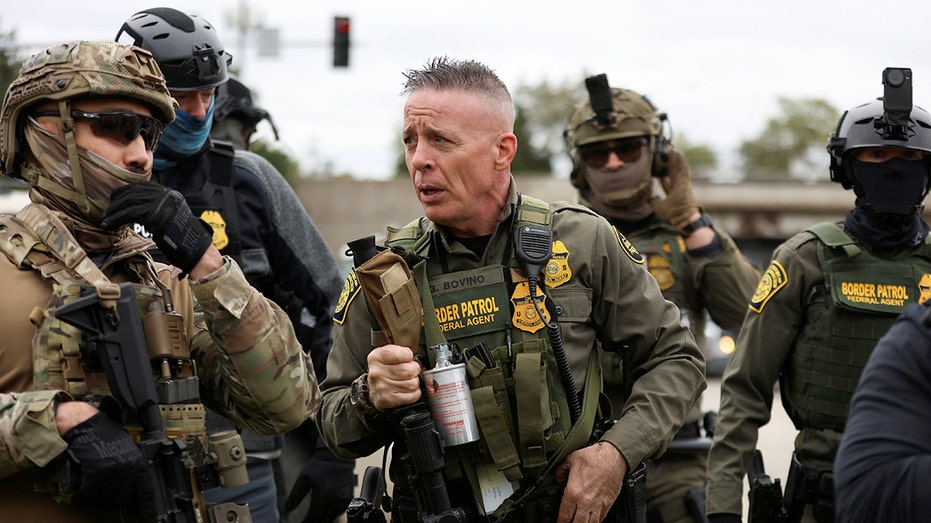
The messages reportedly offered $10,000 “if you take him down” and included a photo of a senior Border Patrol official. What no one in court agrees on is whether those Snapchat posts were a real murder contract or just reckless digital chatter.
In a federal courtroom in Chicago, 37-year-old Juan Espinoza Martinez is on trial over a single count of murder for hire. Prosecutors say he tried to arrange the killing of high-ranking Border Patrol official Greg Bovino using Snapchat. The defense says the case is built on rumors, deleted messages and an informant whose credibility is under strain.
The Alleged Snapchat Plot
The case, described in detailed reporting by the Associated Press and Fox News https://www.foxnews.com/us/border-patrol-chief-targeted-alleged-murder-hire-plot-focused-snapchat-messages, began after federal agents were told about an online “hit” targeting Bovino. Homeland Security Investigations, a division of Immigration and Customs Enforcement, opened an inquiry and traced the alleged plot to Espinoza Martinez, who was arrested in early October in Burr Ridge, Illinois, according to that reporting.
Prosecutors say the core evidence is a string of Snapchat messages that never stayed on screen for long. In court, jurors were shown screenshots that the government says came from Espinoza Martinez. According to the Associated Press account, those captures showed an offer of $2,000 for information about where Bovino could be found, and $10,000 “if you take him down,” along with a photograph of Bovino.
Under federal law, murder-for-hire charges are brought under 18 U.S.C. 1958, which makes it a crime to use a facility of interstate commerce, such as the internet or a phone, with the intent that a murder be committed in exchange for payment. The statute carries a maximum of ten years in prison if the alleged plot does not result in a killing https://www.law.cornell.edu/uscode/text/18/1958. Espinoza Martinez has been charged with a single count under that law, according to the AP reporting cited by Fox News.
No physical attack on Bovino has been described in court filings or in the reporting available so far. The entire case turns on what was said on Snapchat, to whom, and with what intent.
Prosecutors: Not Politics, A Murder Contract
From the start of the trial, federal prosecutors have tried to narrow the jury’s focus. They say this is not about contentious immigration policy or heated political speech but about a specific effort to pay for a killing.
“This case is not about someone expressing strong views about immigration enforcement,” Assistant U.S. Attorney Minje Shin told jurors, according to the Associated Press account relayed by Fox News. The prosecution’s position is that the language of the Snapchat messages, the attached image of Bovino and the cash figures show a concrete solicitation, not a joke.
The government also leans on what happened after the messages were sent. A construction company owner who had been in contact with Espinoza Martinez on work-related matters turned those messages over to federal agents. That decision triggered the wider investigation and the arrest in Illinois.
Outside the courtroom, senior officials at the Department of Homeland Security have characterized the case in stark terms. In a public statement, Matthew Scarpino, special agent in charge of Homeland Security Investigations Chicago, described the defendant as a gang member and framed the arrest as part of a broader fight against organized crime. “The arrest of this ruthless and violent member of the Latin Kings, a criminal organization notorious for its cruelty and disregard for the law, highlights the steadfast commitment of Homeland Security Investigations and our law enforcement partners to protect our communities and those who uphold justice,” Scarpino said, according to the Homeland Security statement quoted in Fox’s report. He added, “Targeting a senior federal officer is a brazen and direct assault on the rule of law, and HSI will remain persistent in dismantling violent gangs like the Latin Kings that threaten public safety.”
In court, Espinoza Martinez has denied that he is a gang member. According to the AP account, he told investigators in recorded interviews, later played for jurors, that he was not part of a criminal organization and that he worked daily as a union laborer.
The Defense: Gossip, Rumors And No Real Plan
The defense has tried to pull the jury in a different direction. Attorneys for Espinoza Martinez argue that what the government calls a murder plot was really a mix of online rumor, bravado and anger about immigration enforcement.
They have described their client as a carpenter and laborer with very limited savings. According to the AP report, defense lawyers told jurors that Espinoza Martinez had little money in his accounts and could not realistically fund a $10,000 payout. In their telling, the Snapchat posts were not a binding offer but “neighborhood gossip” lifted from social media and idle talk in his Chicago community.
His younger brother, Oscar Espinoza Martinez, testified for the defense. He told jurors he had already seen a Facebook post about some kind of bounty before receiving the Snapchat messages and that he never believed it represented a genuine offer. “Nobody’s going to do that for $10K,” he said, according to the AP coverage.
In recorded interviews with federal agents, Espinoza Martinez denied threatening anyone and denied that he had tried to hire a killer, the AP reported. He also told agents he was not part of the Latin Kings and had no role in any gang-directed plot.
Defense attorneys have not disputed that the Snapchat messages exist. Instead, they are asking jurors to decide whether those messages amount to criminal intent under the statute, or whether they are protected speech, dark humor or rumor-mongering without any real plan behind them.
The Informant At The Center
Much of that debate runs through one person: Adrian Jimenez, the construction company owner who received the messages and then contacted authorities.
According to the AP account, Jimenez testified that he had communicated with Espinoza Martinez about construction work. At some point, prosecutors say, the conversations shifted to Bovino and to money. Jimenez told jurors he took the Snapchat posts seriously enough that he reached out to a Homeland Security investigator he knew and supplied screenshots.
On cross-examination, defense lawyers focused on Jimenez’s past and on his role as a government source. Jimenez acknowledged that he had a prior felony conviction, had served a prison sentence and had previously been paid for cooperating as a government informant, according to the reporting. He did not go into detail about those arrangements in open court.
Defense attorney Dena Singer pressed him on whether he truly thought he had been offered a contract killing. “You’re not somebody that commits murder for hire, right?” she asked, according to the AP account. “Nope,” Jiminez replied.
Federal agents have described Jimenez as a confidential source who helped them identify and arrest Espinoza Martinez. The defense has tried to use that same label to suggest that Jimenez had motives that go beyond simple civic duty.
Immigration Status And Gang Allegations
Beyond the alleged plot itself, prosecutors and Homeland Security officials have highlighted Espinoza Martinez’s immigration status and alleged gang ties. According to federal authorities cited by the AP, he was born in Mexico and has lived in the United States for decades without legal permission to remain.
In public statements, DHS officials have linked the case to larger efforts against the Latin Kings, a long-established street gang. Espinoza Martinez, in his recorded interviews, has rejected that description, saying he is not a gang member. That leaves jurors sorting through two sharply different portrayals of the same person: a “ruthless and violent” gang figure, as one Homeland Security official put it, or a longtime laborer amplifying neighborhood talk without the means to carry out a contract killing.
When Online Speech Becomes a Federal Crime
The legal questions in this case reach beyond one defendant. Federal law on murder for hire and on threats to officials increasingly runs up against social media platforms where users trade rumors, jokes and sometimes explicit calls for violence.
Under 18 U.S.C. 1958, the government must prove that a defendant used a phone or the internet with the intent that a murder be carried out and that some kind of payment would occur. Courts have said the statute covers completed plots and offers that never lead to an actual attempt, but the line between angry words and a criminal solicitation remains contested https://www.law.cornell.edu/uscode/text/18/1958.
Recent years have seen a series of federal cases involving online threats aimed at immigration and border officials. Fox News, for example, has reported on a separate federal case in which an Oklahoma man was charged with posting online threats to kill Immigration and Customs Enforcement agents and elected officials https://www.foxnews.com/us/oklahoma-man-charged-threatening-kill-ice-agents-maga-republicans-online. Those prosecutions rely on a mix of statutes governing threats, obstruction and solicitation, and they often turn on the defendant’s intent and the audience’s perception.
Espinoza Martinez’s case fits that pattern. The government argues that offering specific dollar amounts and circulating Bovino’s photograph show serious purpose. The defense says the same facts show posturing, because the money was not available and the supposed “bounty” was already floating around the internet.
What The Jury Has, And What It Does Not
Based on the reporting to date, jurors have seen screenshots of messages that would normally vanish once read on Snapchat. They have heard from Jimenez, the recipient and informant. They have listened to recordings of Espinoza Martinez denying that he meant to threaten anyone. They have been told that if they find him guilty of murder for hire, he could face up to ten years in federal prison.
They have not heard directly from Bovino. According to the AP account, the Border Patrol official did not testify at trial. And because the original Snapchat messages disappear by design, what jurors can see today depends heavily on the screenshots preserved by a single recipient and on the investigators who built the case around them.
At the point described in the AP and Fox News reporting, the trial was moving into closing arguments, with deliberations expected to follow. Publicly available sources up to that point do not include a verdict, so it is not yet clear how jurors ultimately interpreted those clipped images and short lines of text.
For now, the official record shows two sharply conflicting narratives built on the same fragile digital trail. One treats the Snapchat messages as evidence of a paid plot to kill a federal officer. The other treats them as scraps of rumor from a disappearing app, amplified by a man who now faces a decade in prison if twelve strangers decide his words crossed the line into crime.