

Who Was Executed and Why It Matters
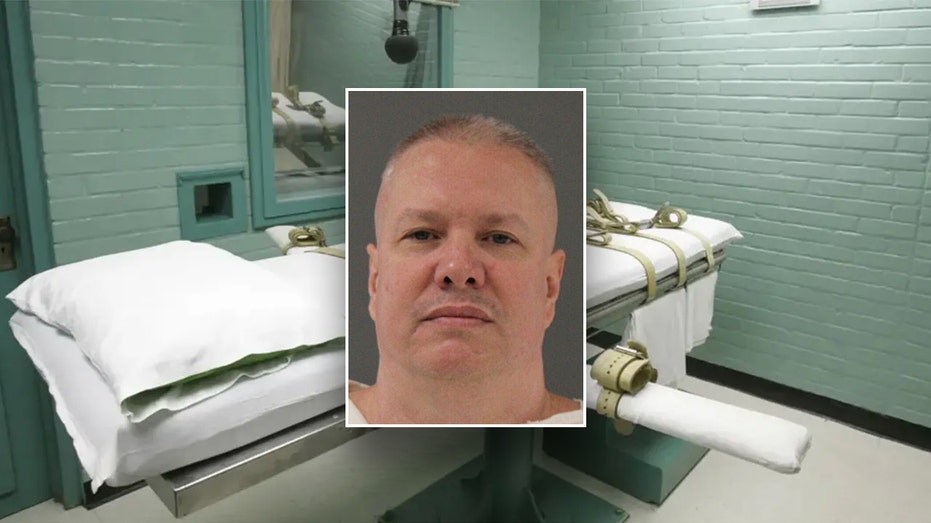
According to an Associated Press account carried by Fox News, Texas put 55-year-old Charles Victor Thompson to death by lethal injection at the Huntsville Unit. State officials pronounced him dead at 6:50 p.m. local time. It was reported as the first execution carried out in the United States in 2026.
A Harris County jury had sentenced Thompson to die for the 1998 shooting deaths of his former partner, 39-year-old Glenda Dennise Hayslip, and her new boyfriend, 30-year-old Darren Keith Cain, in Hayslip’s apartment near Houston. The killings fit a pattern that homicide detectives know well. A late-night confrontation, a breakup that had already turned volatile, and a return visit that ended in gunfire.
The 1998 Killings in Harris County
According to court records described in the AP report, Thompson arrived at Hayslip’s apartment around 3 a.m. in April 1998 and argued with Cain. Police were called to the complex, and Thompson was ordered to leave the property. The records state that he did go, only to return about three hours later.
By that second visit, the situation had shifted from a domestic dispute to a capital murder case. Prosecutors said Thompson came back with a firearm and shot both Hayslip and Cain inside the apartment. Cain died at the scene. Hayslip survived for about a week before dying from her injuries.
Under Texas law, killing more than one person during the same criminal episode can qualify as capital murder, which makes the death penalty available to prosecutors. Harris County, which includes Houston, has historically been one of the most active jurisdictions in the country for capital prosecutions, according to data compiled by the Death Penalty Information Center.
Conviction, Overturned Sentence, and a Second Death Verdict
Thompson was convicted and initially sent to death row. That first death sentence did not stand. His punishment was later overturned on appeal, a relatively rare outcome in capital cases, though his underlying convictions remained in place. The AP account does not detail the specific legal error, only that an appellate court set the sentence aside.
In November 2005, after a new punishment phase, a different Harris County jury again decided that Thompson should be executed. That second death sentence, rather than the first, is the one that ultimately took him to the execution chamber in Huntsville.
Texas maintains extensive public information on capital cases. The Texas Department of Criminal Justice (TDCJ) publishes basic data on each death row prisoner and every execution on its Death Row Information pages, including conviction counties, offense descriptions, and execution dates. Those records show how few people receive a new death trial after a sentence is overturned, and fewer still are resentenced to death.
A Rare Death Row Escape
Shortly after being resentenced in 2005, Thompson did something almost unheard of in a modern U.S. capital case. He escaped from the Harris County Jail in Houston. According to the AP report, he stayed free for about three days before law enforcement tracked him down.
Authorities ultimately arrested him in Louisiana. The AP account states that he was captured while trying to set up overseas wire transfers, which officials interpreted as an attempt to reach Canada. The escape prompted a manhunt and raised obvious questions about jail security in one of the nation’s largest urban counties. For the families of Hayslip and Cain, it also meant a brief period when the person convicted of killing their loved ones was back on the streets.
Most capital cases move through a predictable sequence of trial, direct appeal, state habeas review, and federal habeas review. An escape inserts a different kind of uncertainty. It does not erase a conviction, but it can deepen the sense among victims’ families that the criminal justice system is not entirely in control.
The Final Legal Steps
According to the AP report, Thompson pursued appeals and clemency requests in the period leading up to his execution date. Earlier in the week of the execution, the Texas Board of Pardons and Paroles reportedly denied his request to commute his death sentence to a lesser penalty.
The Board, whose work is outlined on its official site at tdcj.texas.gov/bpp/, has the power to recommend clemency in capital cases. In practice, commutations to life in prison are exceedingly rare in Texas, even when death sentences have drawn controversy.
About an hour before the execution was scheduled to begin, the United States Supreme Court issued a short order rejecting Thompson’s final appeal, according to the AP account. Such last-minute rulings are typical in death penalty cases, and high court orders at that stage are usually a single sentence granting a stay or denying relief. In Thompson’s case, the Court did not intervene.
Inside the Chamber: Final Words and Reactions
Witnesses told the AP that a spiritual adviser prayed over Thompson as he lay on the gurney in Huntsville. Before the drugs were administered, Thompson turned his attention to the families of Hayslip and Cain. According to the AP account, he asked them for forgiveness and added that he hoped “you can begin to heal and move past this.”
He also offered a broader reflection on what was about to happen. “There are no winners in this situation,” he said. He then added that his execution “creates more victims and traumatizes more people 28 years later.”
The first execution in the U.S. this year took place in Texas on Wednesday, ending a case that included an escape, retrials, and years of appeals. https://t.co/krIolhUE5D pic.twitter.com/N1wMPBvOGb
— KHOU 11 News Houston (@KHOU) January 29, 2026
As the lethal injection began to flow, Thompson “gasped loudly” and took about a dozen breaths that turned into snoring sounds, the AP reported. Witnesses said he soon stopped moving, and officials pronounced him dead roughly 22 minutes after the process started.
Afterward, reactions diverged sharply. Dennis Cain, whose son Darren was killed in the 1998 shooting, told reporters, “He’s in hell.” Harris County District Attorney Sean Tear, whose office handled the prosecution, said, “This chapter is closed,” and called the execution “justice a long time coming.” Those three short statements describe very different views of what an execution achieves.
Texas, Executions, and What Remains Unsettled
Texas has carried out more executions than any other state since the Supreme Court allowed capital punishment to resume in 1976. The nonpartisan Death Penalty Information Center reports that the state has conducted more than 500 executions over that period, a figure that accounts for a significant share of all U.S. executions.
Thompson’s case fits some of the patterns visible in that broader record. A domestic double murder that met the statutory requirements for capital charges. A Harris County jury willing to impose the death penalty more than once. Years of state and federal review that rarely disturb capital convictions. A clemency system that seldom steps in.
Other aspects of the case are less common. Very few death row prisoners escape custody, even briefly. Fewer still see an initial death sentence overturned only to receive a second one. Thompson’s own words in the chamber also captured a view rarely heard at the moment of execution, when he said, “There are no winners in this situation.”
What remains less visible is how the families of Hayslip and Cain understand this outcome beyond the brief comments captured in news accounts. The public record shows a conviction, an escape, two death sentences, and an execution in Huntsville. Whether those facts amount to closure, or something more complicated, is a question the official documents do not answer.