

Twelve modest money transfers left a Long Beach neighborhood over several months, most for a few hundred dollars or less. By the time federal agents came to the apartment, they say a homemade bomb packed with metal fragments was already sitting in the bedroom.
Federal prosecutors now say those transfers were not random remittances but financial support for ISIS. According to a report by Fox News at foxnews.com, 29-year-old Mark Lorenzo Villanueva of Southern California has pleaded guilty in federal court to attempting to provide material support to a foreign terrorist organization and to being a felon in possession of a firearm.
Mark Lorenzo Villanueva, 29, a green card holder from Long Beach, California, admitted to one count of attempting to provide material support to a foreign terrorist organization and one count of being a felon in possession of a firearm. #FBI #ISIS
READ: https://t.co/4jvOkvXIuM pic.twitter.com/X8vfvzKED6
— Republika News (@RepublikaNewsPH) January 29, 2026
From Social Media Messages to Alleged ISIS Contacts
According to the plea agreement described in the Fox News report, Villanueva began communicating on social media in early 2025 with a person who identified as an ISIS fighter in Syria. That individual allegedly provided instructions on how to route money overseas.
Court filings cited in the report indicate that Villanueva later interacted with two people who both described themselves as ISIS fighters. Prosecutors say he repeatedly expressed a desire to join the group in person and discussed potential operations in the United States.
In one message quoted in court records, Villanueva allegedly wrote, It’s an honor to fight and die for our faith. It’s the best way to go to heaven. Someday soon, I’ll be joining.
What remains unclear from public reporting is who those online contacts actually were. The Fox News story describes them as individuals who self-identified
as ISIS fighters, but it does not specify whether they were genuine foreign fighters, undercover operatives, confidential informants, or some other category of source. The Justice Department has not yet released full public documentation that would clarify that detail.
Following the Money Trail
The financial records are more concrete. Prosecutors say Western Union data show 12 payments totaling 1,615 dollars sent by Villanueva over about five months. The transfers went to intermediaries overseas, according to the account in Fox News, rather than directly to anyone in a war zone.
In the plea agreement, Villanueva acknowledged that he understood the funds would be used to buy weapons, ammunition, and supplies to support ISIS activities, prosecutors said. That admission is central to the most serious charge he now faces.
Under federal law at 18 U.S.C. 2339B, providing material support or resources
to a designated foreign terrorist organization is a crime. The statute, which can be read in full at law.cornell.edu, covers a wide range of assistance. Money is one category. Others include weapons, training, services, and even expert advice in certain circumstances.
The government does not need to show that any particular attack was funded by the money. It must show that the defendant knew the organization was designated as a terrorist group or engaged in terrorism, and that the support was intended for that group.
The Homemade Device in the Bedroom
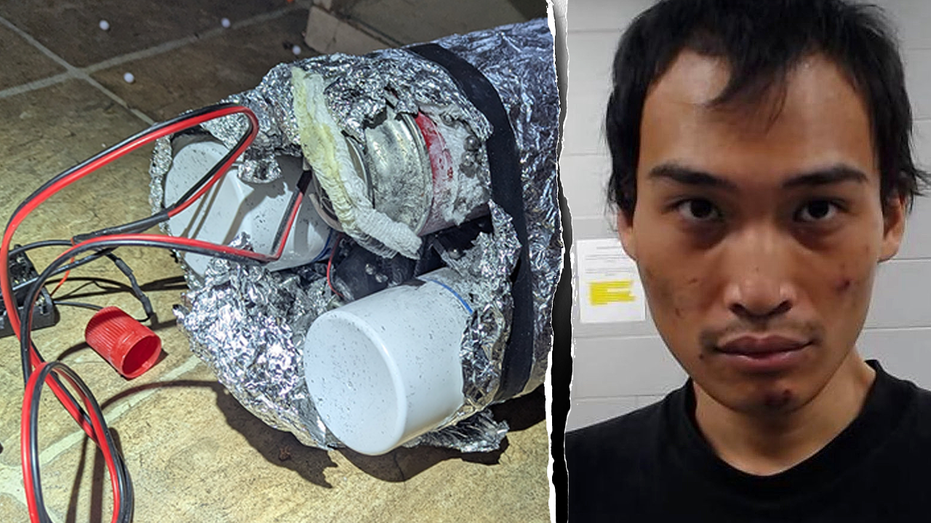
The online communications were only part of what agents say they found. When the FBI’s Joint Terrorism Task Force searched Villanueva’s Long Beach residence in August 2025, they recovered a homemade explosive device from his bedroom, according to Fox News.
The device was allegedly packed with ball bearings, nails, screws, and other metal fragments. Prosecutors say Villanueva knew that the device met the federal definition of a firearm and a destructive device and that it was not registered as required by law.
Federal law treats many improvised explosive devices as destructive devices
if they are designed as weapons and contain explosive material. The Bureau of Alcohol, Tobacco, Firearms, and Explosives explains on its public guidance pages that certain bombs, grenades, and similar devices can qualify as firearms under the National Firearms Act, even when homemade, if they meet statutory criteria such as having explosive charges and being constructed to cause injury or damage.
At the time of the search, Villanueva was already barred from having guns or destructive devices because of a prior felony conviction. According to the Fox News report, he had been convicted of felony stalking in Los Angeles Superior Court in 2017, which meant federal law prohibited him from possessing firearms.
How Investigators Built the Case
The FBI’s Joint Terrorism Task Force in Los Angeles led the investigation, according to statements cited by Fox News. Joint Terrorism Task Forces bring together federal, state, and local law enforcement to investigate suspected terrorism activity. The FBI describes its role at fbi.gov as combining intelligence, surveillance, and criminal investigation tools to detect and disrupt threats.
In this case, task force members used a combination of electronic communications, financial records, and the physical search of Villanueva’s home. The Western Union transfer history provided specific dates and amounts tied to the alleged ISIS contacts. The search warrant execution in August 2025 yielded the explosive device and other items, including knives, that Villanueva had previously discussed with his contacts, according to the plea materials summarized in the news report.
Acting FBI Los Angeles Assistant Director Patrick Grandy praised the work of the task force in an earlier statement quoted by Fox News, saying, Mr. Villanueva is alleged to have financially supported and pledged his allegiance to a terror group that targets the United States and our interests around the world.
The Charges and Potential Sentence
Villanueva pleaded guilty to two federal counts. The first is attempting to provide material support to a designated foreign terrorist organization, linked to his financial transfers and his communications about joining ISIS. The second is being a felon in possession of a firearm, with the homemade explosive device treated as a firearm and destructive device under federal law, according to the Fox News account.
Prosecutors say the material support charge carries a potential prison term of up to 20 years. The firearm charge carries up to 15 years. The article reports that U.S. District Judge Anne Hwang has set sentencing for June 17, and that Villanueva has been held in federal custody since his arrest in August 2025.
Any final sentence will depend on the advisory federal sentencing guidelines, arguments from both sides, and the judge’s assessment of Villanueva’s conduct and history. Public documents referenced so far do not indicate what sentence prosecutors will formally request, or whether they will seek guideline enhancements that sometimes apply in terrorism cases.
Acting U.S. Attorney Bill Essayli, quoted in the Fox News report, framed the case as part of a broad approach to terrorism prosecutions. Supporting a terrorist group, whether at home or abroad, is a serious risk to our national security,
he said. We will aggressively hunt down and prosecute anyone who provides support or comfort to our enemies.
What Is Known, and What Remains Open
Some facts in the case are now established by Villanueva’s own plea. He has admitted sending money overseas that he understood was designated for ISIS activities. He has admitted possessing an unregistered homemade explosive at a time when federal law barred him from having any firearm.
Other details remain less clear from what is publicly available. The Fox News account relies on court filings and government statements, but it does not reproduce the full plea agreement or charging documents. Key questions, such as who exactly received the money, whether any funds reached genuine ISIS members, and whether any undercover operations were involved, are not answered in that reporting.
Until more primary records from the case become public, the outline is partly drawn by the government’s characterization and partly by what Villanueva was willing to admit in court. The sentencing hearing now scheduled for June will likely reveal more, but for now, the case sits at an uneasy point where the homemade bomb is accounted for, the transfers are documented, and the true identities on the other end of those messages still sit behind redactions and sealed exhibits.