

TLDR
New Jersey wrestler Luke Humphrey faces manslaughter charges and a wrongful-death lawsuit over the fatal punching of father of three Oron Beebe outside a Camden County bar, as court filings dispute whether the teen was drinking, who started the confrontation, and what bar staff should have done.
Competing Accounts of Parking Lot Encounter
The criminal and civil cases both stem from a late-night encounter in a parking lot across from Bobby Ray’s Black Horse Tavern in Camden County. According to a civil complaint filed by widow Jennifer Beebe, her husband, 46-year-old father of three Oron Beebe, was walking to his vehicle when he was attacked by then-16-year-old Luke Humphrey.
In the lawsuit, Jennifer Beebe alleges that Humphrey “suddenly and without justification physically attacked, struck and punched [Oron Beebe] in the head,” causing him to fall, hit his head, and suffer catastrophic injuries that led to his death. The filing portrays the confrontation as unprovoked and unforeseeable for the victim.
Accounts tied to the criminal investigation, however, present a different narrative. A criminal complaint obtained by NJ.com, and described by Law & Crime, states that Humphrey’s parents told responding officers the teenager acted in self-defense. Humphrey’s father reportedly said that Beebe threatened to “bury” his son, and a witness described hearing Humphrey shout that he had knocked out the victim because the victim had threatened him.
Those statements, which have not yet been tested at trial, set up a core dispute for both the criminal jury and any future civil jury. Was the punch an unjustified assault, as the widow’s complaint contends, or a response to a perceived threat, as Humphrey’s family reportedly told police?
Widow’s Lawsuit Targets Bar and Teen Wrestler
Separate from the criminal prosecution, Jennifer Beebe has filed a wrongful-death lawsuit against Humphrey and Bobby Ray’s Black Horse Tavern. According to Law & Crime, the suit accuses both the teen and the establishment of contributing to Oron Beebe’s death.
The complaint alleges that Humphrey, then a Delsea Regional High School student and wrestler, attended the bar that night with his parents and other wrestlers to watch the NCAA wrestling championships. It claims the bar invited area wrestlers “in an effort to increase business and its customer base.”
In the filing, Jennifer Beebe alleges that Humphrey had “a propensity for aggression, violence, or disruptive behavior,” referencing a prior restraining order and disciplinary history. These claims are presented as part of an argument that his conduct outside the bar was foreseeable, and that the tavern and its staff should have taken more precautions.
The lawsuit also seeks to hold the bar responsible for what it calls inadequate security and crowd management once Humphrey and his parents were removed from the premises. The complaint alleges that staff forced the family to leave because of disruptive behavior “for the safety of the patrons,” but did so without taking reasonable steps to separate or protect other guests, including Oron Beebe, from potential retaliation or confrontation.
None of these allegations has been proven in court. Humphrey is contesting the civil claims, and the bar disputes the account of events.
Questions About Alcohol Service and Foreseeability
A significant portion of the civil complaint focuses on alcohol service and underage drinking, raising potential dram shop liability issues. The lawsuit alleges that bar staff “permitted minors, including Humphrey, to be present on the premises while alcohol was being served and consumed,” and that they “permitted or failed to prevent” the service or consumption of alcohol by minors or by visibly intoxicated, disorderly patrons.
Those assertions are central to the widow’s claim that the tavern should be held financially responsible for her husband’s death. If a court finds that staff knowingly allowed minors to drink or failed to intervene when patrons became unruly, the bar could face substantial civil exposure.
The bar’s owner, however, has strongly rejected the allegation that any of the wrestlers drank alcohol. Asked about the claims, Black Horse Tavern owner Bobby Ray Harris told NJ.com, as quoted by Law & Crime, “Absolutely did not happen.” Harris said staff were instructed to be vigilant about alcohol near minors, adding, “None of these kids were drinking. We made sure as soon as they came in, I met with the staff and said, ‘Listen, be very careful. I don’t even want any of their parents’ drinks on their table at all.'”
Humphrey’s attorney in the civil case, Robert Agre, has also denied that the teen consumed alcohol at the bar. According to NJ.com, he said, “That’s strongly denied. He didn’t have any alcoholic beverages to drink.”
Those denials highlight another unresolved factual question. If the court determines that underage drinking did occur, it could strengthen the widow’s argument that the bar helped create conditions for the fatal confrontation. If not, the case may turn more narrowly on security decisions and the split-second events in the parking lot.
School Wrestling Eligibility and Policy Limits
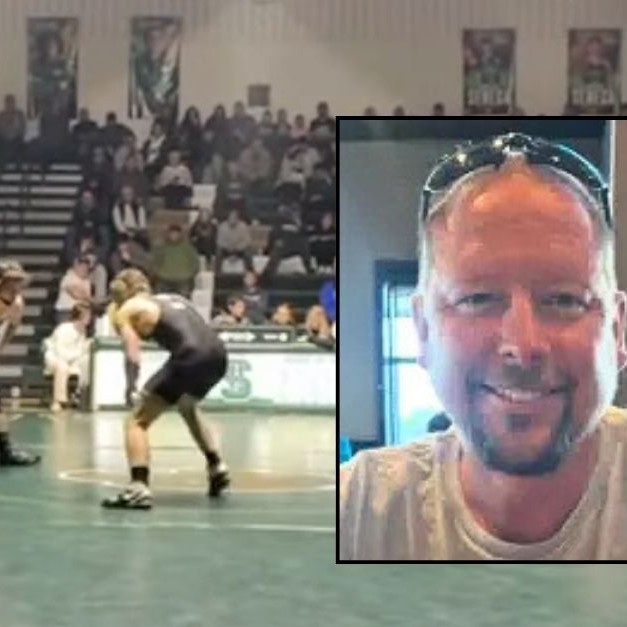
While the criminal and civil cases move forward, Humphrey has continued to wrestle for Delsea Regional High School. That decision has drawn criticism from some in the community, including friends of the victim’s family, who argue that a student under indictment for manslaughter should not represent the school in competition.
In comments reported by NJ.com and cited by Law & Crime, Humphrey’s wrestling coach defended the decision to keep him on the team, saying the teenager “works hard” and has “earned the right to be here just like every other kid.” The coach’s public position underscores the tension between the presumption of innocence in criminal law and community expectations around school athletics.
The New Jersey State Interscholastic Athletic Association, the governing body for high school sports, has said its rules do not automatically bar students from competition based solely on pending criminal charges. A spokesperson told NJ.com that, on eligibility questions like this, “the NJSIAA relies on its member schools as the first point of review” and defers to courts and law enforcement regarding any restrictions.
“We defer to the courts, and nothing in NJSIAA rules prohibits participation based solely on pending charges,” the spokesperson said. “If a student is lawfully attending school, has not been suspended, and there are no restrictions from law enforcement or the courts, we respect those determinations.”
That framework leaves significant discretion with individual schools. In this case, it places Delsea Regional officials at the center of a sensitive decision about balancing a student’s rights with the concerns of a grieving family and broader community.
Parallel Criminal Case and What Comes Next
On the criminal side, Humphrey was arrested in October 2024 and charged with “recklessly causing the death of Oron Beebe,” according to Law & Crime’s review of NJ.com reporting. Online court records cited by the outlet show that a Camden County grand jury indicted him in April 2025.
Humphrey, who is being tried as an adult despite being 16 at the time of the incident, is out on bail and scheduled to go on trial in March. The eventual jury will be asked to weigh his self-defense claim, any evidence about threats made before the punch, and expert or medical testimony regarding Beebe’s fatal injuries.
The criminal case and the wrongful-death lawsuit proceed under different standards. Prosecutors must prove the manslaughter charge beyond a reasonable doubt. In civil court, Jennifer Beebe will need to establish liability under a lower preponderance-of-the-evidence standard, both against Humphrey and, if she continues to pursue it, against the bar.
Key questions remain unresolved. What did witnesses see and hear in the moments before the punch? How much weight will jurors give to Humphrey’s reported claim of self-defense or to allegations about his prior behavior? And to what extent, if any, will a court find that a bar’s decisions about serving, monitoring, and ejecting patrons contributed to a parking lot encounter that ended in a fatal fall?
Those issues will be tested in court, where the outcome will shape not only Humphrey’s future and the Beebe family’s search for accountability, but also how other schools and bars in New Jersey interpret their responsibilities when young people, alcohol, and high-stakes confrontations intersect.